Allergies & Diets · Japan
Vegan & Vegetarian Travel in Japan: Hidden Dashi, Shojin Ryori & Japanese Cards
Last updated
Japan looks like plant-based heaven — tofu, miso, seaweed, and soba everywhere — until you discover that bonito fish dashi quietly hides inside almost every bowl. Here is how to eat thrillingly well vegan or vegetarian across Japan without accidentally drinking fish stock.

On this page (10 sections)
- In short
- How it works
- The One Culinary Secret Every Plant-Based Traveler in Japan Learns on Day One
- Hidden Dashi & Konbini Extract Cheat Sheet (原材料名 Kanji to Spot)
- Shojin Ryori & Japan’s Best Naturally Plant-Based Wins
- How to Set Up Ask Lucy for Vegan & Vegetarian Japan Trips
- Cards to show
- Watch out for
- Common questions
- Use Lucy on the spot
What vegan and vegetarian travelers must know in Japan
Saying 'no meat' (niku nashi) in Japan rarely keeps a dish vegetarian or vegan, because everyday miso soup, soba dipping sauce, simmered vegetables, rolled eggs, and even pickles rely on katsuobushi (smoked bonito fish flakes) or niboshi (dried sardines) dashi broth. Always specify 'no fish broth/dashi' (katsuo-dashi / niboshi nashi), read full 原材料名 ingredient panels on konbini snacks for hidden meat extracts (ekisu), seek out Buddhist shojin ryori and dedicated vegan Tokyo/Kyoto/Osaka spots, and set Diet to vegan or vegetarian in Ask Lucy to shape every reply.
- Biggest hidden trap
- Katsuobushi (bonito flakes) & niboshi (dried sardines) dashi inside miso soup, soba/udon, sauces & pickles
- Plant-based dashi to ask for
- Kombu dashi (昆布だし, pure kelp) & shiitake dashi (干し椎茸だし, dried mushroom)
- Japan's vegan culinary gem
- Shojin ryori (精進料理) — traditional Zen Buddhist temple cuisine in Kyoto, Koyasan & Kamakura
- Konbini label kanji to scan
- かつお (bonito), 魚介/肉エキス (fish/meat extract), ゼラチン (gelatin), 動物性油脂 (animal fat)
How it actually works on the spot
-
Learn to look past 'no meat' to the invisible broth
In everyday Japanese cooking, fish stock (dashi) is treated like salt or water — many well-meaning servers honestly tell you a vegetable udon has 'no meat or fish' even when the soup is brewed from smoked bonito flakes. Always explicitly name dashi, katsuobushi, and niboshi when asking.
-
Read the full 原材料名 block on 7-Eleven, Lawson & FamilyMart labels
Japan's allergen icon grid does NOT flag bonito fish stock, and meat extracts hide inside potato chips, seaweed snacks, and salad dressings. Flip every package over and snap the entire 原材料名 ingredient paragraph with Ask Lucy (up to 4 photos in one turn) instead of relying on the front picture.
-
Mix dedicated vegan/shojin spots with smart everyday wins
Tokyo, Kyoto, and Osaka now pack world-class dedicated vegan ramen, sushi, izakaya, and Buddhist shojin ryori restaurants. Between those meals, lean on verified everyday wins: plain salted onigiri (塩おにぎり), edamame, roasted sweet potatoes (yaki-imo), CoCo Ichi Veggie Curry (ココイチベジカレー) available at most CoCo Ichibanya branches nationwide, and soy milk (豆乳).
-
Show a clear, polite Japanese card BEFORE ordering
Because Japanese kitchens prepare sauces and broths hours ahead of service, they rarely strip fish stock out on the fly. Showing your card early lets staff guide you to genuinely plant-based dishes — or politely tell you 'Muzukashii desu' ('It is difficult') so you can move on cleanly.
The One Culinary Secret Every Plant-Based Traveler in Japan Learns on Day One
Step into Tokyo or Kyoto and everything looks reassuringly plant-forward: steaming bowls of tofu, emerald edamame, glossy pickled vegetables, buckwheat soba, and delicate miso soup. Then you politely ask for “niku nashi” (“no meat”) — and still wind up eating fish in four out of five dishes.
That is not carelessness. In Japanese cuisine, dashi — a crystal-clear umami broth steeped from smoked skipjack tuna flakes (katsuobushi) or dried baby sardines (niboshi) — plays the foundational role that salt and olive oil play in the Mediterranean. Because you cannot see chunks of fish floating in the bowl, many Japanese cooks do not register dashi as “fish” when someone asks for a meat-free meal.
Once you learn which words spot hidden dashi and animal extracts — and where Japan’s truly extraordinary plant-based food lives — eating vegan or vegetarian in Japan turns from a guessing game into a highlight of your trip.
Hidden Dashi & Konbini Extract Cheat Sheet (原材料名 Kanji to Spot)
Japan’s packaged allergen boxes (see our Japanese Food Labels & Dates Guide) do not declare bonito fish stock, and meat extracts quietly season snacks you would never suspect. Look for these exact characters in the 原材料名 (Ingredients) block:
| Japanese on label | Reading | What it actually is | Where it hides |
|---|---|---|---|
| かつお節 / かつおだし / 鰹エキス | katsuobushi / katsuo-dashi / katsuo ekisu | Smoked bonito fish flakes / stock / extract | Miso soup, mentsuyu noodle sauce, tamagoyaki omelet, agedashi tofu, onigiri, tsukemono pickles, natto sauce packets |
| 煮干し / いりこ | niboshi / iriko | Dried baby sardines / anchovies | Homestyle miso soup, Kansai/Sanuki udon broth, ramen soup bases |
| 昆布だし / 干し椎茸だし | kombu dashi / hoshi-shiitake dashi | Kelp / dried mushroom stock | Plant-based gold standard (still verify no bonito was blended alongside!) |
| ポークエキス / チキンエキス / ビーフエキス | pōku / chikin / bīfu ekisu | Pork, chicken, or beef extract | Potato chips, rice crackers (senbei), instant noodles, Japanese curry roux, dressings |
| 魚介エキス / 魚醤 | gyokai ekisu / gyoshō | Seafood extract / fish sauce | Seaweed snacks, kimchi, dipping sauces, convenience-store salads |
| ゼラチン / ラード / 動物性油脂 | zerachin / rādo / dōbutsusei yushi | Gelatin / pork lard / animal fat | Gummies, konbini puddings, cream desserts, ramen broths, fried snacks |
| ショートニング / 乳化剤 | shōtoningu / nyūkazai | Shortening / emulsifiers | Bakery bread, cookies, pastries (Japanese labels rarely specify plant vs. animal origin) |
| 卵 / 乳成分 / はちみつ | tamago / nyūseibun / hachimitsu | Egg / dairy / honey | Japanese mayo (Kewpie), milk bread (shokupan), soft cakes, glazes |
Shojin Ryori & Japan’s Best Naturally Plant-Based Wins
Long before “plant-based” became a restaurant trend, Zen Buddhist monks in Japan perfected shojin ryori (精進料理) — meditative multi-course temple cuisine crafted entirely from seasonal vegetables, wild mountain herbs, silky yuba tofu skin, sesame tofu (goma-dofu), fermented soy, and pure kombu and shiitake dashi. Booking a shojin ryori lunch at a historic temple in Kyoto (around Arashiyama, Daitoku-ji, or Nanzen-ji), Kamakura, or an overnight temple stay on Mount Koya (Koyasan) is one of Japan’s great culinary memories. (Just double-check casual tourist “shojin-style” cafés outside temples, which occasionally slip in bonito stock or egg.)
Outside temples, major cities have exploded with dedicated plant-based kitchens:
- Tokyo: T’s TanTan (100% vegan tantanmen ramen inside Tokyo Station, Ueno Station, Ikebukuro, and Narita Airport — lifesaver for train days!), dedicated vegan izakayas in Shibuya/Shinjuku/Asakusa, and vegan sushi counters that cure tomato, eggplant, and konjac to mimic nigiri texture.
- Kyoto & Osaka: Vegan okonomiyaki and takoyaki counters in Osaka’s Namba/Shinsaibashi, vegan gyoza and ramen bars across central Kyoto, and abundant matcha sweet shops using pure anko sweet red bean paste and warabimochi (always double-check wagashi for egg white, honey, or gelatin).
- Nationwide chain backup: CoCo Ichibanya curry shops offer CoCo Ichi Veggie Curry (
ココイチベジカレー) — a plant-based curry base free of meat fat available at most branches nationwide (distinct from their regular curry roux!), letting you stack vegetable toppings on a tight schedule. - Smart konbini picks (verify back label every time!): Plain salted rice ball (
塩おにぎり), pickled plum (梅— check for bonito seasoning), plain edamame, steamed yaki-imo sweet potatoes, fresh fruit, plain tofu, unsweetened 豆乳 (tōnyū soy milk), and plain natto beans (just skip the tiny tare sauce sachet inside, which almost always uses katsuobushi!).
How to Set Up Ask Lucy for Vegan & Vegetarian Japan Trips
Before your flight, open Ask Lucy on your iPhone or iPad (iOS 26+) and configure two fields in your Profile:
- Set Diet to
veganorvegetarian. Diet is not Health data and requires no Health consent. - Add Japan-specific rules in Notes to Lucy (up to 2,000 characters, read with every turn), such as: “Strict vegan in Japan — always check for katsuobushi bonito dashi, niboshi sardine broth, fish or meat extracts (ekisu), gelatin, honey, and unlabeled shortening on menus and konbini packages.”
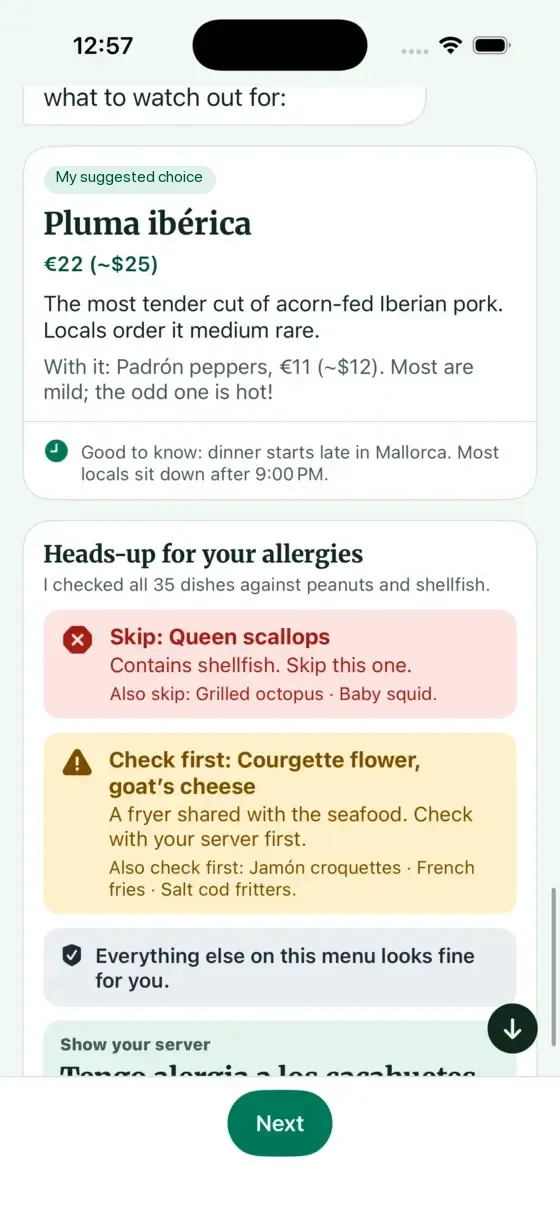
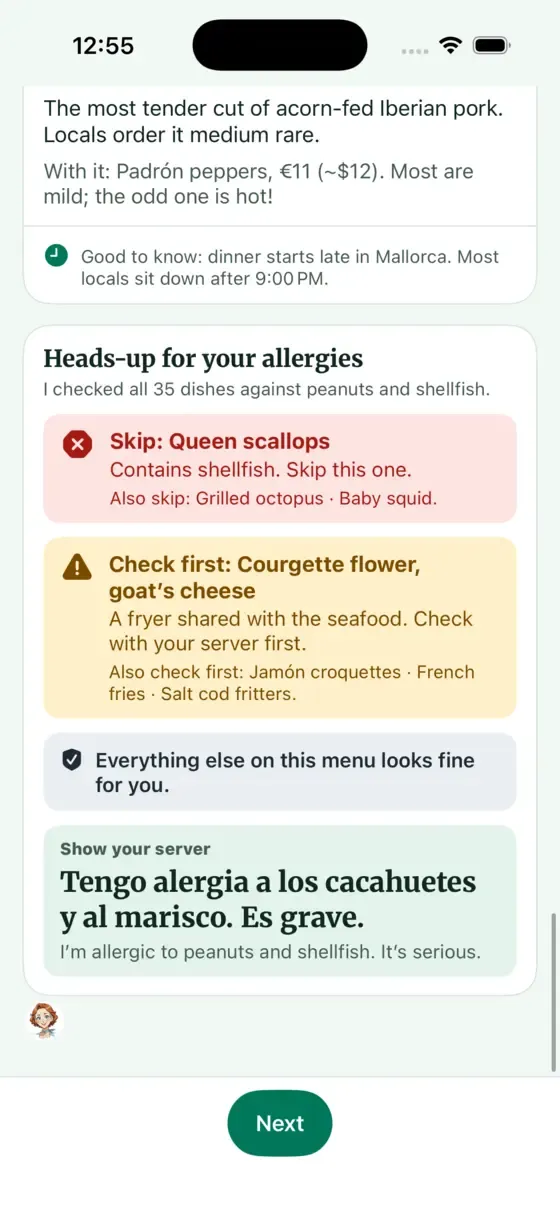
One honest product detail worth knowing: Diet and Notes to Lucy shape Lucy’s written replies, dish notes, and Japanese Show-your-server cards — they do not produce four-state Safety verdict cards. Safety verdicts (Safe, Caution, Unsafe, Unknown) run strictly for medical allergies saved behind explicit Health consent. If you also avoid fish, egg, or milk for a medical allergy, save those as allergies with your exact Severity too.
Standing in a 7-Eleven aisle or facing a wooden izakaya menu? Snap up to 4 photos in one turn (front packaging + dense 原材料名 kanji paragraph). Lucy unpacks every ingredient line, flags hidden fish stock or pork extract, shows Home-first yen prices ($1.30 (¥200)), and drafts a polite full-screen Japanese Show-your-server card. Because Ask Lucy needs Wi-Fi or mobile data to generate answers (subterranean department-store basement snaps wait in her Offline outbox until signal returns), keep an offline Japanese pack in Apple Translate or Google Translate handy — and if you ever need a live two-way spoken conversation with a chef about broths, use sister app Let’s Tango.
Cards to say or show
Tap any Japanese card to show it full screen to your waiter, temple host, or bakery clerk.
Watch out for
- Never assume 'kombu' (kelp) onigiri or plain 'zaru soba' is vegan: convenience-store kombu onigiri and standard soba dipping sauce (mentsuyu) almost always contain bonito fish extract (かつおエキス) — always scan the back label.
- Japanese curry roux usually contains beef or pork fat: classic katsu-less 'vegetable curry' in Japan is routinely cooked with animal-fat roux unless a restaurant explicitly serves a plant-based curry (like CoCo Ichibanya's CoCo Ichi Veggie Curry base).
- Traditional tamagoyaki (rolled omelet) and agedashi tofu swim in fish dashi: even ovo-vegetarians get caught by bonito stock whipped into sushi-bar omelets and poured over fried tofu.
- Watch sneaky konbini bakery ingredients: Japanese milk bread (shokupan), melonpan, and pastries routinely use butter, milk, egg, lard (ラード), or unlabeled animal/plant shortening (ショートニング).
- Respect honest refusals ('Muzukashii desu'): Japanese staff hate giving you food that violates your rules — if a small noodle counter says they cannot make a fish-free bowl, thank them warmly and head to your next spot.
Common questions
Is Japan hard for vegans and vegetarians in 2026?
Not if you plan smartly. Tokyo, Kyoto, Osaka, and major tourist hubs now have vibrant dedicated vegan ramen shops, plant-based izakayas, vegan bakeries, and historic Buddhist shojin ryori restaurants. The tricky part is walking cold into random neighborhood noodle or curry shops without knowing about hidden bonito fish dashi and meat extracts.
Why does miso soup in Japan usually contain fish?
Traditional miso soup starts with awase dashi — a clear stock steeped from kombu kelp and katsuobushi (smoked skipjack tuna flakes) or niboshi (dried sardines) before the miso paste is whisked in. Unless a restaurant explicitly states vegan or pure kombu/shiitake dashi, assume everyday miso soup contains fish stock.
What convenience store (konbini) foods in Japan are typically vegan?
Always read the back 原材料名 label because recipes vary by chain and season, yet common plant-based finds include plain salted onigiri (塩おにぎり), pickled plum onigiri (梅 — verify no katsuo seasoning), chilled edamame, roasted sweet potatoes (焼き芋), plain tofu packs, plain natto (skip the included sauce packet, which usually contains fish dashi!), unsweetened soy milk (豆乳), bananas and cut fruit, and marked plant-based snacks.
Does setting Diet to vegan or vegetarian in Ask Lucy show Safety verdict cards?
No — and that distinction is intentional. In Ask Lucy, Diet (vegetarian, vegan, pescatarian, or gluten free) and Notes to Lucy shape Lucy's written replies, dish guidance, and Show-your-server cards automatically without requiring Health consent, and they do not generate Safety verdict cards. Four-state Safety verdicts (Safe, Caution, Unsafe, Unknown) are reserved strictly for medical allergies saved in your Profile behind explicit Health consent.
Is Buddhist shojin ryori always 100% vegan?
Authentic Zen temple shojin ryori is strictly vegan — built on pure kombu and shiitake dashi, tofu, yuba, seasonal mountain vegetables, and sesame tofu (with no meat, fish, dairy, eggs, or pungent garlic/onion). However, a few casual tourist 'temple-style' lunch sets near sightseeing spots occasionally slip in bonito dashi or egg, so confirm quickly with your Japanese card when booking.