Allergies & Diets · France
Celiac & Gluten-Free in France: Bistro Sauces, Galettes & French Server Cards
Last updated
France takes bread seriously — and hides wheat flour inside classic sauces, fries, and even 'buckwheat' crêpes. Here is how to use France's EU 14 allergen law, spot hidden roux, and show a crystal-clear French celiac card.

On this page (11 sections)
- In short
- How it works
- The Honest Reality of Eating Gluten-Free in France
- Decoding French Menus: The Hidden Flour & Grain Cheat Sheet
- Four French Kitchen Traps That Catch Celiac Travelers Off Guard
- Grocery Stores, Pharmacies & Naturally Safer Stops
- How to Use Ask Lucy Across French Bistros and Supermarkets
- Cards to show
- Watch out for
- Common questions
- Use Lucy on the spot
What gluten-free and celiac travelers must know in France
Dining gluten-free in France requires more vigilance than in Italy or Spain: everyday bistros thicken classic sauces with wheat flour (roux), standard boulangeries are thick with airborne flour, and many Breton buckwheat galettes mix wheat flour into the batter. Lean on EU 14 allergen lists (legally required on request), seek dedicated 100% sans gluten bakeries in Paris and major cities, and always explain 'maladie cœliaque' — never just 'sans gluten'.
- Legal allergen right
- EU 14 law requires every French restaurant & bakery to hold written allergen info (liste des allergènes) on request
- Packaged certification
- Épi Barré (AFDIAG crossed-grain logo) + bolded blé, orge, seigle, épeautre, avoine on labels
- Sneakiest French traps
- Flour roux in sauces (béchamel, bœuf bourguignon), wheat-blended galettes, shared frites fryers
- Reliable grocery hubs
- Naturalia, Biocoop, La Vie Claire, Monoprix & Carrefour 'Sans Gluten / Bio' aisles
How it actually works on the spot
-
Open with 'Bonjour' and state 'maladie cœliaque' clearly
Polite French hospitality starts with a warm 'Bonjour.' Follow immediately by showing your card stating 'maladie cœliaque' (celiac disease) so your waiter knows this is a medical condition involving sauces and cross-contact, not a request to skip the bread basket.
-
Ask specifically about the sauce, thickening flour, and fryer
Even a plain-sounding steak, stew, or roasted chicken in a French bistro may arrive glazed in a flour-thickened jus or plated next to fries cooked in shared breaded-food oil. Ask for the sauce on the side or plain olive oil/butter, and check the fryer separately.
-
Treat standard boulangeries as window shopping — seek dedicated GF spots
Neighborhood boulangeries dust every surface with wheat flour. Save bakery treats for dedicated 100% sans gluten pâtisseries (increasingly easy to find in Paris, Lyon, Bordeaux, and Nice) or verified sealed supermarket snacks carrying the AFDIAG Épi Barré logo.
The Honest Reality of Eating Gluten-Free in France
France can feel intimidating at first glance when wheat is practically a national monument. Every street corner smells of warm baguettes, every bistro table opens with a basket of sliced pain de campagne, and outside major cities some servers still assume “sans gluten” is a fashionable wellness whim rather than an autoimmune disease.
Yet France is far more rewarding for celiac travelers in 2026 than its old reputation suggests — provided you split your strategy in two: seek dedicated 100% sans gluten bakeries for pastries, and order smart at classic bistros by steering clear of flour-thickened sauces and shared fryers.
Big cities like Paris, Lyon, Marseille, Bordeaux, and Nice now support thriving dedicated gluten-free boulangeries, crêperies, and brunch spots where you can eat a flaky croissant or éclair without a single shred of anxiety. In smaller towns and countryside villages, lean on naturally gluten-free French classics — grilled meats, seafood, salads, cheese (if you tolerate dairy), potatoes cooked in duck fat, and fresh market produce — backed by clear French communication.
Decoding French Menus: The Hidden Flour & Grain Cheat Sheet
Under EU Regulation No 1169/2011, every restaurant, café, and bakery in France must keep a written liste des allergènes covering the 14 mandatory EU allergens, including gluten-containing cereals (céréales contenant du gluten). Don’t be shy about asking for it — and memorize these key French menu words so you spot wheat before the waiter even walks over:
| French menu word | What it means | Gluten risk | Kitchen reality to verify |
|---|---|---|---|
| Blé / Froment | Wheat | Unsafe | Standard flour (farine de blé) in bread, pastries, and roux |
| Épeautre / Petit épeautre | Spelt / Einkorn | Unsafe | Ancient wheat varieties — still full gluten despite “artisan” marketing |
| Orge / Malt / Seigle | Barley / Malt / Rye | Unsafe | Found in beer, some dark country breads (pain de seigle), and malt vinegar |
| Sarrasin / Blé noir | Buckwheat | Naturally GF — check! | Despite the word blé, pure buckwheat is GF — but many crêperies blend in wheat flour |
| Roux / Béchamel / Velouté | Flour-thickened sauces | Unsafe | Core base of gratins, croque-monsieur, creamy soups, and classic bistro stews |
| À la meunière / Pané / En croûte | Flour-dredged / Breaded / In pastry | Unsafe | Sole meunière is floured before butter-basting; pâté en croûte is wrapped in dough |
| Frites maison | House French fries | Cross-contact risk | Often fried in the same oil as breaded items — always ask “huile dédiée ?” |
| Entrecôte / Tartare / Huîtres | Ribeye / Steak tartare / Oysters | Often adaptable | Order steak plain (sans sauce), verify tartare Worcestershire/sauces, skip bread |
| Crème brûlée / Sorbet / Mousse | Classic desserts | Usually GF — check! | Confirm no biscuit garnish (tuile), no flour in mousse, clean scoop for sorbet |
| Épi Barré (AFDIAG) | Crossed-grain seal | Certified GF | Official French celiac association certification on packaged foods |
Four French Kitchen Traps That Catch Celiac Travelers Off Guard
- The invisible sauce thickener. In a traditional brasserie, bœuf bourguignon, coq au vin, blanquette de veau, and even a simple sauce au poivre on your steak are commonly dusted with farine de blé or finished with a butter-and-flour beurre manié. A waiter who only thinks of bread may insist the stew is “just beef and wine” until you specifically ask about farine de blé in the sauce.
- The Breton galette illusion. Savory buckwheat galettes are a celiac traveler’s dream in Brittany and across Paris — when they are genuine 100% sarrasin cooked on a dedicated billig (flat cast-iron griddle). Sadly, shortcut crêperies routinely mix wheat flour into the savory batter to stop it tearing, or cook sweet wheat crêpes on the exact same plate all afternoon. Use the crêperie card below before you sit down.
- Processed charcuterie and terrines. Pure cured ham (jambon cru) and simple dry sausages are frequently gluten-free, yet rustic pâtés, terrines, boudin, and supermarket rillettes sometimes use wheat flour or breadcrumbs as binders. On supermarket packs, EU law bolds blé or gluten clearly in the ingredient block; at a restaurant, always ask.
- The “just scrape off the croutons” reflex. French soupe à l’oignon (onion soup) is topped with toasted baguette and sometimes thickened with flour, and salade de chèvre chaud arrives on toasted rounds of bread. Ask for soups and salads sans croûtons, sans pain from the start — never pick bread off a plate after it arrives.
Grocery Stores, Pharmacies & Naturally Safer Stops
When exploring smaller towns outside Paris, a quick morning run to Naturalia, Biocoop, La Vie Claire, or a large Monoprix / Carrefour gives you bulletproof picnic insurance. Look for the AFDIAG crossed-grain Épi Barré symbol on crackers, madeleines, and breads, plus naturally gluten-free French market joys: raw fruit, artisanal cheeses, olives, roasted chicken (poulet rôti — verify no basting glaze with wheat), and plain cornichons. (If you are managing dairy as well as gluten, pair this page with our Dairy-Free Travel in France guide.)
And remember one helpful cultural tip: unlike Italy, French pharmacies focus primarily on medicine and skincare rather than gluten-free bread aisles (see our French Pharmacy Guide for Travelers if you ever need stomach relief or OTC meds). Do your GF snack shopping at bio markets and big supermarkets instead.
How to Use Ask Lucy Across French Bistros and Supermarkets
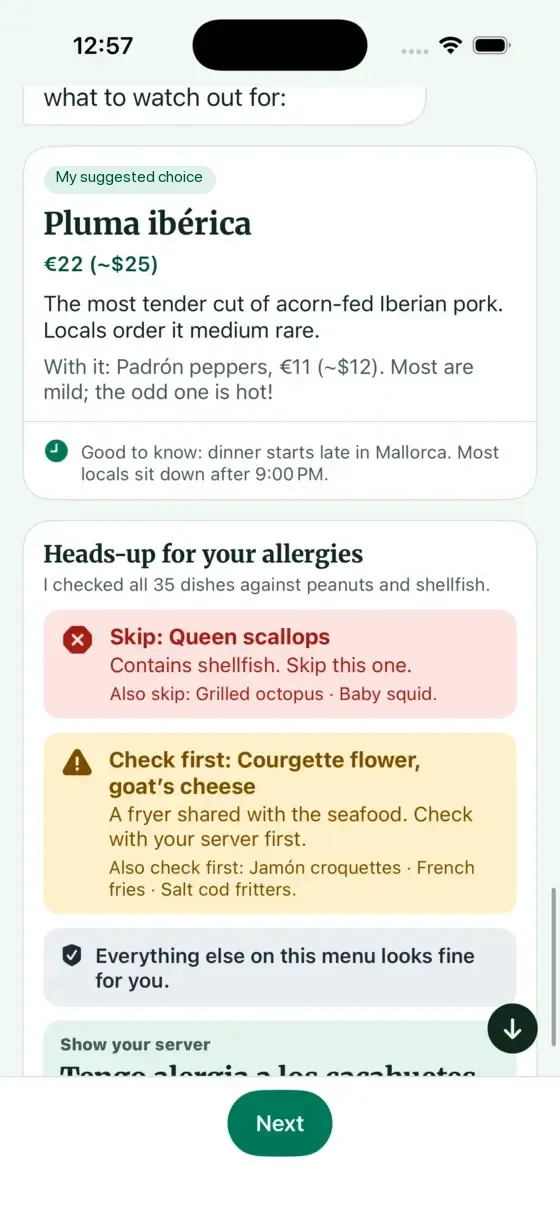
French brasseries love cursive handwritten ardoises (daily chalkboards) where classic sauce names give zero hint of their flour base. Before your flight, configure Ask Lucy on your iPhone or iPad (iOS 26+):
- Save wheat/gluten as an allergy with
severeSeverity in your Profile (stored only after explicit one-tap Health consent) so Lucy runs four-state Safety verdicts (Safe, Caution, Unsafe, or Unknown). - Set Diet to
gluten freeand add a crisp line to Notes to Lucy: “Celiac disease — flag roux, flour-thickened sauces, épeautre, shared frites oil, and wheat-mixed galettes.”
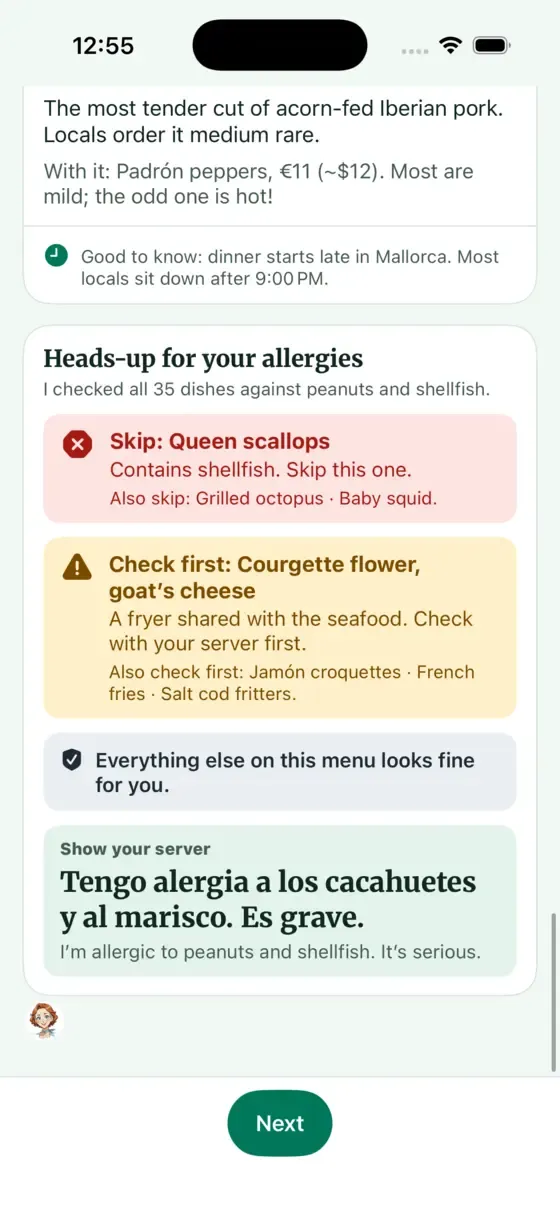
At the table or in a Monoprix aisle, snap up to 4 photos in one turn — the cursive chalkboard, printed carte, and allergen sheet — and Lucy decodes every French dish, marks unverified sauces Caution or Unknown rather than guessing Safe, and writes a polite, full-screen French Show-your-server card tailored to what you want to order.
Keep two practical backups in your bag: Ask Lucy requires Wi-Fi or mobile data to generate answers (photos snapped in subterranean wine-bar dining rooms wait in her Offline outbox and send once connectivity returns), and she is photo + text chat rather than live spoken interpreting. Carry a laminated French celiac card (grab our template in the Food Allergy Translation Cards Guide), download French offline packs in Apple Translate or Google Translate before takeoff, and confirm every dish directly with the kitchen.
Cards to say or show
Tap any French card to show it full screen to your server, crêpier, or shopkeeper.
Watch out for
- Classic French sauces start with a wheat-flour roux: béchamel, velouté, blanquette de veau, bœuf bourguignon, coq au vin, and even peppercorn steak sauces are routinely thickened with farine de blé (wheat flour).
- Buckwheat galettes ('blé noir') are a famous double trap: ironically, blé noir means buckwheat (naturally GF), yet many crêperies blend 10–30% wheat flour (froment) into the batter for easier flipping — or cook galettes on the exact same billig griddle as sweet wheat crêpes.
- Fish 'à la meunière' is dusted in wheat flour: sole meunière and trout meunière look like plain pan-fried fish in butter, yet the fish is dredged in wheat flour before hitting the skillet.
- Épeautre and petit épeautre are wheat, NOT gluten-free: French organic bakeries love ancient spelt (épeautre) and einkorn (petit épeautre) and sometimes mistakenly suggest them as 'low-gluten' alternatives — they are unsafe for celiac disease.
- Macarons still need a cross-contact check: pure almond-meringue macarons are naturally flourless, yet specialty flavors (speculoos, praline feuilletine, chocolate-biscuit) contain wheat wafers and may share trays in mixed pâtisseries.
Common questions
Is France hard for travelers with celiac disease?
It is very manageable once you plan ahead, though less automatic than Italy or Spain. Paris, Lyon, and major hubs now have dedicated 100% gluten-free bakeries and cafés, while traditional bistros require clear communication about flour-thickened sauces, shared fryers, and grilled meats prepared plainly.
Are Breton buckwheat galettes (galettes de sarrasin) gluten-free?
Traditional Brittany galettes made from 100% buckwheat flour (sarrasin / blé noir), water, and salt are naturally gluten-free — but never assume. Many tourist crêperies add wheat flour (farine de froment) to the mix or use the same cooking surface for sweet wheat crêpes. Always ask before sitting down.
Do French restaurants have to provide an allergen list?
Yes. Under EU Regulation No 1169/2011 and French decree, every restaurant, café, caterer, and bakery must keep written documentation of the 14 mandatory allergens — including gluten-containing cereals — available on request (liste des allergènes).
Which naturally gluten-free French dishes are safest to look for at a classic bistro?
Look for grilled steak (entrecôte or bavette — plain, without flour-thickened sauce), oysters and shellfish platters (huîtres, fruits de mer), salade niçoise (no croutons), ratatouille, plain omelettes, duck confit (confit de canard — verify the potatoes' fryer), and desserts like crème brûlée or fruit sorbet (confirm no wafer garnish or flour).
Where should I shop for gluten-free food in France?
Organic chains like Naturalia, Biocoop, and La Vie Claire carry the widest gluten-free selections, and mainstream supermarkets (Monoprix, Carrefour, Auchan, Franprix) have dedicated 'Sans Gluten' shelves. Look for the AFDIAG Épi Barré (crossed-grain) logo and scan the bolded allergen lines on the back.