Allergies & Diets · France
Dairy-Free Travel in France: Hidden Butter, Crème Fraîche & French Server Cards
Last updated
In France, saying 'no cheese' leaves half a stick of butter in the pan. Learn the crucial line between milk allergy and lactose intolerance, spot hidden beurre and crème, and hand over a clear French server card.

On this page (11 sections)
- In short
- How it works
- Why Dairy-Free in France Is Mostly About Invisible Butter
- Milk Allergy vs. Lactose Intolerance: Don’t Let Staff Mix Them Up
- French Menu & Label Decoder: Where Dairy Hides (and Where It Doesn’t)
- Navigating Bakeries, Cafés & Supermarkets Dairy-Free
- How to Use Ask Lucy for Dairy-Free Dining in France
- Cards to show
- Watch out for
- Common questions
- Use Lucy on the spot
How to eat dairy-free in France without guesswork
French cooking treats butter (beurre) and cream (crème fraîche) as default kitchen foundations — especially in northern and central France — so never just ask for 'sans fromage' (no cheese). Always name milk, butter, cream, and cheese explicitly ('sans lait, sans beurre, sans crème, sans fromage'), request olive oil (huile d'olive), lean on France's EU 14 allergen lists, and enjoy southern Provençal cooking, traditional baguettes, seafood, and fruit sorbets.
- EU 14 label law
- Lait (milk) is one of France's 14 mandatory bolded allergens on packaged goods & restaurant allergen lists
- Biggest mistake
- Asking only for 'sans fromage' — kitchens still cook in beurre (butter) and finish sauces with crème fraîche
- Easiest French region
- Southern France (Provence, Nice, Marseille) — olive oil (huile d'olive) replaces butter as the base fat
- Naturally dairy-free star
- Authentic Baguette de Tradition (flour, water, yeast, salt by law — unlike brioche or pain de mie)
How it actually works on the spot
-
Separate milk allergy from lactose intolerance on your card
French waiters increasingly know 'intolérance au lactose,' which can trick them into offering aged cheese, butter, or goat cheese as 'gentle' substitutes. If you have a true milk allergy (allergie aux protéines de lait), state clearly that ALL milk — cow, goat, sheep, butter, and cream — is dangerous.
-
Ask for 'cuisson à l'huile d'olive, sans beurre' before ordering
Even a seemingly plain grilled steak, pan-seared fish, or plate of green beans (haricots verts) gets finished with a knob of butter in classic bistros. Explicitly requesting olive oil (or plain grilling with no butter) stops automatic finishing at the pass.
-
Check bakery labels and café milks before taking a sip or bite
Traditional baguettes and rustic sourdough loaves are dairy-free, whereas croissants, pains au chocolat, brioche, and pain de mie are loaded with butter or milk. Specialty coffee shops in big cities stock oat (avoine) and soy (soja) milk, while classic zinc-bar cafés usually carry only cow's milk — order an expresso or allongé there.
Why Dairy-Free in France Is Mostly About Invisible Butter
If you ask an ordinary traveler what makes France tricky for dairy-free dining, they picture wheels of Brie and bubbling gratin dauphinois. Cheese is the easy part — you can see it coming from across the dining room.
The real challenge in France is silent butter (beurre) and cream (crème fraîche). Across Paris, Normandy, Brittany, Burgundy, and Alsace, classic chefs finish pan sauces by whisking in cold butter (monter au beurre), toss plain green beans in salted butter, baste steaks in foaming butter, and stir cream into vegetable soups without ever mentioning either word on the printed menu. Tell a waiter “pas de fromage” (no cheese) and your plate will still land glistening with Normandy butter.
Flip that script — name milk, butter, cream, and cheese explicitly, ask for olive oil (huile d’olive), and lean into France’s rich olive-oil, seafood, duck-fat, and baguette traditions — and you will eat remarkably well from Paris brasseries to Mediterranean ports.
Milk Allergy vs. Lactose Intolerance: Don’t Let Staff Mix Them Up
Before you show a card or order, know how French kitchens interpret the two conditions:
- Milk protein allergy (allergie aux protéines de lait / APLV): An immune reaction to dairy proteins (caséine, lactosérum / whey). You must avoid all mammal milks — cow (vache), goat (chèvre), and sheep (brebis) — plus butter, clarified butter, cream, cheese, and “sans lactose” (lactose-free) products, which still carry full milk protein.
- Lactose intolerance (intolérance au lactose): Difficulty digesting milk sugar (lactose). Many lactose-intolerant travelers handle small amounts of butter or long-aged hard cheeses (like 24-month Comté) — or bring lactase pills from home — while strictly avoiding fresh milk, crème fraîche, béchamel, ice cream, and young cheeses.
If you have a milk allergy, never soften it to “lactose intolerant” to sound polite. Waiters who hear lactose regularly suggest “un petit peu de chèvre” (a little goat cheese) or buttered fish thinking they are helping you. State “allergie grave au lait et à tous les produits laitiers” right at the top.
French Menu & Label Decoder: Where Dairy Hides (and Where It Doesn’t)
Under EU Regulation No 1169/2011, lait (milk) is one of France’s 14 mandatory allergens — bolded on every packaged supermarket label and documented in every restaurant’s written liste des allergènes. Watch these exact words on menus and Monoprix/Carrefour packages:
| French term | What it means | Dairy status | Traveler tip |
|---|---|---|---|
| Beurre / Beurre blanc / Meunière | Butter / butter sauce / butter-basted fish | Contains dairy | Ask for cuisson à l’huile d’olive (cooked in olive oil) instead |
| Crème fraîche / Chantilly / Velouté | Thick cream / whipped cream / creamy soup | Contains dairy | Even “vegetable soup” (potage / velouté) frequently hides cream or butter |
| Béchamel / Gratin / Quiche | Milk-butter white sauce / baked cream dishes | Contains dairy | Avoid croque-monsieur, gratin dauphinois, and traditional savory tarts |
| Lactosérum / Caséine / Poudre de lait | Whey / Casein / Milk powder | Contains milk protein | Bolded on French grocery labels — hides in chips, dark chocolate, and cured meats |
| Baguette de tradition / Pain au levain | Traditional baguette / country sourdough | Naturally dairy-free | Flour, water, yeast, salt by law — avoid brioche, viennoiserie, and pain de mie |
| Steak tartare / Huîtres / Fruits de mer | Raw beef tartare / Oysters & shellfish | Usually dairy-free | Skip the butter pats served beside oysters and check sauces |
| Confit de canard / Cassoulet / Ratatouille | Duck confit / bean stew / Provençal veggies | Naturally oil/duck-fat based | Still confirm potatoes weren’t finished with butter |
| Moules marinières | Mussels in white wine & shallots | Check butter! | Classic marinières avoids cream (unlike moules à la crème), but many chefs swirl in butter — ask “sans beurre” |
| Sorbet aux fruits | Fruit sorbet | Usually dairy-free | Confirm no milk/cream (unlike glace) and clean scoop for severe milk allergies |
Navigating Bakeries, Cafés & Supermarkets Dairy-Free
- The bakery (boulangerie) rule: Walk right past croissants, pains au chocolat, and brioches (pure butter) and ask for a warm baguette de tradition, pain de campagne, or olive fougasse (confirm no cheese). In Paris, Lyon, and major cities, dedicated plant-based pâtisseries (pâtisserie végétale / végane) now turn out astonishing dairy-free croissants and tarts.
- Supermarket finds: French supermarkets — especially Naturalia, Biocoop, Monoprix, and Carrefour — stock entire chilled bays of soy yogurts (yaourt au soja), oat/almond drinks (boisson végétale avoine/amande), and vegan dark chocolate (chocolat noir — still scan the back for beurre pâtissier or traces de lait!). Note that under EU naming rules, plant milks are labeled “boisson végétale” rather than “lait” on supermarket cartons.
- French charcuterie & pharmacy check: Pure cured meats like jambon cru are typically dairy-free, yet some saucissons and pâtés use lactose or milk powder as a curing stabilizer — always scan the bolded ingredient block. And if you need allergy meds or lactase guidance on the road, see our French Pharmacy Guide for Travelers.
How to Use Ask Lucy for Dairy-Free Dining in France
Classic French menus love poetic dish titles (Blanquette, Quenelles, Île Flottante, Sole Meunière) that never utter the words beurre or crème. Before you board, save milk/dairy in your Ask Lucy Profile (on iPhone and iPad, iOS 26+) with your exact Severity (mild, moderate, or severe) behind explicit one-tap Health consent — or set Diet to vegan if you avoid all animal products. Use Notes to Lucy (up to 2,000 characters) to add key specifics like “True cow’s milk protein allergy — no goat/sheep cheese, no butter finishing, no lactose-free dairy” or “Lactose intolerant — tiny amounts of aged hard cheese okay.”
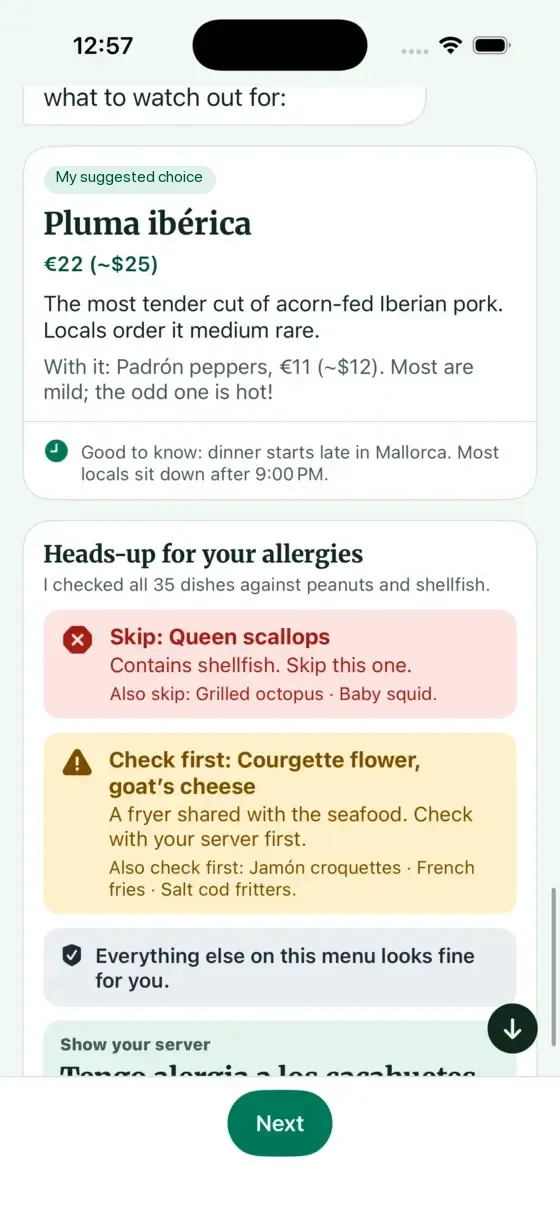
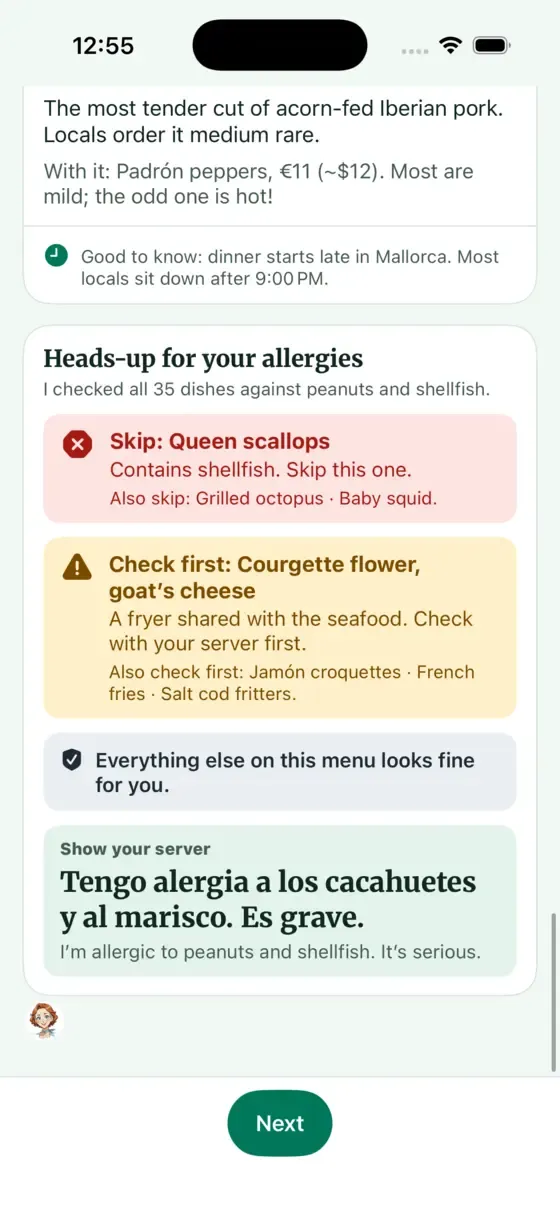
When a cursive chalkboard or supermarket wrapper lands in front of you, snap up to 4 photos in one turn. For saved allergies, Lucy runs four-state Safety verdicts (Safe, Caution, Unsafe, or Unknown — never labeling an unverified bistro dish Safe from its name alone), flags classic butter finishes like meunière or purée, and generates a full-screen French Show-your-server card requesting olive oil and clean pans.
Two honest travel backups: Ask Lucy requires Wi-Fi or mobile data to generate answers (photos snapped in signal-free cellar bistros queue in her Offline outbox and send once connectivity returns), and she is photo + text chat rather than live spoken interpreting. Carry a laminated French allergy card (see our Food Allergy Translation Cards Guide), download French offline packs in Apple Translate or Google Translate before departure, and always confirm pan fat and sauces directly with your server.
Cards to say or show
Tap any French card to display it full screen for your waiter, chef, or barista.
Watch out for
- Vegetables and steaks get 'monté au beurre': even plain-looking haricots verts, sautéed mushrooms, grilled steaks, and steamed mussels are routinely glossed with butter right before leaving the kitchen unless you ask for olive oil.
- Mashed potatoes (purée) are practically half butter: classic French purée de pommes de terre is famously enriched with generous butter and heavy cream or milk — swap for frites (verify frying fat isn't butter/beef-blended) or roasted potatoes in oil.
- Goat (chèvre) and sheep (brebis) cheeses are STILL dairy: if you have a milk protein allergy, avoid them completely — and never rely on 'sans lactose' (lactose-free) products, which still contain full milk protein.
- Breton galettes get brushed with salted butter: even though pure buckwheat batter is water and salt, crêperies almost always grease the billig griddle with beurre demi-sel — ask if they can wipe a clean spot with oil.
- Sorbet vs. Glace matters at dessert: fruit sorbet (sorbet aux fruits) is usually dairy-free water and fruit (check dark chocolate sorbet too, though verify shared scoops!), while glace is cream- and milk-based ice cream.
Common questions
What is the difference between milk allergy and lactose intolerance in French restaurants?
A milk allergy (allergie aux protéines de lait de vache) reacts to milk proteins and requires strictly avoiding every dairy derivative — cow, goat, sheep, butter, cream, whey (lactosérum), and casein (caséine), plus 'sans lactose' items. Lactose intolerance (intolérance au lactose) reacts to milk sugar, so some travelers tolerate small amounts of long-aged hard cheese or lactase enzyme pills. Spell out which one you have so the kitchen doesn't guess.
Is a traditional French baguette dairy-free?
Yes. Under France's 1993 Bread Decree (Décret Pain), an authentic 'baguette de tradition française' may contain only wheat flour, water, yeast or levain, and salt — zero butter, milk, or additives. By contrast, croissants, brioche, pain au lait, and packaged sandwich bread (pain de mie) normally contain dairy.
Can I buy lactase enzyme tablets (like Lactaid) at a French pharmacy?
Sometimes, under names like Lactolérance or generic lactase supplements, though pharmacies carry them far less universally than US or Canadian drugstores — pack a generous supply from home before your flight.
Are plant milks like oat milk easy to find in French cafés?
In Paris, Lyon, Bordeaux, and specialty third-wave coffee shops, oat milk (lait d'avoine), soy milk (lait de soja), and almond milk (lait d'amande) are now common. Traditional neighborhood brasseries and train-station cafés still rarely stock plant milk, so stick to black coffee (expresso or allongé — skip café noisette, which adds a splash of milk), tea, or fresh orange juice there.
Which regions of France are easiest for dairy-free travelers?
Southern France — Provence, Nice, Marseille, and Languedoc — cooks primarily with olive oil (huile d'olive), garlic, tomatoes, and herbs rather than Normandy butter and heavy cream, making dishes like ratatouille, bouillabaisse, salade niçoise, and grilled Mediterranean fish naturally easier to order.