Allergies & Diets · Italy
Celiac & Gluten-Free in Italy: AIC Network, Pasta Traps & Italian Server Cards
Last updated
Italy is the rare land of pizza and pasta where celiac disease is taken with medical seriousness. Know how the AIC network works, dodge shared pasta pots and barley espresso, and hand over a clear Italian server card before you order.

On this page (11 sections)
- In short
- How it works
- Why Italy Beats Almost Every Other Country for Celiac Travelers
- How EU 14 Allergen Law Works at Italian Tables
- Italian Menu & Grocery Cheat Sheet: Safe vs. Trap
- Five Cross-Contact Traps Even Experienced Travelers Miss
- How to Set Up Ask Lucy Before You Land in Italy
- Cards to show
- Watch out for
- Common questions
- Use Lucy on the spot
How celiac-safe dining works in Italy
Italy is one of the easiest countries in Europe for celiac travelers thanks to widespread medical awareness, EU 14 allergen law, and the Associazione Italiana Celiachia (AIC) Alimentazione Fuori Casa network of audited restaurants. Always say 'Sono celiaco/a' (never just 'no gluten'), verify separate pasta boiling pots and pizza ovens at non-AIC spots, and watch hidden traps like farro, orzo (barley coffee), and shared gelato scoops.
- Gold-standard network
- AIC (Associazione Italiana Celiachia) Alimentazione Fuori Casa — audited restaurants, pizzerias & gelaterias
- Packaged seal to spot
- Spiga Barrata (crossed-grain logo) + bolded EU 14 allergens on every Italian label
- Magic Italian phrase
- Sono celiaco (m) / Sono celiaca (f) — signals medical cross-contact rules immediately
- Secret gluten-free backup
- Every neighborhood farmacia (pharmacy) stocks dedicated shelves of certified gluten-free pasta, bread & snacks
How it actually works on the spot
-
Say 'Sono celiaco/a' the moment you are greeted
In Italy, saying 'celiaco' or 'celiaca' immediately distinguishes autoimmune disease from a casual carb-cutting diet. Trained servers will quickly tell you whether the kitchen runs a separate boiling pot and clean prep area — or honestly warn you if their wood-fired oven cannot avoid wheat flour dust.
-
Check both the menu allergen key and kitchen cross-contact
Italian menus must disclose the 14 EU allergens (usually via small numbers next to dishes and a legend at the back). That table tells you recipe ingredients, not whether your gluten-free penne is boiled in the same pot as wheat spaghetti — ask both questions before ordering.
-
Stock up at supermarkets and farmacie for travel days
Because diagnosed Italian citizens receive monthly public health vouchers for gluten-free staples, even small-town pharmacies (farmacie) and chains like Esselunga, Coop, and Conad carry impressive Spiga Barrata ranges — including Schär, Nutrifree, Barilla Senza Glutine, and Rummo.
Why Italy Beats Almost Every Other Country for Celiac Travelers
Tell friends you are heading to Italy with celiac disease and someone will inevitably offer their condolences about pasta and pizza. Save your sympathy for another trip. Italy is arguably the single easiest country in Europe to eat celiac-safe and eat extraordinarily well.
Two cultural facts explain why. First, Italian pediatricians and family doctors screen aggressively for celiachia, and diagnosed residents receive monthly public-health allowances for certified gluten-free groceries. That means waiters, chefs, and pharmacists rarely blink when you mention celiac disease — they have cousins, neighbors, or regulars with it. Second, the Associazione Italiana Celiachia (AIC) runs Alimentazione Fuori Casa (AFC), an audited nationwide network of restaurants, pizzerias, bakeries, gelaterias, and hotels trained in dedicated prep zones, separate cooking water, and strict cross-contact procedures.
You will recognize AIC-affiliated spots by the circular red-and-white Alimentazione Fuori Casa sticker on the door or by checking the official AIC directory before booking dinner. Even better: Italy does not treat senza glutine as joyless cardboard. Many AIC pizzerias ferment their own rice-and-corn doughs for 48 hours, and classic trattorias plate handmade gluten-free tagliolini or gnocchi alongside real Roman cacio e pepe or Tuscan bistecca.
How EU 14 Allergen Law Works at Italian Tables
Under EU Regulation No 1169/2011, every restaurant, bar, and bakery in Italy must make written disclosure of the 14 mandatory allergens available — and gluten-containing cereals (cereali contenenti glutine) are always first on the list.
In practice, most Italian menus print tiny numbers beside each dish (1, 3, 7) linked to an allergen legend (tabella allergeni) on the back page or in a separate binder. Never assume 1 always means gluten without checking the legend on that menu — restaurants occasionally reorder the list.
And remember the big limitation of any menu legend: allergen numbers list recipe ingredients, not kitchen cross-contact. A dish without a gluten number might still share frying oil with calamari fritti or sit on a grill brushed with flour-thickened marinade. At non-AIC restaurants, always follow the menu check with a direct question about separate pots, pans, and fryers.
Italian Menu & Grocery Cheat Sheet: Safe vs. Trap
Keep this reference handy when scanning chalkboards, trattoria menus, or supermarket aisles (and if you are still getting used to Italian table fees and bread baskets, see our Italian Coperto & Cover Charge Guide — note you can politely ask for the complimentary wheat bread basket cestino del pane to stay off your table!):
| Italian term | What it actually is | Gluten status | What to ask or check |
|---|---|---|---|
| Senza glutine | Gluten-free | Usually safe if verified | Confirm separate boiling pot, clean colander, and dedicated oven/tray |
| Spiga Barrata | Crossed-grain certification seal | Certified (under 20 ppm) | Gold standard on packaged pasta, snacks, biscuits, and pharmacy items |
| Grano / Frumento | Wheat | Unsafe | Includes semola di grano duro (durum semolina) and grano tenero |
| Farro / Kamut / Spelta | Ancient wheat varieties | Unsafe | Frequently shows up in rustic Tuscan soups (zuppa di farro) and salads |
| Orzo / Caffè d’orzo | Barley / roasted barley drink | Unsafe | Very common caffeine-free order at coffee bars — skip it! |
| Segale / Avena | Rye / Oats | Unsafe (unless certified GF oats) | Watch alpine breads in northern Italy (pane di segale) |
| Risotto / Polenta | Rice / Cornmeal | Often adaptable | Confirm stock cube (brodo) is GF and braised sauces contain no flour |
| Bistecca / Pesce alla griglia | Grilled steak or fish | Usually safe | Ask for clean grill space and plain olive oil (solo olio d’oliva), no breading |
| Fritto misto / Cotoletta | Mixed fried seafood / breaded cutlet | Unsafe | Wheat flour coating and shared frying oil unless at a dedicated GF kitchen |
| Prosciutto di Parma / Parmigiano | DOP cured ham / aged cheese | Naturally GF | Pure DOP versions are GF, but check processed cold cuts and mortadella labels |
Five Cross-Contact Traps Even Experienced Travelers Miss
- The shared pasta boiler (bollitore). Traditional trattorias drop fresh portions of wheat pasta into one giant simmering pasta cooker all night long. Asking for pasta senza glutine does zero good if it lands in cloudy wheat-starch water — always ask for a separate pot with clean water (pentola separata con acqua pulita).
- Flour-dusted wood-fired pizza decks. Authentic Neapolitan ovens run scorching hot and constantly receive showers of raw wheat flour from wooden peels. At an AIC pizzeria, gluten-free pies bake in a separate electric oven or sealed pan. At a random tourist pizzeria advertising “GF pizza,” ask how it is baked before ordering — if it hits the same stone deck as wheat pies, pass.
- The tiny cookie stuck in your gelato. Even when a gelateria scoops cioccolato or fragola from a fresh back tub with a clean spatula, staff instinctively jam a wheat wafer (cialda) on top as a garnish. Always add “senza cialda” (no wafer) when ordering your cup (coppetta).
- Cappuccino foam and caffè d’orzo wands. Espresso itself is naturally gluten-free (our Italian Coffee Ordering Guide decodes the whole bar counter), yet busy cafés steam oat milk and brew caffè d’orzo (barley espresso). If you are sensitive, stick to straight caffè, macchiato, or cappuccino with cow’s milk and check the oat milk brand before assuming it is certified gluten-free.
- Aperitivo buffets. Standing bars during Italian aperitivo lay out tempting bowls of olives, cheeses, and chips right beside focaccia, bruschetta, and breadsticks — shared tongs make buffets a cross-contact minefield. Stick to table-served sealed snacks or ask the bar for a fresh plate straight from the kitchen.
How to Set Up Ask Lucy Before You Land in Italy
For celiac travelers, one small detail in your Ask Lucy Profile (on iPhone and iPad, iOS 26+) makes a big difference:
- Add wheat/gluten as an allergy with
severeSeverity (saved behind one-tap Health consent) so Lucy runs explicit four-state Safety verdicts — Safe, Caution, Unsafe, or Unknown — on every menu and supermarket package you scan. - Set your Diet to
gluten free(which shapes Lucy’s explanations without requiring Health consent) and add a short line in Notes to Lucy (up to 2,000 characters), such as: “Celiac disease — strict cross-contact: flag farro, orzo, shared pasta water, pizza ovens, and fryers.”
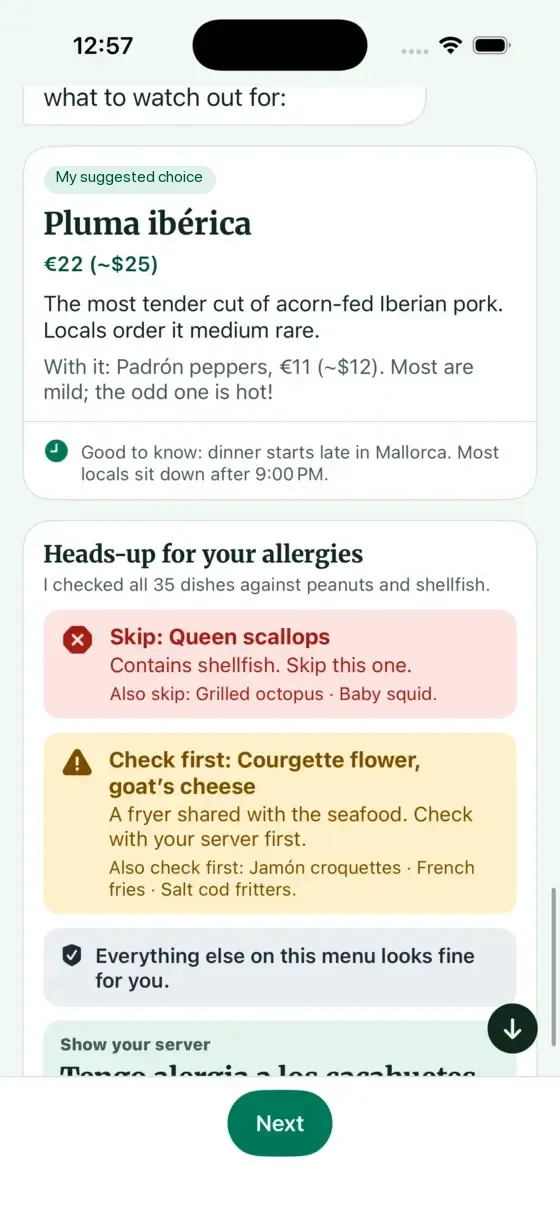
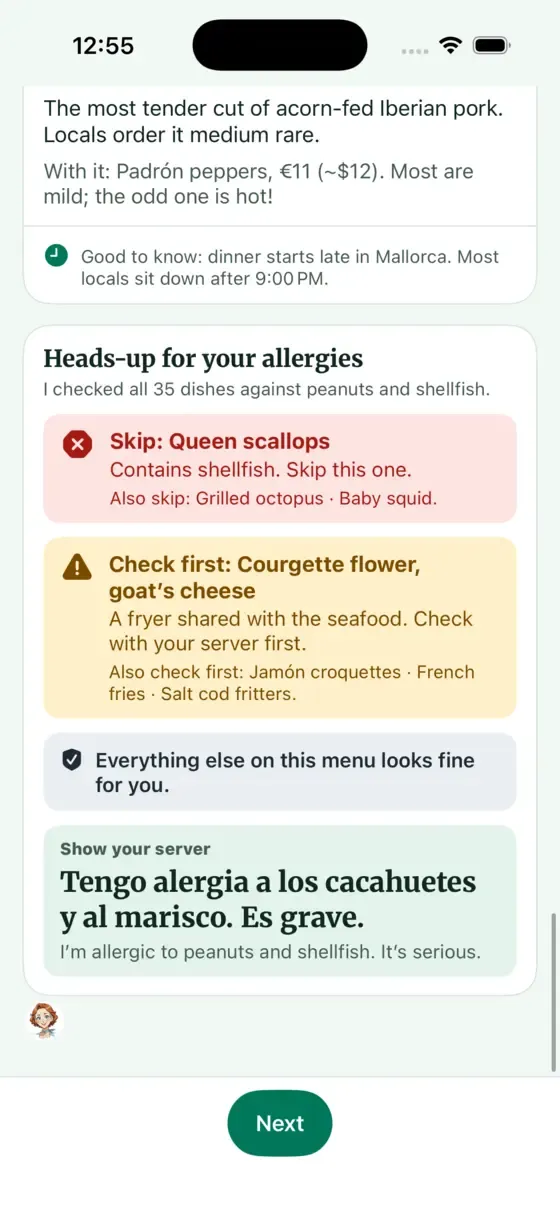
Because Lucy never stamps a bare dish name Safe without a full ingredient list, she flags suspicious soups, sauces, and ancient grains honestly and generates a full-screen Italian Show-your-server card written specifically for the dish you want to order. Snap up to 4 photos in one turn — say, two pages of a trattoria menu plus the allergen chart at the back — or photograph the tiny ingredient block on an Italian grocery packet when shopping at Conad or a local farmacia.
Two honest caveats for Italian travel: Ask Lucy needs Wi-Fi or mobile data to generate answers (photos snapped inside a vaulted stone basement queue automatically in her Offline outbox and send once signal returns), and she is photo + text chat rather than live spoken interpreting. Pack a laminated Italian celiac backup card (see our Food Allergy Translation Cards Guide), pre-download Italian offline packs in Apple Translate or Google Translate for dead zones, and use Conversation mode in Apple or Google Translate if you ever need a rapid spoken back-and-forth with a chef. No app can inspect a kitchen behind swinging doors — combine clear checks, AIC spots, and direct confirmation so you can focus on enjoying Italy’s food rather than fearing it.
Cards to say or show
Tap any Italian celiac card to display it full screen for your waiter, pizzaiolo, or gelateria clerk.
Watch out for
- Farro and Kamut are ancient wheats — NOT gluten-free: Tuscan farro soups (zuppa di farro) and artisanal breads labeled 'grani antichi' contain full wheat gluten.
- Caffè d'orzo is pure barley: a wildly popular caffeine-free coffee alternative at Italian bars, brewed from roasted barley (orzo) and strictly unsafe for celiac travelers.
- Wood-fired pizza ovens carry flying flour dust: even if a pizzeria offers gluten-free dough (impasto senza glutine), confirm whether it bakes in a dedicated electric oven or sealed tray rather than directly on a wheat-dusted stone deck.
- Gelato scoops cross-contaminate in seconds: dipping the same spatula from biscuit or tiramisù tubs into pistachio or chocolate ruins a naturally gluten-free flavor — always ask for a clean spatula from an untouched tub, and skip the little decorative wafer (cialda).
- Breadcrumbs hide in classic secondi: meatballs (polpette), breaded cutlets (cotoletta), stuffed vegetables, and some regional parmigiana recipes use pane grattugiato (wheat breadcrumbs), while fryers for fritto misto are almost always shared.
Common questions
Is Italy really one of the best countries in the world for celiac travel?
Yes. Italy has high clinical awareness of celiac disease (celiachia), mandatory EU 14 allergen disclosure across restaurants and packaged goods, and the AIC (Associazione Italiana Celiachia) Alimentazione Fuori Casa network of thousands of audited restaurants, pizzerias, gelaterias, and hotels trained specifically on cross-contact.
Should I say 'senza glutine' or 'sono celiaco/a' in Italian restaurants?
Always lead with 'Sono celiaco' (for men) or 'Sono celiaca' (for women). 'Senza glutine' describes food, whereas 'celiaco/a' signals a medical autoimmune condition and immediately alerts Italian staff to separate boiling pots, clean utensils, and oven cross-contact.
Can I eat risotto and polenta safely in Italy with celiac disease?
Often yes, because rice and cornmeal are naturally gluten-free — but never assume automatically. Confirm that the risotto stock (brodo) does not use a gluten-containing bouillon cube, that no flour was used to thicken a braised meat sauce served over polenta, and that the kitchen avoided wheat cross-contact.
Where can I buy certified gluten-free groceries in Italy?
Every major supermarket (Esselunga, Coop, Conad, Carrefour, Pam) has a dedicated 'Senza Glutine' section, and nearly every neighborhood pharmacy (farmacia) carries certified gluten-free bread, pasta, crackers, and cookies stamped with the crossed-grain Spiga Barrata symbol.
Does Ask Lucy work inside thick-walled Italian trattorias with poor cell signal?
Ask Lucy needs Wi-Fi or mobile data on iPhone and iPad to generate new answers; photos you snap offline queue in her Offline outbox and send automatically once signal returns. For stone-walled cellars or hill-town alleys with zero reception, keep a laminated Italian celiac card in your wallet and pre-download an Italian pack in Apple Translate or Google Translate.