Allergies & Diets · Japan
Japan Food Allergy & Celiac Guide: Hidden Dashi, Kanji Labels & Server Cards
Last updated
Eating safely in Japan with food allergies or celiac disease comes down to two things — knowing the hidden ingredients (dashi, soy sauce, soba water) and handing your server a crystal-clear Japanese card before you sit down.

On this page (10 sections)
What allergic and celiac travelers must know in Japan
Japan enforces strict allergen labeling on packaged food (9 mandatory allergens as of April 2026: wheat, egg, milk, peanut, buckwheat, shrimp, crab, walnut, and cashew, with cashew labels phasing in through March 2028), yet restaurant kitchens rely heavily on hidden fish stock (dashi) and wheat-based soy sauce (shoyu), and rarely customize set sauces. Always carry a clear Japanese server card and read full ingredient lists, not just summary boxes.
- Mandatory package labels (9)
- Wheat, egg, milk, peanut, buckwheat (soba), shrimp, crab, walnut, cashew (phasing in Apr 2026 – Mar 2028)
- Recommended package labels (20)
- Soy, sesame, almond, macadamia, pistachio, salmon, mackerel, salmon roe, abalone, squid, pork, beef, chicken, etc. (bonito & bivalves are NOT listed!)
- Biggest hidden traps
- Bonito/kelp dashi broth, wheat-fermented soy sauce (shoyu), shared soba/udon pots
- Safest quick backup
- Plain salt onigiri (塩おにぎり), fresh fruit, plain yakitori (shio) at verified spots, self-cooked groceries
How it actually works on the spot
-
Show your Japanese allergy card BEFORE ordering
In Japan, servers take safety seriously — if a kitchen cannot guarantee a safe dish (especially for celiac or severe nut/shellfish allergies), they will politely tell you up front rather than improvise. Showing your card early saves everyone stress.
-
Check the full ingredient list on konbini & supermarket backs
Packaged foods at 7-Eleven, Lawson, and FamilyMart declare Japan's mandatory allergens clearly, though older packages on shelves may still be transitioning cashew labels through March 2028 — and bonito fish stock or clams/oysters are not on either allergen summary list. Snap the full back panel with Ask Lucy to read every kanji ingredient line.
-
Ask about broths, marinades, and shared oil
A dish that looks like plain grilled fish or steamed vegetables may have been brushed with soy sauce (wheat) or simmered in bonito dashi (fish). Always check the invisible liquid, not just the headline ingredient.
Why Japan Is Both Easier and Trickier for Food Allergies
Ask ten travelers with celiac disease or severe allergies about Japan and you will hear two wildly opposite stories — and both are true.
The easier part: Japanese packaged food labeling is among the clearest in the world. Flip over an onigiri rice ball at 7-Eleven or a box of snacks at Don Quijote and the label systematically calls out mandatory allergens with remarkable precision.
The trickier part: Japanese restaurant cooking is built on invisible flavor foundations — mainly dashi (usually bonito fish + kelp broth) and shoyu (soy sauce fermented with wheat) — that quietly live inside dishes where Western diners would never suspect them.
The Essential Japanese Allergen Kanji Cheat Sheet
Screenshot this table or keep Ask Lucy on your Lock Screen to scan any back-of-pack label (especially アレルゲン / 原材料名, “Ingredients”):
| Allergen | Japanese to spot | Reading | Where it hides in Japan |
|---|---|---|---|
| Wheat / Gluten | 小麦 (mandatory) | komugi | Regular soy sauce (shoyu), ramen, udon, tempura, panko, miso (barley miso), curry roux, teriyaki/unagi glazes |
| Soy | 大豆 | daizu | Soy sauce, tofu, miso, edamame, natto, many snack oils and dressings |
| Egg | 卵 (mandatory) | tamago | Japanese mayo (Kewpie — used generously!), ramen noodles (often), okonomiyaki, tonkatsu breading, custard pastries |
| Milk / Dairy | 乳 / 乳成分 (mandatory) | nyū / nyūseibun | Bakery breads (shokupan milk bread), Japanese curry blocks, cream stews, matcha lattes, soft-serve desserts |
| Peanut | 落花生 / ピーナッツ (mandatory) | rakkasei / pīnattsu | Okinawan jimami tofu (made from peanuts, not soy!), tantanmen broth, some sesame dressings, traditional rice crackers |
| Walnut, Cashew & Tree Nuts | くるみ / カシューナッツ (mandatory*), アーモンド / マカダミアナッツ / ピスタチオ | kurumi, kashū nattsu, āmondo, makadamia nattsu, pisutachio | Bakery pastries, walnut soba dipping sauce (kurumi-dare), granola, curries, specialty chocolates (*cashew transition through Mar 2028) |
| Buckwheat | そば (mandatory) | soba | Soba noodles, soba tea (sobacha), shared noodle-boiling water in casual shops |
| Shrimp & Crab | えび / かに (mandatory) | ebi / kani | Tempura fryers, okonomiyaki/takoyaki batter, dashi variations, dried shrimp (sakura ebi) in fried rice & snacks |
| Fish / Bonito | 魚 / かつお / だし | sakana / katsuo / dashi | Miso soup, dipping sauces (mentsuyu), rolled omelet (tamagoyaki), agedashi tofu, savory rice seasoning (furikake) |
| Sesame | ごま | goma | Salad dressings (goma-dare), chili oil (rayu), ramen toppings, pickles, rice crackers |
The 4 Sneakiest Allergen Traps in Japan
- Okinawan jimami tofu is peanut tofu. It looks and wobbles just like soy tofu, yet it is made primarily from peanuts. A literal translator that just says “jimami tofu” will never save a peanut-allergic traveler — this is the textbook reason dish-level allergen checking matters.
- Regular shoyu is half wheat. Even at an upscale sushi counter, standard soy sauce is brewed with wheat. Celiac travelers often pack small single-serve travel packets of certified gluten-free tamari (and still confirm the sushi rice vinegar).
- “Vegetable” broth is rarely vegetarian or fish-free. Unless a restaurant explicitly states kombu dashi (pure kelp) or vegan/shojin ryori preparation, assume clear broths, simmered vegetables (nimono), and dipping sauces contain bonito fish flakes (katsuobushi).
- Shared fryers and noodle boilers. Casual noodle counters frequently boil wheat udon and buckwheat soba in the same water, and tempura spots fry shrimp and vegetables in the same oil. Always ask before ordering.
How to Use Ask Lucy Safely Across Japan
Save your exact allergies and Severity (mild, moderate, or severe) in your Ask Lucy Profile once before your flight (health info requires explicit one-tap Health consent and is never passively guessed from chats).
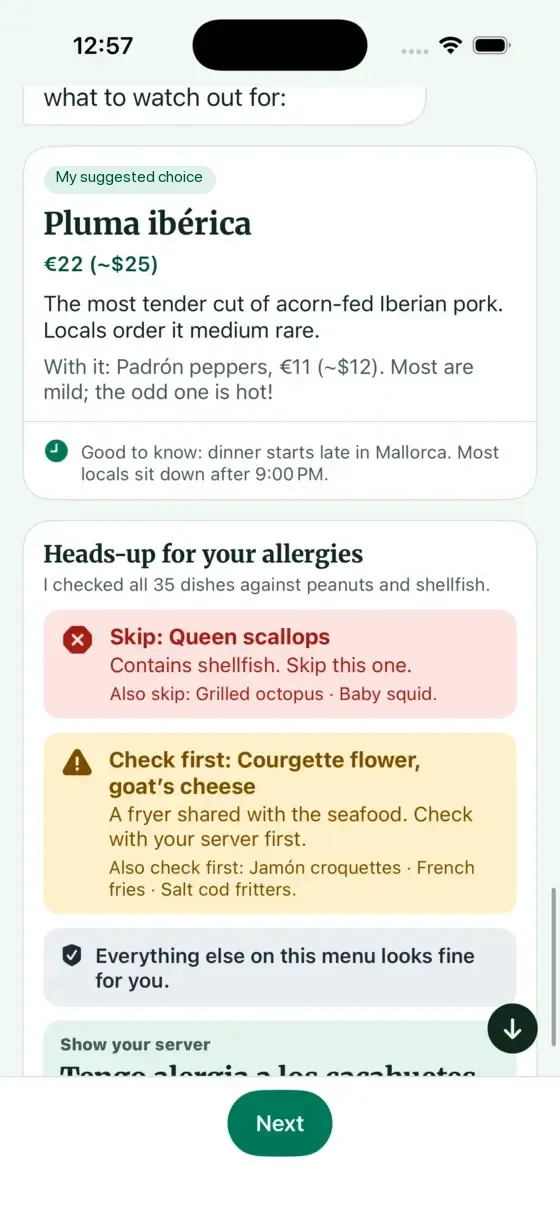
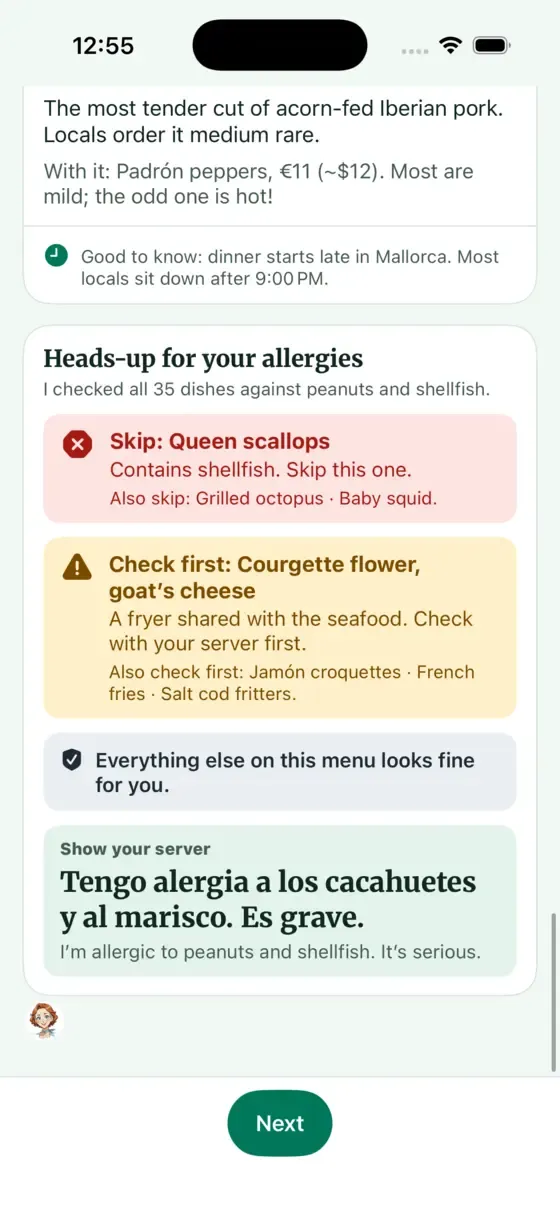
At a restaurant or convenience store, snap up to 4 photos — the printed menu, daily chalkboard, or back of a snack package. Lucy checks every item with explicit four-state Safety verdicts (Safe, Caution, Unsafe, or Unknown — never marking an unchecked item Safe) and writes a full-screen Japanese Show-your-server card tailored to the dish in front of you. Pair that with a pre-downloaded Apple or Google Translate offline pack for subway basements where signal drops, and always confirm severe allergies directly with the staff.
Cards to say or show
Tap any card to show it full screen to your waiter, chef, or bakery clerk.
Watch out for
- Soy sauce (醤油 / shoyu) almost always contains wheat: celiac and wheat-allergic travelers need gluten-free tamari (たまり醤油 — check the label!) because regular Japanese soy sauce is brewed with ~50% wheat.
- Generic fish and bivalve shellfish are NOT on Japan's allergen summary list: only shrimp, crab (mandatory), and salmon, mackerel, salmon roe, abalone, and squid (recommended) appear in allergen boxes. Bonito (katsuobushi in dashi), tuna, clams, oysters, and scallops must be checked in the full ingredient text.
- Soba noodles are buckwheat (そば): a mandatory labeled allergen in Japan, and many noodle shops boil udon and soba in the same pot — huge cross-contact risk for buckwheat or wheat allergies.
- Watch the cashew transition window: cashews (カシューナッツ) became Japan's 9th mandatory allergen in April 2026, but manufacturers have until March 31, 2028 to update packaging — and almonds, macadamias, and pistachios stay on the recommended list. Always scan the full ingredient panel.
- Expect honest refusals rather than risky substitutions: if a Japanese restaurant says 'Muzukashii desu' (it is difficult), thank them and move on — they are protecting you because their kitchen cannot prevent cross-contact.
Common questions
What are Japan's mandatory labeled food allergens?
Under Japan's Consumer Affairs Agency labeling standard (updated April 1, 2026), packaged foods must declare 9 specific allergens: wheat (小麦), egg (卵), milk (乳), peanut (落花生), buckwheat/soba (そば), shrimp (えび), crab (かに), walnut (くるみ), and cashew (カシューナッツ, with a manufacturer packaging transition through March 31, 2028). Another 20 allergens — including soy, sesame, almond, macadamia, pistachio, salmon, mackerel, salmon roe, abalone, and squid — are recommended for labeling.
Is sushi automatically gluten-free in Japan?
Not automatically. While plain fish and rice contain no wheat, sushi vinegar sometimes includes grain vinegar or seasonings, imitation crab (kanikama) and eel sauce (unagi tare) contain wheat, and standard soy sauce is brewed with wheat. Bring travel packets of certified gluten-free tamari and confirm vinegar ingredients.
Does Japanese convenience store (konbini) food clearly list allergens?
Yes — 7-Eleven, Lawson, and FamilyMart packages have standardized ingredient panels on the back listing mandatory allergens right in the text or in a neat Allergen box (アレルゲン). Photograph the back panel with Ask Lucy to decode every kanji line in seconds.
Will Japanese restaurants swap ingredients if I ask?
Usually less flexibly than in the US, UK, or Australia. Many Japanese broths and marinades are pre-made in big batches hours before service, so kitchens cannot simply 'leave out the soy sauce.' Research a few dedicated allergy-friendly or gluten-free Tokyo/Kyoto spots ahead of time and use Ask Lucy to verify everyday menus and snacks on the go.