Allergies & Diets · Japan
Halal Food Travel Guide to Japan: Hidden Mirin, Pork Broth & Japanese Cards
Last updated
Halal wagyu yakiniku and halal ramen are thriving across Tokyo, Osaka, and Kyoto — yet outside certified kitchens, mirin rice wine, cooking sake, pork-bone broth, and animal gelatin hide in everyday Japanese dishes. Here is how to read labels, navigate alcohol nuances, and eat halal confidently in Japan.

On this page (10 sections)
- In short
- How it works
- Why Halal Travel in Japan Is Easier Than Ever — Once You Know the Invisible Kanji
- The Halal Kanji Cheat Sheet: Five Hidden Traps on Japanese Menus & Labels
- Navigating Halal Dining in Tokyo, Osaka & Kyoto
- How to Set Up Ask Lucy Accurately for Halal Travel in Japan
- Cards to show
- Watch out for
- Common questions
- Use Lucy on the spot
What halal travelers need to know before eating in Japan
Japan's major cities now offer abundant halal-certified restaurants (especially in Asakusa, Shinjuku, Ueno, Namba, and central Kyoto), yet standard Japanese sauces, broths, and convenience-store snacks routinely hide five non-halal ingredients: mirin (sweet rice wine), ryorishu (cooking sake), added alcohol preservative (shusei), pork-bone tonkotsu broth or meat extracts, and animal gelatin, lard, or unlabeled shortening. Write your exact halal standard in Ask Lucy's Notes to Lucy (optionally pairing Diet: pescatarian or vegetarian outside halal spots), scan full 原材料名 ingredient panels, and show clear Japanese cards before ordering.
- Hidden alcohol terms
- みりん (mirin), 料理酒 (ryōrishu cooking sake), 酒精 (shusei preservative), 洋酒 (liquor)
- Hidden pork & animal terms
- 豚骨 (tonkotsu pork broth), ポークエキス (pork extract), ラード (lard), ゼラチン (gelatin)
- Key halal hubs in Japan
- Tokyo (Asakusa, Ueno, Shinjuku, Shibuya) · Osaka (Namba, Dotonbori) · Kyoto (Station, Gion)
- Best Ask Lucy setup
- Save your exact Halal rules in Notes to Lucy (plus optional pescatarian/vegetarian Diet outside halal venues)
How it actually works on the spot
-
Distinguish Halal-Certified vs. Muslim-Friendly vs. Seafood/Plant-Based spots
In Japan, 'Halal-Certified' venues (audited by bodies like JHA, NAHA, JMA, or MPJA) run dedicated pork- and alcohol-free kitchens with halal meat. 'Muslim-Friendly' spots offer pork-free or halal-meat dishes but may still serve alcohol or non-halal plates in the same restaurant — check which level matches your personal practice before booking.
-
Spot the five invisible ingredients hiding in everyday Japanese food
Even dishes that look purely fish or vegetable often pack mirin (sweet rice wine), ryorishu (cooking sake), tonkotsu (pork-bone broth), meat extracts (ポーク/チキンエキス), or pork-derived gelatin and lard. Always check sauces, broths, and glazes — never assume grilled fish or miso ramen is automatically clear.
-
Scan the entire 原材料名 ingredient paragraph on konbini & Don Quijote snacks
Japan's allergen summary boxes do not flag alcohol, mirin, lard, or unlabeled shortening, and meat/gelatin are only on the voluntary recommended list. Flip every package over and snap up to 4 photos of the front and 原材料名 panel in Ask Lucy so every kanji line is translated cleanly.
-
Present a clear Japanese card before ordering at non-halal-certified spots
Japanese kitchens prep marinades and broths hours ahead of service. Showing your Japanese card immediately lets staff confirm whether plain salt-grilled fish (shioyaki), steamed rice, or alcohol-free vegetable dishes are genuinely possible — or politely let you know if the kitchen uses mirin or pork broth everywhere.
Why Halal Travel in Japan Is Easier Than Ever — Once You Know the Invisible Kanji
Ten years ago, eating halal in Japan meant subsisting on salted rice balls and praying over mystery bowls of noodles. Today, you can sit down in Tokyo’s Asakusa, Osaka’s Dotonbori, or central Kyoto for sizzling halal-certified wagyu yakiniku, rich halal chicken-broth ramen, crisp halal tempura, and halal okonomiyaki.
The challenge starts the moment you step outside halal-certified restaurants — browsing a 7-Eleven shelf at midnight, picking souvenir snacks at Don Quijote, or walking into a seaside grilled-fish spot in Kamakura or Hakone. Japanese cuisine weaves sweet rice wine (mirin), cooking sake (ryōrishu), pork broth, and pork-derived gelatin into places where most visitors would never think to look.
The Halal Kanji Cheat Sheet: Five Hidden Traps on Japanese Menus & Labels
Memorize — or scan with Ask Lucy — these exact terms inside any package’s 原材料名 (genzairyōmei, Ingredients) block (see our full How to Read Japanese Food Labels Guide for date stamps and 2026 allergen rules):
| Japanese to spot | Reading | What it actually is | Where it hides |
|---|---|---|---|
| みりん / 本みりん / みりん風調味料 | mirin / hon-mirin / mirin-fū | Sweet rice wine (~14% ABV) / mirin-style seasoning (under 1% ABV) | Teriyaki glazes, soba/udon mentsuyu, simmered veggies, tamagoyaki, unagi sauce |
| 料理酒 / 清酒 / 酒 | ryōrishu / seishu / sake | Cooking sake / rice wine | Marinades, steamed fish, hot pots, savory onigiri fillings, ramen tare |
| 酒精 / 洋酒 / リキュール | shusei / yōshu / rikyūru | Added ethyl alcohol preservative / Western liquor | Soft sponge cakes, packaged fresh noodles, miso packs, chocolates, wagashi |
| 醤油 / しょうゆ | shōyu | Japanese soy sauce | Naturally brewed shoyu holds ~1.5–2.5% natural fermentation ethanol; some brands add extra 酒精 — halal spots use certified zero-alcohol shoyu |
| 豚肉 / 豚骨 / ポークエキス | butaniku / tonkotsu / pōku ekisu | Pork / pork-bone broth / pork extract | Ramen soups (even “miso” or “shoyu” ramen!), gyoza, curry roux, potato chips, instant noodles |
| 牛肉 / 鶏肉 / チキン・ビーフエキス | gyūniku / toriniku / chikin-bīfu ekisu | Non-halal beef / chicken / meat extracts | Standard Japanese restaurants (non-zabiha unless certified), cup soups, crackers, curry blocks |
| ゼラチン / ラード / 動物性油脂 | zerachin / rādo / dōbutsusei yushi | Gelatin (often pork) / pork lard / animal fat | Gummies, konbini puddings, cheesecakes, marshmallows, fried snacks, ramen oil |
| ショートニング / マーガリン / 乳化剤 | shōtoningu / māgarin / nyūkazai | Shortening / margarine / emulsifiers | Japanese bakery bread (shokupan), melonpan, biscuits (labels rarely state plant vs. animal origin!) |
Navigating Halal Dining in Tokyo, Osaka & Kyoto
Before walking into a restaurant, check which tier it operates under:
- Halal-Certified (
ハラル認証): Audited by recognized organizations such as the Japan Halal Association (JHA), Nippon Asia Halal Association (NAHA), Japan Muslim Association (JMA), or Muslim Professional Japan Association (MPJA). Dedicated halal meat supply, zero pork, zero alcohol in cooking, and clean prep standards. - Muslim-Friendly (
ムスリムフレンドリー): Offers pork-free or halal-meat menu sections, yet the same dining room may still serve alcohol or non-halal dishes to other tables. Ask staff clearly about shared grills, fryers, and cookware if strict separation matters to you. - City highlights to plan around:
- Tokyo: Asakusa is Japan’s unofficial halal dining capital (halal ramen, halal wagyu yakiniku, halal sushi, halal tempura, and halal matcha sweets within walking distance of Senso-ji), alongside rich clusters around Ueno / Okachimachi (near Assalaam Mosque and halal spice/meat shops), Shinjuku, Shibuya, and upscale halal kaiseki/wagyu counters in Ginza (book ahead!).
- Osaka: Namba, Dotonbori, and Shinsaibashi host halal-certified okonomiyaki, takoyaki, halal ramen, and halal wagyu BBQ, plus halal grocers near Osaka Masjid.
- Kyoto: Look near Kyoto Station, Gion, and Higashiyama for halal Kyoto-style ramen, halal shabu-shabu, and bento — and if you try Buddhist shojin ryori (see our Vegan & Vegetarian Japan Guide), remember to confirm no mirin or cooking sake is used in the dipping sauces.
- Everyday backups: Plain salted onigiri (
塩おにぎり), fresh fruit, plain steamed edamame, plain shioyaki (fish grilled with pure sea salt only — confirm no mirin glaze or shared pork grill), and clearly marked halal frozen/pantry staples at Gyomu Super or specialty markets in Shin-Okubo and Ueno.
How to Set Up Ask Lucy Accurately for Halal Travel in Japan
Ask Lucy’s four built-in Diet presets on iPhone and iPad (iOS 26+) are vegetarian, vegan, pescatarian, and gluten free — there is not a separate Halal preset chip, so the cleanest way to make Lucy work hard for your trip is Notes to Lucy (“Anything Lucy should always know”, up to 2,000 characters, read with every turn!):
- Paste your exact Halal rules into Notes to Lucy (not Health data — no Health consent required), for example: “Halal traveler in Japan: no pork, lard, tonkotsu, animal gelatin, non-halal meat, mirin, cooking sake (ryorishu), or added alcohol (shusei). Flag ambiguous shortening or emulsifiers, note soy-sauce fermentation alcohol clearly so I can decide, and suggest salt-only seafood or plant-based options.”
- Optional tip outside halal-certified spots: Toggle Diet to
pescatarianorvegetarianwhen exploring rural towns so Lucy automatically steers you away from non-halal beef and chicken dishes while your Notes catch mirin and gelatin.
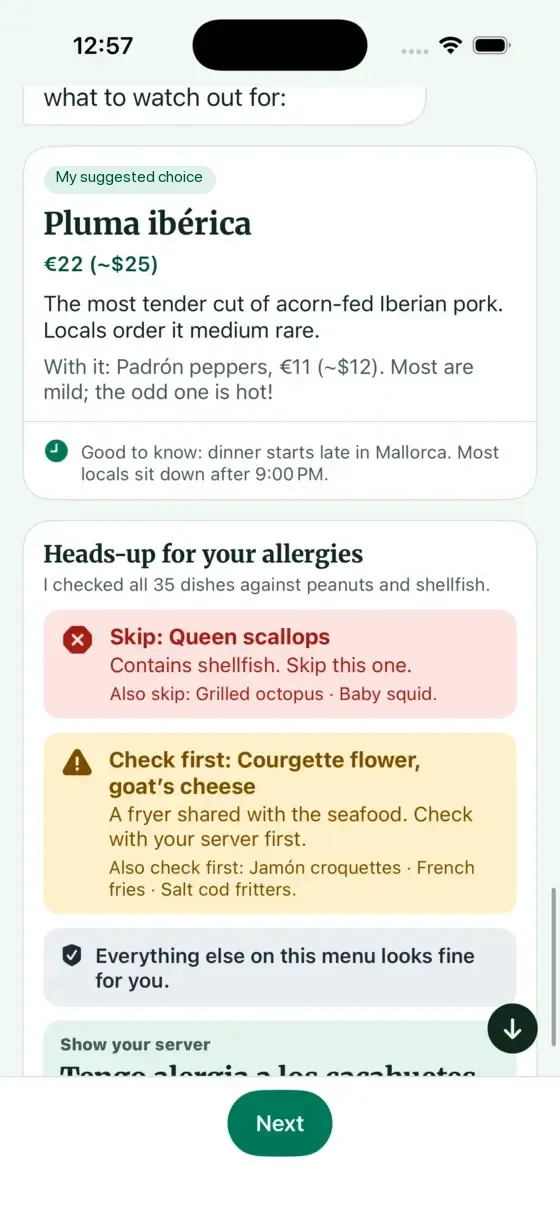
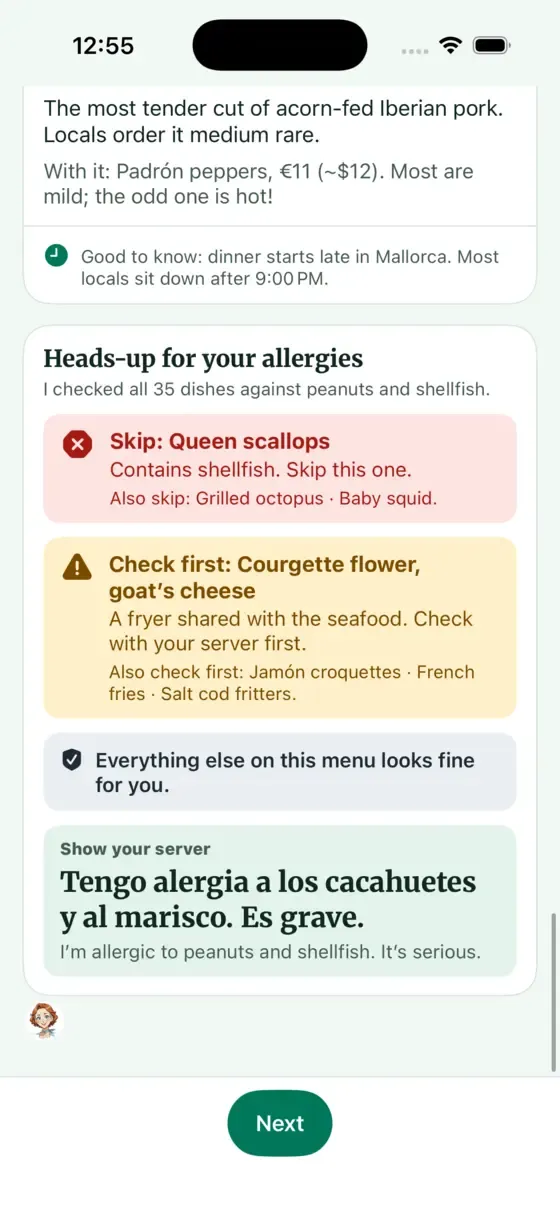
One transparent distinction: Notes to Lucy and Diet shape Lucy’s written replies, label explanations, and Japanese Show-your-server cards — they do not produce four-state Safety verdict cards. Safety verdicts (Safe, Caution, Unsafe, Unknown) run strictly for medical allergies saved behind explicit Health consent (add any food allergies there separately if you have them!).
Snap up to 4 photos in one turn at a bakery, Don Quijote shelf, or neighborhood seafood counter — front packaging plus the full tiny 原材料名 kanji paragraph. Lucy breaks down every alcohol, meat, and fat entry, shows Home-first yen prices ($1.95 (¥300)), and writes a polite Japanese Show-your-server card. Because Ask Lucy needs Wi-Fi or mobile data to reply (basement supermarket snaps wait in her Offline outbox until signal returns), download an offline Japanese pack in Apple Translate or Google Translate as backup, and pair her with sister app Let’s Tango whenever you need a live two-way spoken Japanese conversation with a chef.
Cards to say or show
Tap any Japanese halal card to display it full screen to your waiter, sushi chef, or bakery clerk.
Watch out for
- Never assume 'shoyu ramen' or 'miso ramen' is pork-free: countless Tokyo and Osaka ramen bowls labeled miso or soy-sauce still use a tonkotsu (pork-bone) or pork-chicken stock base — stick to verified halal ramen shops.
- Mirin and ryorishu hide in almost every savory Japanese glaze: teriyaki sauce, eel tare, soba dipping sauce (mentsuyu), simmered vegetables (nimono), and even sushi-rice vinegar mixes frequently contain mirin (sweet rice wine) or cooking sake.
- Understand soy-sauce fermentation alcohol vs. added alcohol (酒精): traditionally brewed Japanese shoyu naturally contains ~1.5–2.5% fermentation ethanol, and some commercial bottles add extra 酒精 (ethyl alcohol preservative). Muslim travelers differ by scholarly opinion on trace natural fermentation alcohol — halal-certified zero-alcohol shoyu is served at halal restaurants and sold at specialty markets.
- Japanese milk bread (shokupan), pastries, and gummies are hidden traps: convenience-store breads often list ショートニング (shortening) or 乳化剤 (emulsifiers) without specifying animal vs. plant origin, and chilled puddings/gummies routinely contain pork-derived ゼラチン (gelatin).
- Check Buddhist shojin ryori for mirin too: even strictly meat- and fish-free temple cuisine sometimes seasons simmered vegetables with mirin or sake — ask before assuming vegan automatically equals alcohol-free.
Common questions
Is it easy to find halal-certified food in Tokyo, Osaka, and Kyoto in 2026?
Yes — Japan's major cities have grown dramatically more Muslim-friendly. Tokyo (especially Asakusa, Ueno/Okachimachi, Shinjuku, Shibuya, and Ginza), Osaka (Namba, Dotonbori, Shinsaibashi), and Kyoto (near Kyoto Station and Gion) all offer halal-certified ramen, halal wagyu yakiniku, halal tempura, halal sushi, and halal bento, alongside prayer spaces at major airports and tourist hubs. Still book popular halal wagyu dinner spots in advance.
Does regular Japanese soy sauce (shoyu) contain alcohol?
Naturally brewed Japanese soy sauce develops roughly 1.5–2.5% alcohol during normal fermentation, and some mass-market brands also add extra ethyl alcohol (labeled 酒精, shusei) as a preservative. Because Muslim travelers follow differing scholarly views on naturally occurring fermentation alcohol versus added alcohol, halal-certified restaurants in Japan use certified zero-alcohol halal shoyu — and scanning the 原材料名 panel shows immediately whether extra 酒精 was added.
What is the difference between hon-mirin (本みりん) and mirin-fu (みりん風調味料)?
Hon-mirin (本みりん) is true sweet fermented rice wine containing roughly 14% alcohol by volume. Mirin-fu chomiryo (みりん風調味料, mirin-style seasoning) is a syrup-like substitute with under 1% alcohol (often trace fermentation alcohol). Many strict halal travelers avoid both, while halal-certified kitchens use certified alcohol-free sweetening glazes.
Does Ask Lucy have a Halal Diet chip, or how should I set it up?
Ask Lucy's four built-in Diet presets are vegetarian, vegan, pescatarian, and gluten free. For Halal travel, put your exact rules into Notes to Lucy ('Anything Lucy should always know', up to 2,000 characters — read with every turn!), specifying your stance on pork, non-halal meat, mirin/ryorishu, soy-sauce fermentation alcohol, gelatin, and unlabeled shortening. Outside halal-certified restaurants, you can also toggle Diet to pescatarian or vegetarian. Note that Notes to Lucy and Diet shape Lucy's written replies and Show-your-server cards without producing Safety verdict cards (which are strictly for saved medical allergies behind Health consent).
Can Ask Lucy handle a live spoken conversation with a Japanese restaurant chef?
Ask Lucy is photo + text chat rather than live two-way spoken interpreting. Use Ask Lucy to scan kanji menus, back-of-pack labels, and display full-screen Japanese Show-your-server cards — and whenever you need a live back-and-forth spoken Japanese conversation with a chef or hotel concierge, pair her with sister app Let's Tango (lets-tango.com).