Cruise & Port Days
Cruise Food Allergies on Shore Excursions: Port Lunches, Cards & Offline Backup
Last updated
Your cruise ship's dining room knows your allergies by heart — until you step down the gangway into Naples, Cozumel, or Santorini with six hours before all-aboard. Here is how to eat safely ashore without missing the ship or risking a reaction.

On this page (11 sections)
- In short
- How it works
- Why Port Days Are the Hardest Part of Cruising With Food Allergies
- Your Pre-Sail Allergy Checklist (Do This Before Leaving Home Wi-Fi)
- Shore Excursion Lunches vs. Independent Port Dining
- Carrying Emergency Medication Ashore: Four Non-Negotiable Rules
- How to Use Ask Lucy Safely at the Harbor Table
- Cards to show
- Watch out for
- Common questions
- Use Lucy on the spot
How to handle food allergies on cruise port days
Save every allergy and its Severity in your Ask Lucy Profile (behind Health consent) before embarkation while you have strong Wi-Fi, pack two epinephrine auto-injectors plus laminated local-language cards in your daypack, and skip rushed tour-bus buffets in favor of sit-down restaurants with written allergen charts or pre-vetted spots. Snap up to 4 photos of harbor chalkboards and menus for four-state Safety verdicts, display full-screen Show-your-server cards, and pair Lucy's Offline outbox with downloaded Apple or Google Translate packs for patchy pier signal.
- Highest-risk port meal
- Pre-paid shore-excursion buffets — shared serving spoons, rushed timing & missing ingredient lists
- Emergency kit ashore
- 2 epinephrine auto-injectors (kept cool out of sun), antihistamines, prescription copy & ship port-agent number
- Food off the ship rule
- Most ports ban fresh fruit, sandwiches, or open ship buffet food ashore — only factory-sealed snacks where customs allows
- Best connectivity backup
- Ask Lucy (Offline outbox queues snaps when roaming lags) + laminated local cards + offline Apple/Google Translate packs
How it actually works on the spot
-
Set up your Ask Lucy Profile and backups BEFORE embarkation
Ship Wi-Fi can be slow or pricey, and roaming can lag the minute you step off the pier. Before sailing, save every allergy and its Severity (mild, moderate, or severe) behind one-tap Health consent in your Ask Lucy Profile, write any cross-contact details in Notes to Lucy, download offline packs in Apple Translate or Google Translate for every port language, and print laminated backup cards.
-
Pack emergency meds and the port agent's phone number every morning
Never leave epinephrine auto-injectors locked in your cabin safe on a port day — and never leave them roasting on a tour-bus dashboard. Carry two auto-injectors in a small insulated pouch, plus a photo of the ship's daily newsletter showing the local port agent's emergency number (snap it in Ask Lucy to pull a one-tap Call button on a Details card).
-
Eat a safe anchor breakfast onboard and skip mystery tour buffets
Let the ship's allergy kitchen handle a hearty breakfast before you disembark so you never walk ashore starving and tempted to gamble on a street stall. If you book a shore excursion with an 'included local buffet,' ask ahead whether plated allergy meals exist — if not, skip the steam trays and bring permitted factory-sealed snacks from home.
-
Snap harbor chalkboards and show a full-screen local card before ordering
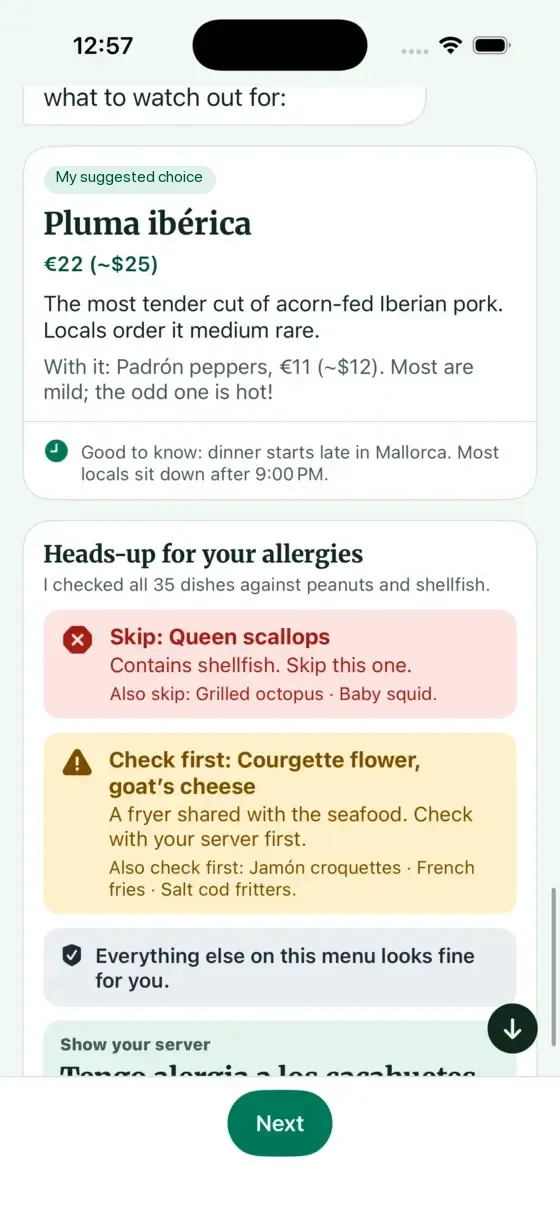
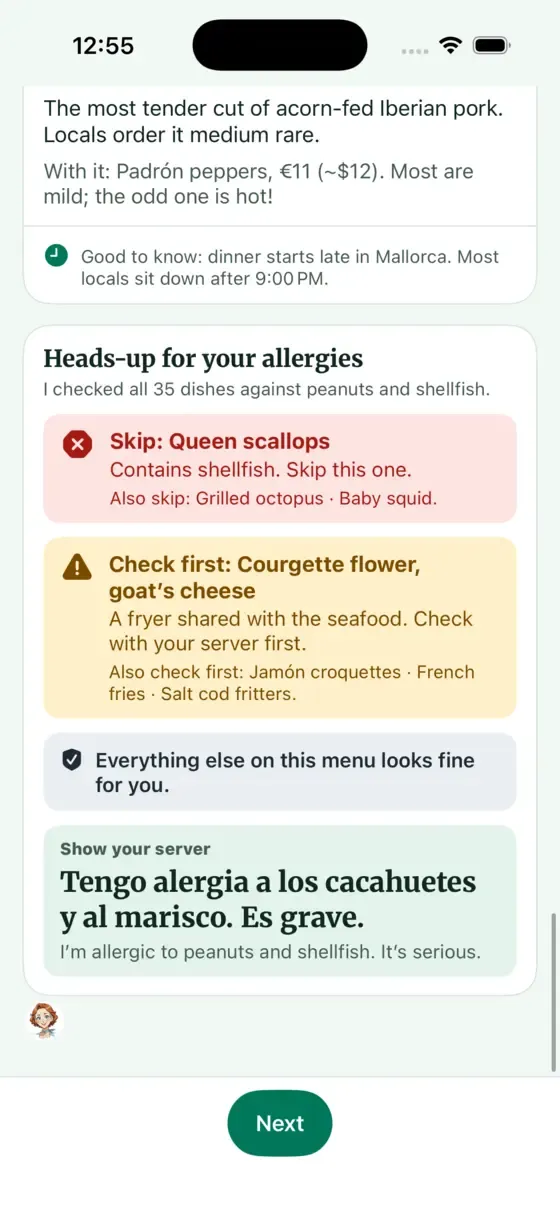
When you pick an independent port restaurant, shoot up to 4 photos in one turn with Ask Lucy — chalkboard specials, printed menu, and allergen legend (mandatory across EU ports). Review her four-state Safety verdicts, then tap her full-screen Show-your-server card in the local language to confirm shared fryers, oils, and boiling pots directly with staff.
Why Port Days Are the Hardest Part of Cruising With Food Allergies
Cruising is rightly famous as one of the easiest ways to travel with celiac disease or severe food allergies — while you are onboard. Major lines let you pre-order dinner the night before, assign a headwaiter to check every plate, and cook gluten- or allergen-free meals on dedicated prep lines (see our breakdown of the best cruise lines for food allergies).
Then the gangway drops at 8:00 AM in Naples, Cozumel, Marseille, or Piraeus, and that whole carefully controlled system stays behind on Deck 4. Suddenly you are navigating a new language, unfamiliar regional sauces, patchy port roaming, and a hard all-aboard deadline that leaves zero patience for a slow kitchen check.
The goal on shore days is never to stay trapped on the ship — it is to build a five-minute pre-sail routine so port lunches feel calm, informed, and genuinely enjoyable.
Your Pre-Sail Allergy Checklist (Do This Before Leaving Home Wi-Fi)
Do not wait until you are sailing through choppy sea-day satellite Wi-Fi to configure your phone. Tick off these five steps before embarkation:
- Save your allergies in Ask Lucy’s Profile (iPhone & iPad, iOS 26+). Open Settings in Ask Lucy, grant one-tap Health consent, and enter every allergen with its Severity (
mild,moderate, orsevere). Add any cross-contact or regional rules to Notes to Lucy (up to 2,000 characters — read with every turn), and set Diet (vegetarian,vegan,pescatarian, orgluten free) if relevant. Remember: only saved allergies behind Health consent receive four-state Safety verdicts; Diet and Notes shape Lucy’s explanations. - Add Ask Lucy to your iPhone Lock Screen. Pulling out your phone outside a crowded harbor trattoria takes two seconds from the Lock Screen widget instead of digging through folders while your tour group walks ahead.
- Download offline language packs for every port on your itinerary. Because Ask Lucy needs Wi-Fi or mobile data to generate new answers, install offline packs in Apple Translate or Google Translate for every stop (Italian, Spanish, French, Greek, Croatian, Japanese, etc.) as your zero-signal safety net.
- Laminate wallet-sized local allergy cards. Paper needs zero battery and zero cellular bars, and a waiter can walk it straight into the kitchen (see our Food Allergy Translation Cards Guide for the five-part formula).
- Pack commercially sealed emergency snacks from home. Protein bars, nut-free crackers, or certified gluten-free oat packs in unopened factory wrappers give you a calm Plan B whenever a port village has no safe kitchen — just check each country’s agricultural rules before carrying snacks down the gangway.
Shore Excursion Lunches vs. Independent Port Dining
Not all port-day eating carries the same risk. Compare your four realistic options before clicking “Book Excursion”:
| Port-day dining strategy | Cross-contact risk | Time pressure | Best move for allergic cruisers |
|---|---|---|---|
| Group tour “included buffet” | High — shared tongs, unlabeled sauces, rushed staff | Very high (35–45 min slots) | Avoid for severe allergies; skip the buffet and eat sealed safe snacks or wait for the ship |
| Half-day tour + lunch back onboard | Lowest — ship allergy kitchen handles lunch | Low | Ideal for complex multiple allergies or ports with tricky regional ingredients |
| Pre-vetted independent restaurant | Moderate — controllable if you pick EU/certified spots | Manageable with 90-min buffer | Best way to taste real local food (e.g., AIC celiac spots in Italy or EU 14 allergen menus) |
| Harbor café / street snack stop | Variable — high fryer/oil & nut/sesame cross-contact | Flexible | Stick to sealed packaged goods with full ingredient panels (read back labels carefully!) |
Carrying Emergency Medication Ashore: Four Non-Negotiable Rules
- Always carry two doses of epinephrine. Never leave your backup auto-injector in your cabin safe while touring an island 45 minutes from the pier. Keep both injectors together in your daypack alongside any prescribed antihistamines or asthma inhalers.
- Protect injectors from Mediterranean & Caribbean heat. Direct sun on a beach towel or inside a parked excursion van can push temperatures past storage limits fast. Slip auto-injectors into a slim insulated pouch (not directly on ice packs — freezing ruins them too).
- Carry a printed medical summary & prescription copy. Keep your doctor’s letter and original pharmacy prescription label in a zip bag for port security scanners and local ER intake.
- Snap the ship’s port-agent sheet every morning. Every morning’s cruise newsletter lists the local Port Agent phone number and pier address. Snap a photo of that box with Ask Lucy — her Details card extracts a one-tap Call button and Apple Maps Directions back to the exact terminal gate.
How to Use Ask Lucy Safely at the Harbor Table
Walking down a cobbled port lane with six menus competing for your lunch hour? Here is the exact rhythm that keeps shore dining safe and gets you back before all-aboard:
- Shoot up to 4 photos in a single turn. Capture the outdoor chalkboard, both pages of the menu, and the EU 14 allergen legend (or packaged snack ingredient block) together. Lucy automatically flags Blurry or Too dark shots and pops up a Light button in dim stone taverns.
- Read the four-state Safety verdicts honestly. Lucy evaluates each dish against your saved Profile allergies as Safe, Caution, Unsafe, or Unknown. Skipped items or a bare dish name without a full ingredient list are never stamped
Safe— she tells you exactly which hidden broth, nut garnish, dairy glaze, or shared fryer to ask about. - Display the full-screen Show-your-server card. Tap Lucy’s local-language Show-your-server card and turn your iPhone toward your waiter before ordering, giving them polite permission to steer you away from dishes cooked in shared oil or boiling water.
- Let the Offline outbox catch roaming hiccups. Cellular roaming often drops for a minute when switching from ship maritime signal to shore towers or stepping inside vaulted European alleys. Snap your menu photos anyway — Lucy queues them in her Offline outbox and sends them automatically the second signal or restaurant Wi-Fi reconnects (snap a café’s Wi-Fi plaque in Lucy too for a one-tap Join Wi-Fi Details card!).
For rapid live two-way spoken back-and-forth with a chef or tour driver, remember Ask Lucy is photo + text chat rather than live voice interpreting — switch to Apple Translate or Google Translate Conversation mode (or sister app Let’s Tango on Japanese cruise stops!). And if you are cruising the Mediterranean next, pair this safety checklist with our Mediterranean Cruise Port Dining Guide so you dodge tourist traps and stay comfortably ahead of all-aboard.
Cards to say or show
Tap any port-ready allergy card to display it full screen to your waiter or tour guide across top Mediterranean and Caribbean cruise languages. Swap in your exact allergens — or let Ask Lucy generate a tailored Show-your-server card for the exact dish in front of you.
Watch out for
- Never gamble on excursion 'included buffets': tour buses routinely drop 150 cruisers at a highway restaurant with unlabeled steam trays, swapped serving spoons, and 40 minutes to eat — a textbook cross-contact minefield.
- Do not smuggle ship buffet food ashore: agricultural biosecurity fines are steep in places like Mexico, Australia, New Zealand, Japan, and many Caribbean and Mediterranean ports. Only pack unopened, commercially sealed snacks where local rules permit.
- Beware ship-time vs. shore-time clocks AND roaming handoffs: cellular data often stalls for 5–10 minutes right after switching off airplane mode at the gangway — keep laminated cards in your pocket so you are never stuck waiting for bars.
- Heat wrecks epinephrine fast: never leave an EpiPen inside a hot backpack on a Mediterranean beach or on a tour-bus seat — use a small insulated cooling pouch and check the viewing window before every trip.
- Know the nearest hospital AND your ship's port agent: if a severe reaction hits ashore, call local emergency services first (112 across the EU, 911 in Mexico/Caribbean/US/Canada, 119 in Japan) and alert the ship's port agent so the vessel knows what happened.
Common questions
Can I bring food from the cruise ship buffet ashore for my food allergies?
Usually no. Most countries strictly prohibit bringing fresh fruit, meats, dairy, sandwiches, or open restaurant/buffet food off cruise ships due to agricultural quarantine laws, with hefty on-the-spot fines. Commercially sealed, unopened factory snacks (like allergy-safe granola bars or crackers brought from home) are permitted in many ports, though strict destinations like Australia, New Zealand, and Chile restrict even packaged items — always read the port customs notice in your daily cruise newsletter.
How do cruise lines handle food allergies on ship-sponsored shore excursions?
Cruise ships excel inside their own onboard kitchens, yet shore excursions are operated by independent local tour companies. While you should notify the shore excursions desk in advance, local bus tours rarely guarantee cross-contact safety at group lunch stops. For severe allergies, book half-day tours that return to the ship for lunch, choose private/independent exploration where you pick the restaurant, or eat a big safe breakfast onboard.
Does Ask Lucy work if I don't buy the cruise ship Wi-Fi package?
Ask Lucy requires Wi-Fi or mobile data on iPhone and iPad to generate new answers — she does not run on-device offline translation. You do not need shipboard Wi-Fi if you have a port roaming plan, local travel eSIM, or café Wi-Fi ashore. If your signal drops momentarily on the pier or in a stone alley, photos snapped in Ask Lucy queue in her Offline outbox and send automatically once signal returns. Always pair Lucy with a laminated backup card and downloaded Apple or Google Translate offline packs for zero-signal moments.
What emergency numbers should allergic cruisers save before every port day?
Save two things before stepping down the gangway: (1) the local emergency ambulance number (112 across Europe and the UK, 911 in the US, Canada, Mexico, and much of the Caribbean, 119 in Japan, 000 in Australia), and (2) the local port agent phone number printed on your ship's daily itinerary. If an emergency occurs ashore, call local emergency services first, administer epinephrine immediately per your doctor's action plan, and have a companion alert the ship's port agent.
Why won't Ask Lucy mark a harbor chalkboard dish 'Safe' just from its name?
Because a chalkboard line like 'Grilled Chicken' or 'Vegetable Soup' never reveals whether the chef used wheat soy sauce, peanut oil, butter, or bonito fish stock behind the counter. Ask Lucy uses four-state Safety verdicts (Safe, Caution, Unsafe, Unknown) and never marks a dish Safe from its name alone without full ingredient confirmation — keeping you focused on the exact follow-up question your server needs to answer.