
Israel
Essential Hebrew Phrases for Travelers
Last updated March 29, 2026
Hebrew is a remarkable linguistic resurrection — an ancient language revived as a modern spoken language in the 20th century. Modern Hebrew uses the Hebrew alphabet (read right-to-left) and has sounds unfamiliar to English speakers, but travel Hebrew is quite approachable. Israelis are informal, direct, and generally appreciate visitors who attempt Hebrew, though they'll often switch to English to be helpful.
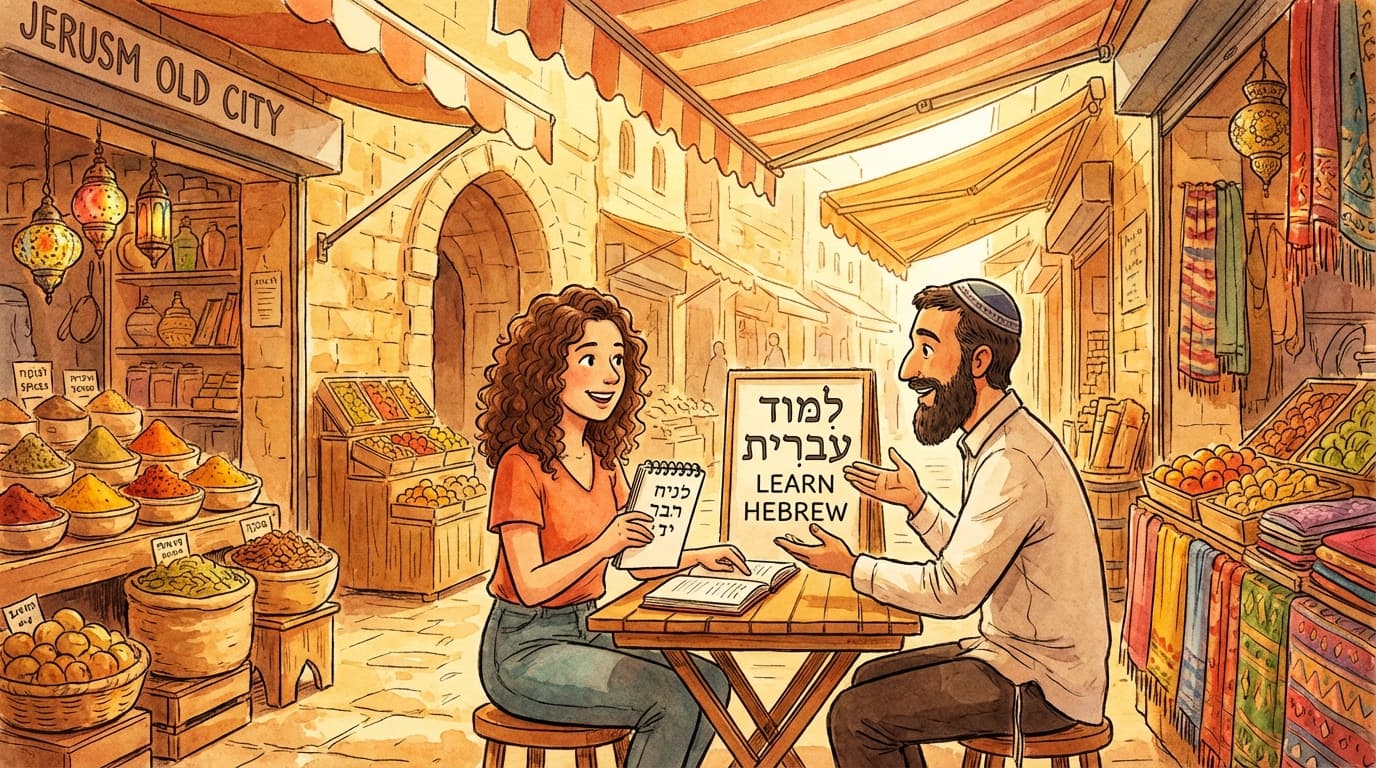
Why Learn Hebrew Phrases for Travel?
Israel is a multilingual society where English, Hebrew, and Arabic coexist, and most Israelis speak good English. But Hebrew phrases show cultural awareness and earn respect. More practically, Hebrew is essential for reading menus, street signs, and market stalls where English transliteration may be absent. A 'Shalom' and 'Toda' cost nothing and create warmth.
Hebrew Alphabet Basics
Hebrew reads right-to-left and consists of 22 consonant letters. Vowels are usually omitted in everyday writing (the reader infers them from context), which makes reading Hebrew challenging for beginners. For travel purposes, focus on spoken phrases rather than reading. The KH sound (like the CH in Scottish 'loch') appears frequently and is the most distinctive Hebrew sound for English speakers.
Israeli Food Culture
Israeli cuisine is a vibrant fusion of Middle Eastern, Mediterranean, and global influences. Hummus is practically a national obsession — every Israeli has a favourite hummus spot and will argue passionately about it. Falafel (in pita with salads and tahini), shakshuka (eggs poached in spicy tomato sauce), sabich (fried aubergine in pita), and fresh Israeli salad (finely chopped tomato and cucumber) are essential. The Machane Yehuda market in Jerusalem is a food paradise.
Essential Phrases
| Phrase | English | Pronunciation |
|---|---|---|
| Shalom | Hello / Goodbye / Peace | shah-LOHM |
| Boker tov | Good morning | BOH-ker tohv |
| Toda | Thank you | toh-DAH |
| Bevakasha | Please / You're welcome | beh-vah-kah-SHAH |
| Slicha | Excuse me / Sorry | slee-KHAH |
| Ken / Lo | Yes / No | ken / loh |
| Eifo...? | Where is...? | AY-foh |
| Kama ze ole? | How much does it cost? | KAH-mah zeh oh-LEH |
Dining & Restaurant Phrases
| Phrase | English | Pronunciation |
|---|---|---|
| Cheshbon, bevakasha | The bill, please | khesh-BOHN, beh-vah-kah-SHAH |
| Ta'im meod! | Very tasty! | tah-EEM meh-OHD |
| Bli charif | Without spicy | blee khah-REEF |
| Mayim, bevakasha | Water, please | MY-eem, beh-vah-kah-SHAH |
| Cafe hafuch | Latte (upside-down coffee) | kah-FEH hah-FOOKH |
| Be'te'avon! | Bon appetit! | beh-teh-ah-VOHN |
Emergency Phrases
| Phrase | English | Pronunciation |
|---|---|---|
| Hatzilu! | Help! (Save us!) | hah-TSEE-loo |
| Ani tsarich/tsricha rofe | I need a doctor (m/f) | ah-NEE tsah-REEKH / tsree-KHAH roh-FEH |
| Tikreu la'mishtara | Call the police | tik-REH-oo lah-mish-tah-RAH |
| Eifo beit ha'cholim? | Where is the hospital? | AY-foh bayt hah-khoh-LEEM |
Cultural Notes
- •Shabbat (Friday sunset to Saturday sunset) shuts down much of Israel. Most shops, restaurants, and public transport stop. Plan accordingly — stock up on Friday morning.
- •Israelis are famously direct — what might seem blunt in other cultures is just the Israeli communication style. Don't mistake directness for rudeness.
- •Security checks are thorough at airports and many public buildings. Be patient and cooperative — it's a fact of life in Israel.
- •The weekend in Israel is Friday-Saturday, not Saturday-Sunday. Sunday is a regular working/school day.