
UAE, Saudi Arabia, Qatar, Bahrain, Kuwait, Oman
Essential Arabic (Gulf) Phrases for Travelers
Last updated March 29, 2026
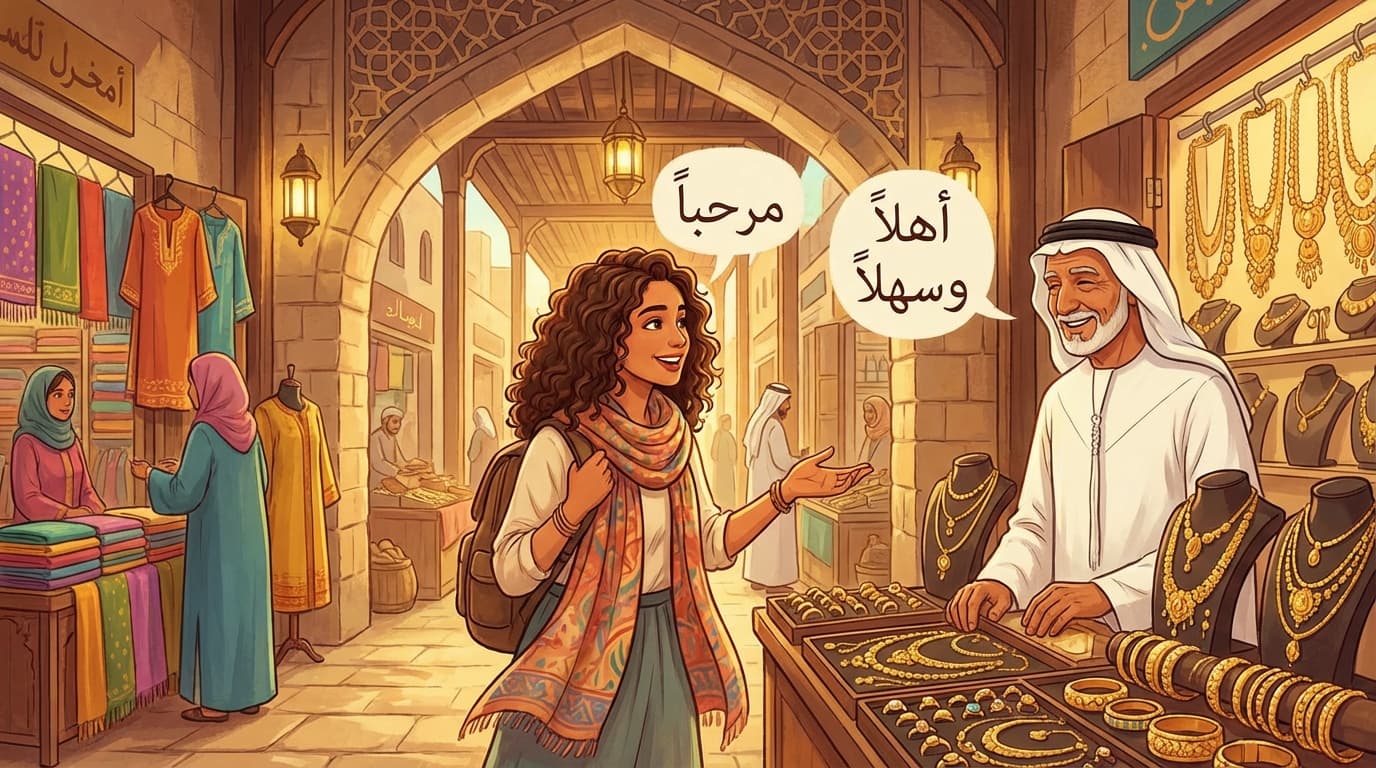
Gulf Arabic (Khaleeji) is the dialect spoken across the Arabian Peninsula — from Dubai and Abu Dhabi to Doha, Riyadh, and Muscat. While English is widely spoken in the Gulf's modern cities, Arabic phrases demonstrate respect for the host culture and earn genuine appreciation, especially in traditional souqs, local restaurants, and when interacting with Emirati, Saudi, and Qatari nationals.
Why Learn Gulf Arabic for Travel?
The Gulf states (UAE, Qatar, Saudi Arabia, Oman, Bahrain, Kuwait) are among the world's most modern and English-friendly destinations. So why learn Arabic? Because the culture beneath the glass towers is deeply traditional, and Arabic phrases are the key that opens it. At a traditional souq, sharing Arabic coffee with an Emirati, or visiting a mosque, Gulf Arabic phrases show a respect that English-speaking tourists rarely demonstrate.
Gulf Arabic vs Egyptian Arabic
Gulf Arabic differs from Egyptian Arabic in pronunciation, vocabulary, and some grammar. 'Where' is 'wein' (Gulf) vs 'fein' (Egyptian). The K sound sometimes becomes CH in Gulf dialect. 'What do you want?' is 'Shinu tabee?' (Gulf) vs 'Ayez eih?' (Egyptian). Both dialects are understood across the region, but using the local variant shows awareness and earns more respect.
Dining in the Gulf
Gulf cuisine centres on generous hospitality. Machbous (spiced rice with meat), harees (slow-cooked wheat and meat porridge), and luqaimat (sweet dumplings drizzled with date syrup) are traditional staples. Arabic coffee (qahwa) is served with dates as a welcome gesture. The Gulf states also have extraordinary international food scenes — Dubai and Abu Dhabi rival London and New York for restaurant diversity. At traditional restaurants, meals may be served on communal platters, eaten with the right hand.
Essential Phrases
| Phrase | English | Pronunciation |
|---|---|---|
| Assalamu alaykum | Peace be upon you | as-sah-LAH-moo ah-LAY-koom |
| Marhaba | Hello | MAR-hah-bah |
| Shukran | Thank you | SHOO-krahn |
| Law samaht/samahti | Please / Excuse me (m/f) | low sah-MAHT / sah-MAHH-tee |
| Na'am / La | Yes / No | NAH-am / lah |
| Wein...? | Where is...? (Gulf dialect) | wayn |
| Bi kam hatha? | How much is this? | bee-KAHM HAH-thah |
| Ma afham | I don't understand | mah AF-ham |
| Insha'Allah | God willing | in-SHAH-ah-lah |
| Masha'Allah | God has willed it (expressing admiration) | MAH-shah-ah-lah |
Dining & Restaurant Phrases
| Phrase | English | Pronunciation |
|---|---|---|
| El hisab law samaht | The bill, please | el hee-SAHB low sah-MAHT |
| Latheeth! | Delicious! | lah-THEETH |
| Bidun harr | Without spicy | bee-DOON hahr |
| Qahwa arabiya | Arabic coffee | KAH-wah ah-rah-BEE-yah |
| Mayya law samaht | Water, please | MY-yah low sah-MAHT |
Emergency Phrases
| Phrase | English | Pronunciation |
|---|---|---|
| Sa'aduni! | Help me! | sah-AH-doo-nee |
| Ahtaj doktor | I need a doctor | AH-tahj DOK-tor |
| Ittasil bish-shurta | Call the police | it-TAH-sil bish-SHOOR-tah |
| Wein el mustashfa? | Where is the hospital? | wayn el mos-TASH-fah |
Cultural Notes
- •Arabic coffee (qahwa) served in tiny cups is a hospitality ritual. Accept at least one cup. Shake the cup gently side to side when you've had enough — otherwise, it will be refilled continuously.
- •The Gulf states have strict modesty standards. Dress conservatively in public — cover shoulders and knees. This applies to both men and women, especially in Saudi Arabia.
- •During Ramadan (the fasting month), do not eat, drink, or smoke in public during daylight hours. Most restaurants close during the day but hotels may serve guests discreetly.
- •Use your right hand for greetings, eating, and passing items. The left hand is considered unclean in Arab culture.
- •Masha'Allah is said when admiring something to ward off the evil eye. Complimenting someone's child, home, or possession should be accompanied by 'Masha'Allah'.