Allergies & Diets · Thailand
Peanut & Tree Nut Allergy Guide for Thailand: Traps, Coconut Nuance & Thai Cards
Last updated
Peanuts aren't in every Thai dish, yet open street-cart bowls, shared woks, and stone som tum mortars make precision essential. Learn the real Thai words for peanuts and cashews, clarify coconut, and show a clear Thai allergy card.

On this page (11 sections)
- In short
- How it works
- The Real Picture: Peanuts Are NOT in Every Thai Dish — Cross-Contact Is the Challenge
- Thai Dishes at a Glance: High-Risk Traps vs. Lower-Risk Picks
- Essential Thai Nut Vocabulary (and the Coconut Nuance)
- Street Food vs. Sit-Down Restaurants — and Thai 7-Eleven Labels
- How to Use Ask Lucy Safely Across Thailand
- Cards to show
- Watch out for
- Common questions
- Use Lucy on the spot
How to travel safely in Thailand with a peanut or nut allergy
Thailand is doable with careful planning, but severe peanut or tree-nut allergies require real caution around street stalls. Never just say 'no thua' (which means all beans, including green beans and soy) — name peanuts (thua lisong / ถั่วลิสง) and cashews (met mamuang / เม็ดมะม่วงหิมพานต์) explicitly, clarify whether coconut (maphrao / kathi) is safe for you, skip high-risk dishes like Pad Thai, Satay, Som Tum, and Massaman curry, and favor sit-down kitchens that can wash clean woks.
- Peanuts in Thai
- ถั่วลิสง (thua li-song) — never just 'thua' (which means all beans/legumes)
- Cashews in Thai
- เม็ดมะม่วงหิมพานต์ (met ma-muang him-ma-phan) — common in stir-fries & salads
- Highest-risk Thai dishes
- Pad Thai, Satay, Som Tum (shared mortar!), Massaman & Panang curries, Cashew Chicken
- Coconut nuance
- Botanically a drupe, not a true tree nut — tell staff if coconut milk (กะทิ / ka-thi) IS okay to unlock half the menu
How it actually works on the spot
-
Show a clear Thai-script card BEFORE ordering — never rely on English alone
Even in tourist areas of Bangkok, Chiang Mai, or Phuket, 'no peanuts' in English is often misunderstood as 'don't sprinkle them on top.' A clear Thai-script card stating hospital-level emergency risk, peanuts, tree nuts, peanut oil, and washed woks stops casual assumptions immediately.
-
Clarify coconut (มะพร้าว / กะทิ) on the spot
Many travelers allergic to peanuts or tree nuts eat coconut safely — and coconut milk (ka-thi) runs through Thai curries, soups, and desserts. Adding one explicit Thai line saying 'I CAN eat coconut' (or 'I am allergic to coconut too') prevents confusion and gives chefs far more safe options.
-
Pick sit-down kitchens over single-wok street carts for severe allergies
Night-market stalls rarely have plumbing to scrub woks or clay mortars between plates, and open bowls of roasted peanuts sit right beside the ladle. Sit-down restaurants, hotel kitchens, and allergy-aware cafés can wash a clean pan and check curry-paste jars with you — and 7-Eleven Thailand packaged labels declare peanuts and tree nuts under Thai FDA rules.
The Real Picture: Peanuts Are NOT in Every Thai Dish — Cross-Contact Is the Challenge
Mention traveling to Thailand with a peanut or tree-nut allergy and people picture every pot bubbling with satay sauce. The reality is both more reassuring and more specific.
Most everyday Thai food — Pad Kra Pao (holy basil stir-fry), Tom Yum soup, Khao Man Gai (poached chicken and rice), Gaeng Khiao Wan (green curry), grilled pork skewers (Moo Ping), and plain fried rice — does not use peanuts or tree nuts as a recipe ingredient. Thailand also cooks overwhelmingly in palm oil or soybean oil rather than pricey peanut oil.
What makes Thailand genuinely demanding for severe nut allergies is kitchen layout and language: open bowls of crushed roasted peanuts sitting right next to a single street-food wok, porous clay mortars pounding Som Tum all afternoon, and servers who speak polite tourist English yet don’t realize that “no peanuts” means life-threatening anaphylaxis rather than picking toppings off the side.
Thai Dishes at a Glance: High-Risk Traps vs. Lower-Risk Picks
Use this quick breakdown before you point at a menu (and remember: even a lower-risk recipe still requires checking wok hygiene, paste jars, and cooking oil):
| Thai dish | Thai script | Nut risk | What hides inside |
|---|---|---|---|
| Pad Thai | ผัดไทย | High risk — avoid | Served with crushed peanuts; woks, boards, and ladles are heavily exposed |
| Satay | สะเต๊ะ | High risk — avoid | Signature dipping sauce (nam jim satay) is straight ground peanuts |
| Som Tum (Papaya Salad) | ส้มตำ | High risk — avoid | Crushed peanuts pounded directly into a shared wooden/clay mortar (krok) |
| Massaman & Panang Curry | แกงมัสมั่น / แกงพะแนง | High risk — avoid | Massaman uses whole peanuts; many Panang curry pastes blend ground peanuts straight in |
| Cashew Chicken | ไก่ผัดเม็ดมะม่วง | Unsafe (tree nuts) | Loaded with roasted cashews (met ma-muang) |
| Pineapple Fried Rice | ข้าวผัดสับปะรด | Unsafe (tree nuts) | Almost always tossed with roasted cashews (unlike plain Khao Pad) |
| Pad Kra Pao (Basil Stir-Fry) | ผัดกะเพรา | Lower risk — verify wok | Minced pork/chicken, chili, garlic, holy basil, fried egg — confirm clean wok & oil |
| Tom Yum / Tom Kha Gai | ต้มยำ / ต้มข่าไก่ | Lower risk — verify paste | Lemongrass broths (check shellfish for Tom Yum; coconut milk for Tom Kha) |
| Khao Man Gai (Chicken & Rice) | ข้าวมันไก่ | Lower risk — verify sauce | Poached chicken, fragrant rice, ginger-soy sauce — confirm no peanut in dipping sauce |
| Mango Sticky Rice | ข้าวเหนียวมะม่วง | Check topping | Crisp yellow bits are toasted mung beans (thua thong), not peanuts — confirm coconut is okay |
Essential Thai Nut Vocabulary (and the Coconut Nuance)
One tiny language shortcut trips up travelers constantly: the Thai word thua (ถั่ว) on its own means beans and legumes in general — yardlong green beans, bean sprouts, soybeans, and mung beans included. Telling a cook “mai kin thua” either confuses them completely or gets you plain steamed rice because soy sauce is made from soybeans.
Instead, always name the exact trigger foods in Thai script:
- Peanuts: ถั่วลิสง (thua li-song)
- Cashews: เม็ดมะม่วงหิมพานต์ (met ma-muang him-ma-phan, often shortened to met ma-muang)
- Tree nuts (general): ถั่วเปลือกแข็ง (thua plueak khaeng — literally “hard-shelled nuts”)
- Peanut oil: น้ำมันถั่วลิสง (nam-man thua li-song)
- Sesame: งา (nga) — often paired with nuts in snacks and khanom desserts
Clarify coconut (มะพร้าว / กะทิ) explicitly! Botanically, coconut is a fibrous drupe rather than a true tree nut, and the vast majority of peanut- and tree-nut-allergic people eat coconut safely (the US FDA even removed coconut from its major tree-nut allergen list in January 2025). Because Thai kitchens use coconut milk (ka-thi) constantly, adding “I CAN eat coconut and coconut milk” on your Thai card — if your allergist confirms coconut is safe for you — instantly unlocks curries, soups, and desserts without frightening the chef. Conversely, if you are allergic to coconut, put “ห้ามใส่มะพร้าวและกะทิ” in bold right beside peanuts.
Street Food vs. Sit-Down Restaurants — and Thai 7-Eleven Labels
Be completely honest about your own Severity before walking into a Bangkok night market. If trace cross-contact triggers anaphylaxis, skip busy single-wok street carts where crushed peanuts sit open beside the chili jar and water rinses replace soap. Thailand’s sit-down restaurants, hotel dining rooms, modern Bangkok and Chiang Mai bistros, and international food halls have proper dishwashing sinks, multiple woks, and staff who can bring out the curry-paste jar so you can read the label together.
For easy breakfasts and travel-day snacks, 7-Eleven Thailand (on practically every block) is a lifesaver. Under Thai FDA rules, packaged snacks, rice boxes, and bottled sauces carry a clear allergen summary line — ข้อมูลสำหรับผู้แพ้อาหาร (“Information for food-allergic consumers”) — right under the Thai ingredients, naming peanuts (ถั่วลิสง) and tree nuts directly.
How to Use Ask Lucy Safely Across Thailand
Thai script leaves zero space between words, which makes reading back-of-pack ingredient blocks or handwritten market menus nearly impossible by eye. Before you board, save peanuts, your exact tree nuts, and Severity (mild, moderate, or severe) in your Ask Lucy Profile on iPhone or iPad (iOS 26+) behind one-tap Health consent. Add one practical line in Notes to Lucy (up to 2,000 characters), such as “Severe peanut & cashew allergy — coconut is safe for me; flag Panang paste, shared som tum mortars, and peanut oil.”
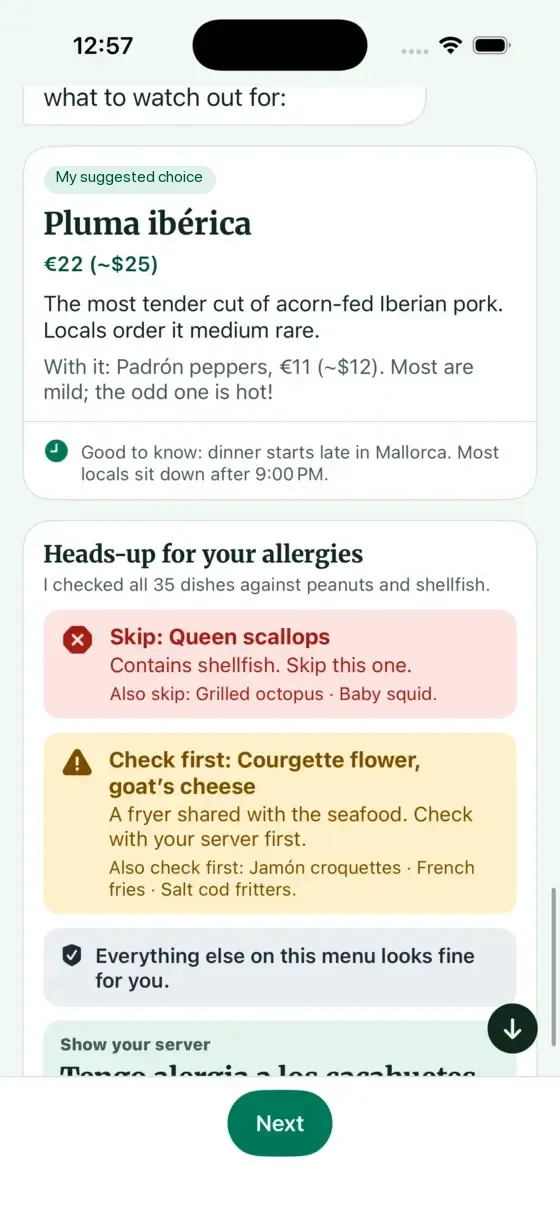
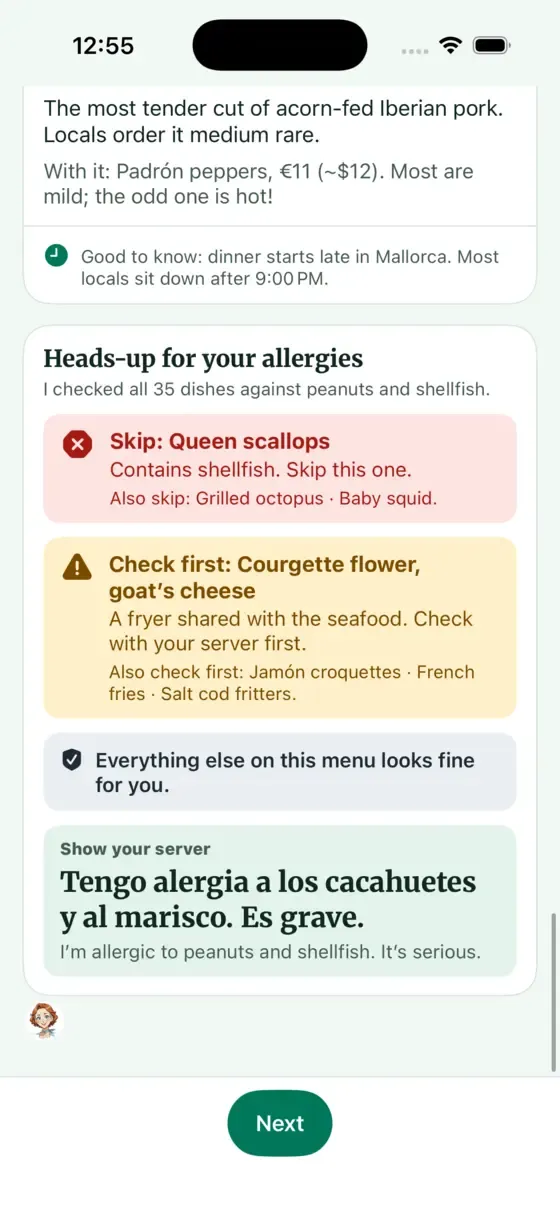
When a Thai menu, spice jar, or 7-Eleven wrapper lands in front of you, snap up to 4 photos in a single turn. Ask Lucy evaluates each dish with explicit four-state Safety verdicts (Safe, Caution, Unsafe, or Unknown — never guessing Safe from a dish name alone), highlights regional traps like Panang paste or pineapple fried rice, and generates a crisp, full-screen Thai Show-your-server card tailored to what you want to order.
Pair Ask Lucy with two essential offline backups: Lucy requires Wi-Fi or mobile data to generate new answers (photos snapped in subterranean markets or island ferries queue in her Offline outbox and send once signal returns), and she is photo + text chat rather than live spoken interpreting. Always carry a laminated Thai-script emergency card (see our Food Allergy Translation Cards Guide), pre-download Thai offline packs in Google Translate or Apple Translate for dead zones, and keep two in-date epinephrine auto-injectors within arm’s reach.
Cards to say or show
Tap any Thai allergy card to show it full screen to your waiter, cook, or vendor. (Female speakers end spoken sentences with 'kha' ค่ะ; male speakers with 'khrap' ครับ.)
Watch out for
- Som Tum (papaya salad) is a hidden cross-contact grenade: even if you ask for 'no peanuts,' vendors pound crushed peanuts right into the porous wooden or clay mortar (krok) all day and only flick water through it between servings.
- Panang curry paste frequently hides ground peanuts: everyone knows Massaman curry contains whole peanuts, yet many Thai restaurants and commercial Panang curry pastes grind roasted peanuts invisibly into the paste itself.
- Never confuse 'thua' (all beans) with 'thua lisong' (peanuts): saying 'mai kin thua' tells Thai cooks you cannot eat green beans (thua fak yao), bean sprouts (thua ngok), or soy sauce — always use the exact words ถั่วลิสง (peanuts) and เม็ดมะม่วงหิมพานต์ (cashews).
- Watch the crunchy yellow topping on Mango Sticky Rice: those crisp dots are toasted split mung beans (thua thong / ถั่วทอง), not peanuts — fine for most nut-allergic travelers, though legume-sensitive diners should ask 'mai sai thua thong' (no mung beans).
- Pineapple fried rice (Khao Pad Sapparot) hides cashews: plain Thai fried rice (Khao Pad) is usually nut-free once wok cross-contact is checked, whereas pineapple fried rice almost always tosses in roasted cashews and raisins.
Common questions
Can I travel to Thailand safely with a severe peanut or tree-nut allergy?
Many travelers with peanut and tree-nut allergies enjoy Thailand safely, provided they take cross-contact seriously: stick mostly to sit-down restaurants and hotel kitchens rather than open single-wok street carts, avoid peanut-heavy dishes and shared som tum mortars, carry a clear Thai-script allergy card, and keep two in-date epinephrine auto-injectors on you at all times.
Do Thai restaurants mostly cook with peanut oil?
Usually no — palm oil and soybean oil are far cheaper and standard across Thai home and street cooking. However, Chinese-Thai kitchens, specialty wok spots, and satay stalls occasionally use peanut oil (น้ำมันถั่วลิสง / nam-man thua li-song), so always confirm the cooking oil explicitly.
Is coconut safe if I have a peanut or tree-nut allergy?
For most people, yes — coconut is botanically a fibrous drupe rather than a true tree nut, and the US FDA updated its food-allergen guidance in January 2025 to remove coconut from its list of tree nuts. Still, individual coconut allergies exist, so confirm with your allergist and state clearly on your Thai card whether coconut milk (ka-thi) is safe or off-limits.
What Thai dishes are typically safest to look for with a nut allergy?
Once you confirm clean woks and oil, naturally nut-free classics include Pad Kra Pao (holy basil stir-fry with minced meat and fried egg), Tom Yum soup, Tom Kha Gai (coconut galangal soup — if coconut is safe), Khao Man Gai (poached chicken and rice), plain Khao Pad (fried rice, NOT pineapple fried rice), and green curry (Gaeng Khiao Wan — verify the curry paste has no peanuts).
Does Thai packaged food at 7-Eleven list peanuts and tree nuts?
Yes. Under Thai FDA food-allergen regulations, packaged foods sold at 7-Eleven, Tops, and Lotus's must declare major allergens — including peanuts (ถั่วลิสง) and tree nuts — usually in a bold summary line ('ข้อมูลสำหรับผู้แพ้อาหาร') beneath the Thai ingredient list. Snap the back panel with Ask Lucy to translate every line.