
Portugal, Brazil, Mozambique, Angola, Cape Verde
Essential Portuguese Phrases for Travelers
Last updated March 29, 2026
European Portuguese is a beautiful, melodic language that sounds quite different from its Brazilian cousin. For cruise travellers visiting Lisbon and Porto, a few well-placed Portuguese phrases will earn you genuine warmth — the Portuguese deeply appreciate visitors who make the effort. The pronunciation takes some practice, but basic phrases are very manageable.
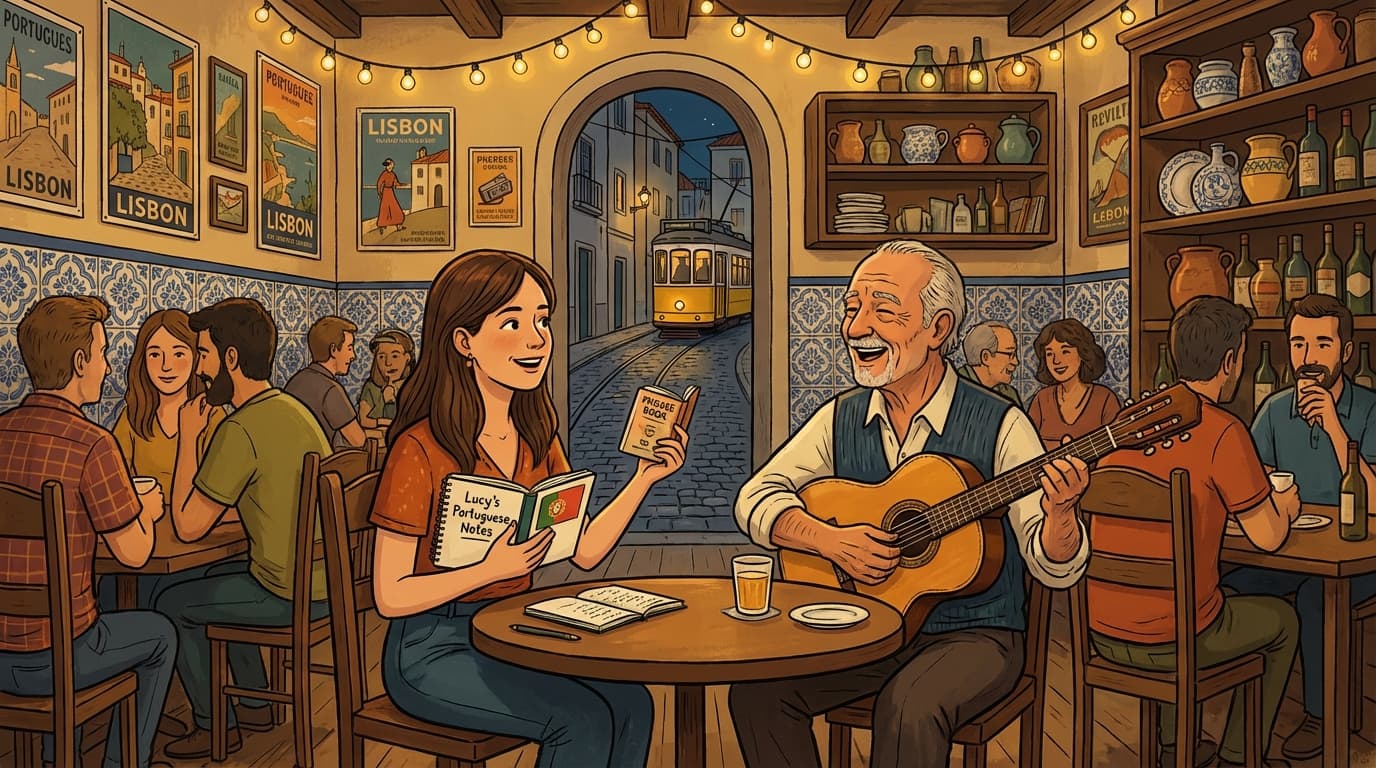
Why Learn Portuguese Phrases for Travel?
Portugal is one of Europe's most welcoming countries, and the Portuguese have a deep appreciation for visitors who attempt their language. Unlike in some tourist-heavy destinations where English is the default, smaller Portuguese towns and traditional restaurants may have limited English, making a few phrases genuinely practical as well as appreciated.
European vs Brazilian Portuguese
European Portuguese sounds significantly different from Brazilian Portuguese — more clipped, with swallowed vowels and a slightly Slavic quality that surprises many visitors. If you've learned Portuguese from Brazilian music or telenovelas, be prepared for the European version to sound almost like a different language. The written language is nearly identical, but spoken Portuguese in Lisbon sounds nothing like spoken Portuguese in Sao Paulo.
Eating in Portugal
Portuguese cuisine is hearty, unpretentious, and centered on seafood. Bacalhau (salt cod) appears in dozens of preparations — the Portuguese claim to have 365 recipes, one for each day of the year. Grilled sardines, seafood rice, and fresh fish by weight are staples. Always ask the price of fish before ordering, as it's typically priced per kilo and can be surprisingly expensive at tourist restaurants.
At traditional tascas, bread, olives, and sometimes cheese will appear at your table unbidden. These are not free — they're a couvert (cover charge) typically costing 2-5 euros. You can send them back if you don't want to pay, but the bread is usually excellent.
Essential Phrases
| Phrase | English | Pronunciation |
|---|---|---|
| Bom dia | Good morning | bom DEE-ah |
| Boa tarde | Good afternoon | BOH-ah TAHR-deh |
| Boa noite | Good evening | BOH-ah NOY-teh |
| Obrigado / Obrigada | Thank you (male / female speaker) | oh-bree-GAH-doo / oh-bree-GAH-dah |
| Por favor | Please | poor fah-VOR |
| Com licenca | Excuse me | kom lee-SEN-sah |
| Onde fica...? | Where is...? | ON-deh FEE-kah |
| Quanto custa? | How much? | KWAN-too KOOSH-tah |
| Nao falo portugues | I don't speak Portuguese | now FAH-loo por-too-GESH |
Dining & Restaurant Phrases
| Phrase | English | Pronunciation |
|---|---|---|
| A conta, por favor | The bill, please | ah KON-tah, poor fah-VOR |
| Uma mesa para dois | A table for two | OO-mah MEH-zah PAH-rah doysh |
| O que recomenda? | What do you recommend? | oo keh reh-koh-MEN-dah |
| Sou alergico/a a... | I am allergic to... | soh ah-LEHR-zhee-koo ah |
| Um copo de vinho tinto | A glass of red wine | oom KOH-poo deh VEEN-yoo TEEN-too |
Emergency Phrases
| Phrase | English | Pronunciation |
|---|---|---|
| Socorro! | Help! | soo-KOH-roo |
| Preciso de um medico | I need a doctor | preh-SEE-zoo deh oom MEH-dee-koo |
| Chame a policia | Call the police | SHAH-meh ah poh-LEE-see-ah |
| Onde fica o hospital? | Where is the hospital? | ON-deh FEE-kah oo osh-pee-TAHL |
Cultural Notes
- •Portuguese uses gendered 'thank you' — men say 'Obrigado', women say 'Obrigada'. This applies to the speaker's gender, not the person you're thanking.
- •Pasteis de nata (custard tarts) are everywhere and always good. Every bakery makes them fresh. Don't queue at Pasteis de Belem when equally good tarts are around the corner.
- •The Portuguese are more reserved than their Spanish neighbours but equally warm once you make the effort. A smile and 'Bom dia' go a long way.
- •Lunch is the main meal, served from about 12:30-2:30pm. The 'prato do dia' (dish of the day) at local tascas is excellent value — often a full meal with wine for under 10 euros.