
Russia, Belarus, Kazakhstan, Kyrgyzstan
Essential Russian Phrases for Travelers
Last updated March 29, 2026
Russian uses the Cyrillic alphabet, which creates an immediate barrier for most Western travellers. But about a third of Cyrillic letters look and sound like their Latin equivalents, and once you learn the rest, you can decode signs, menus, and metro stations. Russian is a rich, expressive language, and even basic phrases — delivered with a smile — earn respect from locals who are genuinely surprised when foreigners try.
Why Learn Russian Phrases and Cyrillic for Travel?
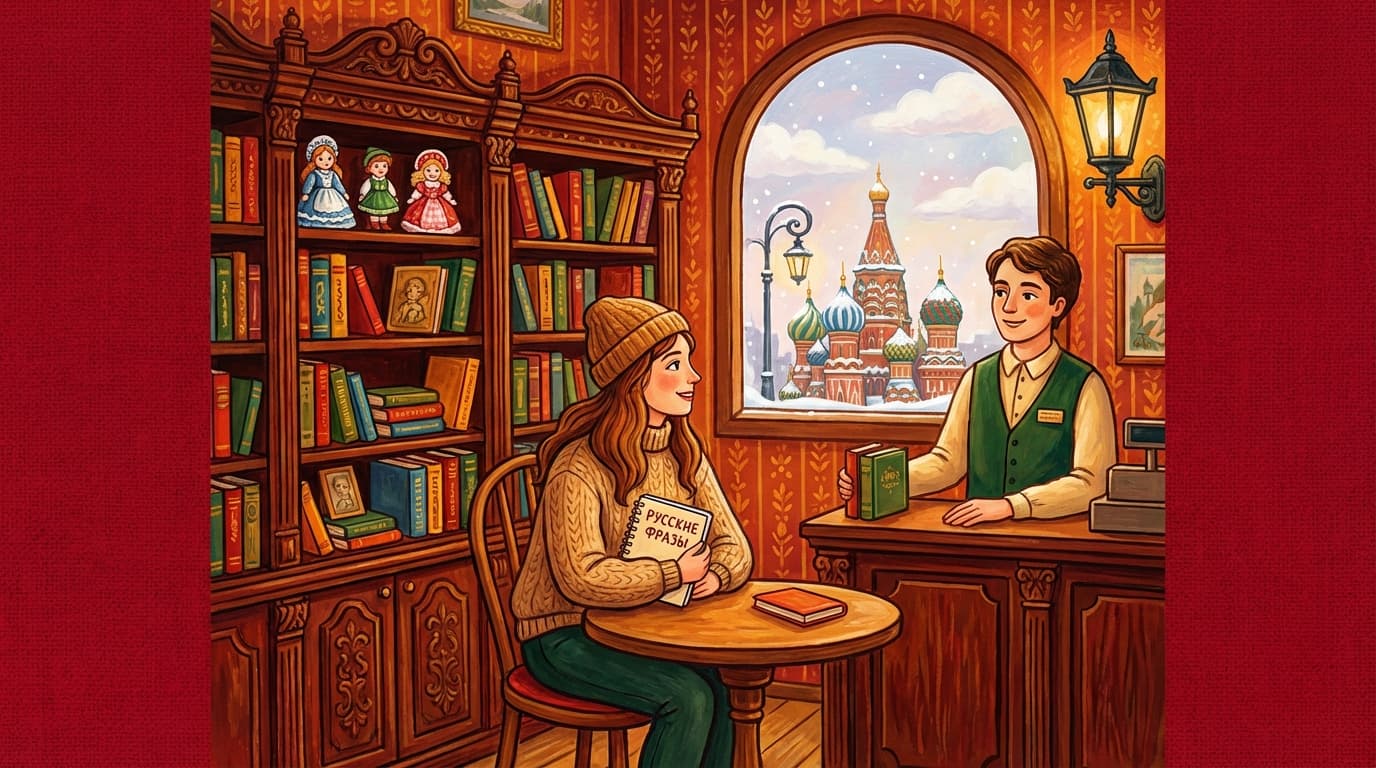
Russia has far less English signage and spoken English than Western Europe. Even in Moscow and St Petersburg, menus, street signs, and metro stations are primarily in Cyrillic. Learning the alphabet — which takes about an hour of focused study — transforms your ability to navigate. And speaking Russian, even just 'Spasibo' and 'Zdravstvuyte', earns genuine respect from locals who rarely encounter foreigners making the effort.
Cyrillic in 15 Minutes
Start with the letters that look and sound familiar: A, E, K, M, O, T. Then learn the 'false friends' that look Latin but sound different: B = V, H = N, P = R, C = S, Y = U, X = KH. Finally, learn the truly new letters: D, ZH, Z, I, L, P, F, TS, CH, SH, SHCH, E, YU, YA. With this knowledge, you can decode metro stations, read restaurant signs, and feel less lost.
Eating in Russia
Russian cuisine is hearty, warming, and much more varied than stereotypes suggest. Borscht (beetroot soup served with smetana/sour cream) is iconic and delicious. Blini (thin pancakes) with caviar, smoked salmon, or jam are quintessential. Pelmeni (meat dumplings) are comfort food. Shashlik (grilled meat skewers) appears at every summer gathering. Georgian restaurants, found throughout Russia, serve some of the best food in the country — try khachapuri (cheese bread) and khinkali (soup dumplings).
Essential Phrases
| Phrase | English | Pronunciation |
|---|---|---|
| Zdravstvuyte | Hello (formal) | ZDRAHST-vooy-teh |
| Privet | Hi (informal) | pree-VYET |
| Do svidaniya | Goodbye | dah svee-DAH-nee-yah |
| Spasibo | Thank you | spah-SEE-boh |
| Pozhaluysta | Please / You're welcome | pah-ZHAHL-stah |
| Izvinite | Excuse me / Sorry | eez-vee-NEE-teh |
| Gde...? | Where is...? | gdyeh |
| Skolko stoit? | How much does it cost? | SKOL-kah STOH-eet |
| Ya ne ponimayu | I don't understand | yah nee pah-nee-MAH-yoo |
| Vy govorite po-angliyski? | Do you speak English? | vy gah-vah-REE-teh pah ahn-GLEE-skee |
Dining & Restaurant Phrases
| Phrase | English | Pronunciation |
|---|---|---|
| Schyot, pozhaluysta | The bill, please | shyot, pah-ZHAHL-stah |
| Stolik na dvoikh | A table for two | STOH-leek nah dvah-EEH |
| Shto vy rekomenduete? | What do you recommend? | shtoh vy reh-kah-men-DOO-yeh-teh |
| U menya allergiya na... | I have an allergy to... | oo meh-NYAH ah-LEHR-gee-yah nah |
| Odno pivo, pozhaluysta | One beer, please | ahd-NOH PEE-vah, pah-ZHAHL-stah |
| Za zdorovye! | Cheers! (To health!) | zah zdah-ROH-vyeh |
Emergency Phrases
| Phrase | English | Pronunciation |
|---|---|---|
| Pomogite! | Help! | pah-mah-GEE-teh |
| Mne nuzhen vrach | I need a doctor | mnyeh NOO-zhen vrahch |
| Vyzovite politsiyu | Call the police | VY-zah-vee-teh pah-LEE-tsee-yoo |
| Gde bolnitsa? | Where is the hospital? | gdyeh bahl-NEE-tsah |
Cultural Notes
- •Russians don't smile at strangers — it's not unfriendliness, it's a cultural norm. A smile without reason is considered insincere. Once you're in conversation, warmth emerges quickly.
- •Toasting with vodka follows strict etiquette. Never toast with an empty glass. The first toast is usually 'Za zdorovye!' (To health). Drink the shot in one go, then eat a bite of food (zakuski).
- •Learning even a few Cyrillic letters pays enormous dividends. In Cyrillic, P = R, H = N, C = S, B = V, Y = U — these 'false friends' fool many visitors reading signs.
- •Russian hospitality, once you're invited in, is overwhelming. You will be fed abundantly, toasted repeatedly, and genuinely cared for. Refusing food can be seen as impolite.