
Turkey, Northern Cyprus
Essential Turkish Phrases for Travelers
Last updated March 29, 2026
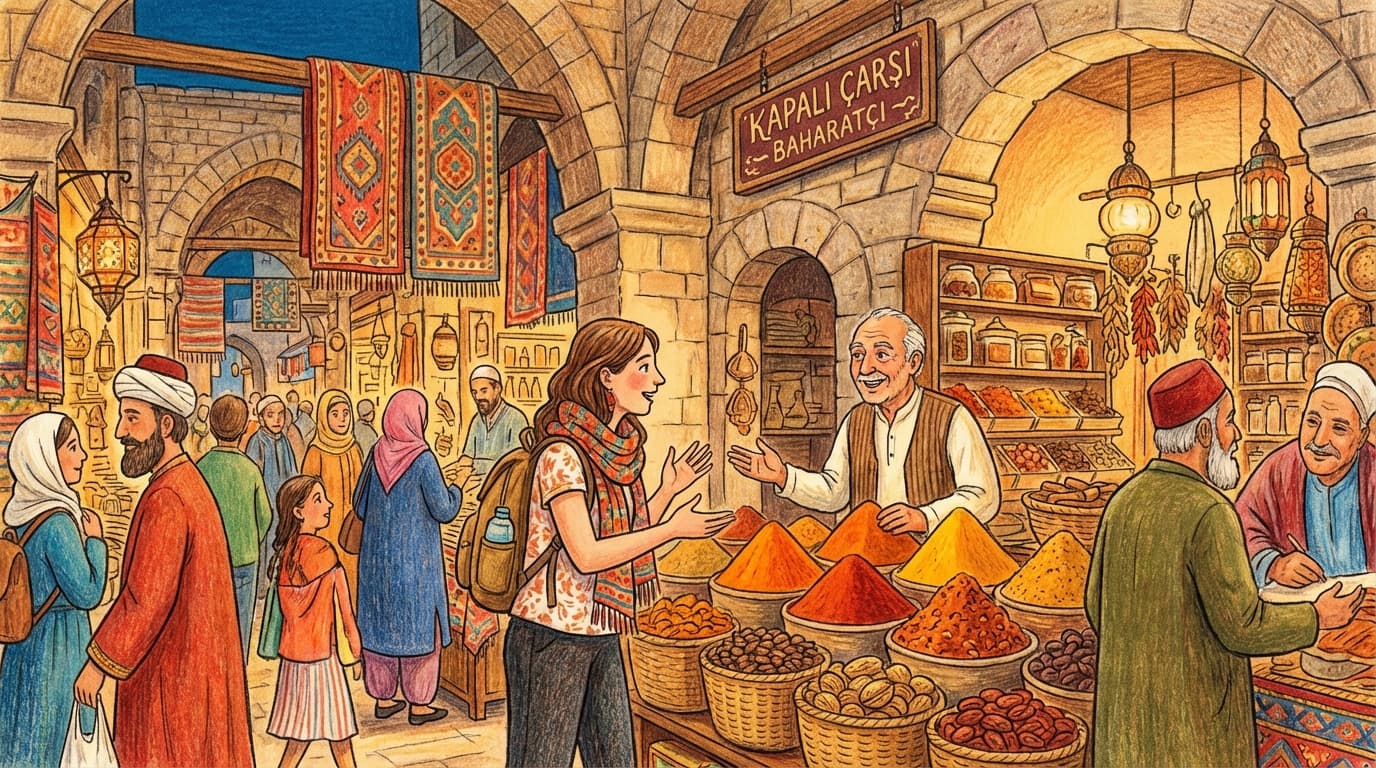
Turkish is a fascinating language with a completely regular grammar — no irregular verbs, no grammatical gender, and perfectly phonetic spelling. Once you learn the pronunciation of each letter, you can read any Turkish word aloud correctly. Turkish hospitality is legendary, and locals are genuinely delighted when visitors attempt even basic phrases. A few words of Turkish in Istanbul's Grand Bazaar or a Bodrum restaurant will transform your experience.
Why Learn Turkish Phrases for Travel?
Turkish hospitality — known as 'misafirperverlik' — is not a marketing slogan. It's a deep cultural value. When you attempt Turkish, however imperfectly, you tap into this tradition. Shopkeepers will offer you tea, restaurant owners will bring extra dishes, and strangers will go out of their way to help. In Istanbul especially, where tourism is a major industry, the few visitors who speak Turkish stand out and receive genuinely warmer treatment.
Turkish Pronunciation Made Simple
Turkish uses the Latin alphabet with a few extra letters: C-cedilla (ch), S-cedilla (sh), G-breve (silent — lengthens the previous vowel), dotted-I (ee, with a dot), undotted-I (uh, without a dot — this distinction matters), O-umlaut (like German o-umlaut), and U-umlaut (like German u-umlaut). Every letter is always pronounced the same way, there are no silent letters (except G-breve), and the stress usually falls on the last syllable. Turkish is one of the most phonetically regular languages in the world.
Eating in Turkey
Turkish cuisine is one of the world's great food traditions. Breakfast (kahvalti) is an extravagant spread of cheeses, olives, tomatoes, honey, and fresh bread. For lunch and dinner, kebabs are just the beginning — try lahmacun (thin flatbread with spiced meat), pide (Turkish pizza), manti (tiny dumplings in yogurt sauce), and meze (small appetizer plates). Finish with baklava and Turkish tea. Istanbul's street food — simit (sesame bread rings), balik ekmek (fish sandwiches), and roasted chestnuts — is exceptional and cheap.
Essential Phrases
| Phrase | English | Pronunciation |
|---|---|---|
| Merhaba | Hello | mehr-HAH-bah |
| Gunaydin | Good morning | goo-nye-DIN |
| Hosca kal | Goodbye (said by the one leaving) | HOSH-chah kahl |
| Lutfen | Please | LOOT-fen |
| Tesekkur ederim | Thank you | teh-shek-KOOR eh-deh-REEM |
| Evet / Hayir | Yes / No | EH-vet / HAH-yir |
| ...nerede? | Where is...? | NEH-reh-deh |
| Bu ne kadar? | How much is this? | boo neh kah-DAHR |
| Cok pahali | Too expensive | chok pah-hah-LI |
| Turkce bilmiyorum | I don't speak Turkish | TURK-cheh bil-mee-YOR-um |
Dining & Restaurant Phrases
| Phrase | English | Pronunciation |
|---|---|---|
| Hesap, lutfen | The bill, please | heh-SAHP, LOOT-fen |
| Iki kisilik bir masa | A table for two | ee-KEE kee-shee-LIK beer MAH-sah |
| Ne onerirsiniz? | What do you recommend? | neh uh-neh-REER-see-neez |
| ...alerjim var | I have an allergy to... | ah-LEHR-zheem vahr |
| Bir cay, lutfen | A tea, please | beer chy, LOOT-fen |
| Afiyet olsun! | Bon appetit! | ah-fee-YET ol-SOON |
| Cok guzel! | Very beautiful / delicious! | chok goo-ZEL |
Emergency Phrases
| Phrase | English | Pronunciation |
|---|---|---|
| Imdat! | Help! | IM-daht |
| Doktora ihtiyacim var | I need a doctor | dok-toh-RAH ih-tee-yah-JIM vahr |
| Polisi arayin | Call the police | poh-lee-SEE ah-rah-YIN |
| Hastane nerede? | Where is the hospital? | hahs-tah-NEH NEH-reh-deh |
Cultural Notes
- •Tea (cay) is central to Turkish culture. You'll be offered tea constantly — in shops, at the bazaar, even during business negotiations. Accepting tea is a sign of friendship. Declining politely is fine, but accepting at least once creates genuine connection.
- •Bargaining is expected in bazaars and markets but not in restaurants or modern shops. Start at about 50-60% of the asking price and work upward. Keep it friendly — it's a social interaction, not a confrontation.
- •Remove your shoes when entering mosques and many homes. Women should carry a scarf to cover their head at mosques — many provide them at the entrance.
- •Turkish coffee is served with the grounds in the cup. Let it settle before drinking, and stop when you reach the thick sediment at the bottom.