
Japan
Essential Japanese Phrases for Travelers
Last updated March 29, 2026
Japanese uses three writing systems (hiragana, katakana, and kanji), has complex honorific levels, and is grammatically unlike any European language. Despite this, travel Japanese is surprisingly approachable — a small set of polite phrases covers most situations, and Japanese people are extraordinarily appreciative of any attempt to speak their language. Politeness is the key: Japanese culture values effort and respect above perfection.
Why Learn Japanese Phrases for Travel?
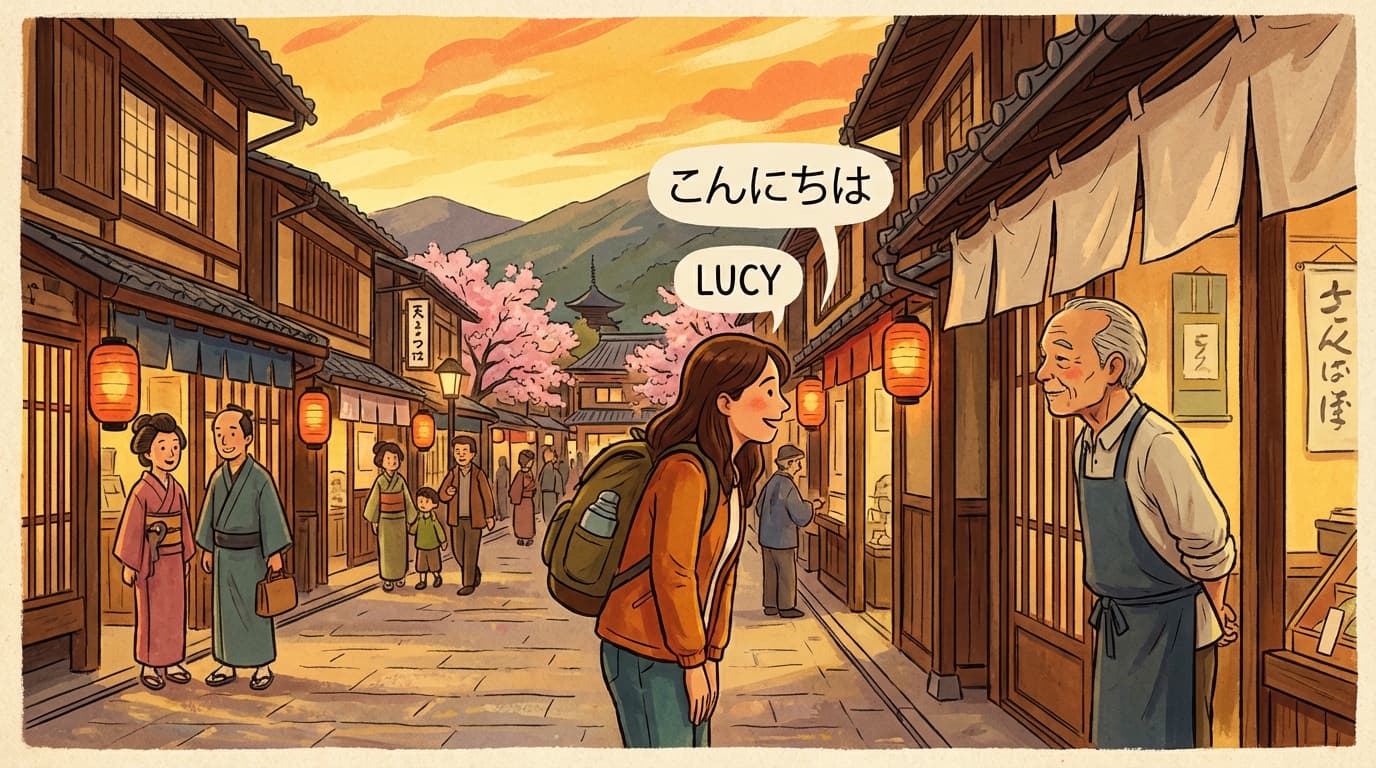
Japan is a country where politeness is a language unto itself. The words you use, and the effort you make, communicate as much as their literal meaning. A well-delivered 'Arigatou gozaimasu' (thank you) or 'Sumimasen' (excuse me) — complete with a slight bow — shows respect for Japanese culture in a way that speaking English, however politely, simply cannot. Japanese people rarely expect foreigners to speak Japanese, which makes every attempt genuinely delightful to them.
Practical necessity also drives learning: outside major tourist zones, English signage and English speakers are less common than many visitors expect. Train station names, restaurant menus, and shop signs are often in Japanese only. Even learning to recognize a few kanji (Chinese characters) for common words like 'entrance', 'exit', 'toilet', and 'station' will help enormously.
Japanese Pronunciation
Japanese pronunciation is actually quite easy for English speakers. There are only 5 vowel sounds: A (ah), I (ee), U (oo), E (eh), O (oh). Consonants are similar to English. The R sound is between an English R and L — tap the tip of your tongue lightly against the roof of your mouth. Double consonants (like the NN in 'konnichiwa') should be held slightly longer. Every syllable gets roughly equal stress.
Dining in Japan
Japanese restaurant culture has specific etiquettes that, when followed, earn visible respect. Enter and wait to be seated — don't choose your own table. Use the hot towel (oshibori) to clean your hands, not your face. When eating from shared plates, use the opposite end of your chopsticks. Never stick chopsticks upright in rice (this resembles a funeral ritual). And when you're ready to leave, bring the bill to the register rather than paying at the table — this is standard practice at most restaurants.
Essential Phrases
| Phrase | English | Pronunciation |
|---|---|---|
| Konnichiwa | Hello / Good afternoon | kohn-nee-chee-WAH |
| Ohayou gozaimasu | Good morning (polite) | oh-hah-YOH goh-zah-ee-MAHS |
| Konbanwa | Good evening | kohn-bahn-WAH |
| Arigatou gozaimasu | Thank you (polite) | ah-ree-GAH-toh goh-zah-ee-MAHS |
| Sumimasen | Excuse me / Sorry / Thank you | soo-mee-mah-SEN |
| Hai / Iie | Yes / No | high / ee-eh |
| ...wa doko desu ka? | Where is...? | wah DOH-koh DES-kah |
| Ikura desu ka? | How much is it? | ee-KOO-rah DES-kah |
| Eigo o hanasemasu ka? | Do you speak English? | AY-goh oh hah-nah-seh-MAHS-kah |
| Wakarimasen | I don't understand | wah-kah-ree-mah-SEN |
| ...eki wa doko desu ka? | Where is ... station? | EH-kee wah DOH-koh DES-kah |
Dining & Restaurant Phrases
| Phrase | English | Pronunciation |
|---|---|---|
| Itadakimasu | Said before eating (I humbly receive) | ee-tah-dah-kee-MAHS |
| Gochisousama deshita | Said after eating (Thank you for the meal) | goh-chee-SOH-sah-mah DESH-tah |
| Okaikei onegai shimasu | The bill, please | oh-KAI-kay oh-NEH-gai shee-MAHS |
| Osusume wa nan desu ka? | What do you recommend? | oh-SOO-soo-meh wah nahn DES-kah |
| ...arerugii ga arimasu | I have a ... allergy | ah-reh-ROO-gee gah ah-ree-MAHS |
| Biiru hitotsu | One beer | BEE-roo hee-TOH-tsoo |
| Omizu kudasai | Water, please | oh-MEE-zoo koo-dah-SAI |
Emergency Phrases
| Phrase | English | Pronunciation |
|---|---|---|
| Tasukete! | Help! | tah-SOO-keh-teh |
| Isha o yonde kudasai | Please call a doctor | ee-SHAH oh YOHN-deh koo-dah-SAI |
| Keisatsu o yonde kudasai | Please call the police | KAY-sah-tsoo oh YOHN-deh koo-dah-SAI |
| Byouin wa doko desu ka? | Where is the hospital? | BYOH-een wah DOH-koh DES-kah |
Cultural Notes
- •Bowing is the standard greeting. A slight bow of the head (15 degrees) is appropriate for casual interactions. Don't bow and shake hands simultaneously — choose one.
- •Tipping does not exist in Japan and can be considered rude. Exceptional service is the baseline — additional payment implies the worker needed financial motivation to do their job properly.
- •Say 'Itadakimasu' before eating and 'Gochisousama deshita' after. These are not prayers but expressions of gratitude for the food. Using them impresses locals immensely.
- •Slurping noodles (ramen, soba, udon) is polite in Japan — it shows you're enjoying the food and helps cool the noodles. Eating quietly is actually the unusual choice.
- •Many restaurants have plastic food displays or picture menus outside. Pointing is perfectly acceptable and common — even Japanese people do it at unfamiliar restaurants.