
France, Belgium, Switzerland, Luxembourg, Monaco, Canada
Essential French Phrases for Travelers
Last updated March 29, 2026
French has a reputation for being difficult, but the basics are very achievable for English speakers — roughly 45% of English vocabulary has French origins. The key to unlocking French hospitality is simple: always begin every interaction with 'Bonjour'. This single word is the most important phrase in this entire guide. Skip it, and you'll be treated as rude. Say it, and doors open.
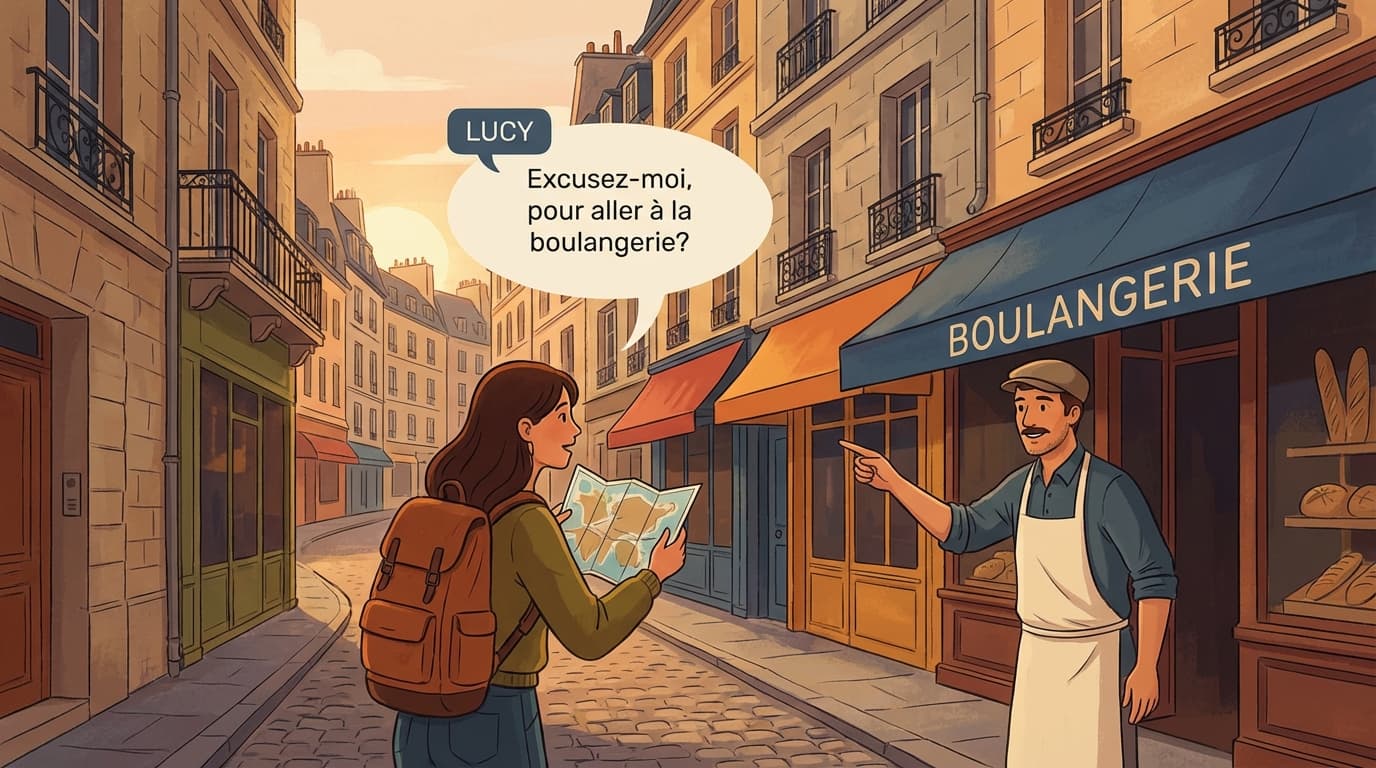
The One French Word That Changes Everything
Before you learn any other French, memorize this: say 'Bonjour' to every person you interact with. When you walk into a bakery: 'Bonjour'. When you approach a ticket counter: 'Bonjour'. When you make eye contact with a shop owner: 'Bonjour'. This single greeting is the key that unlocks French hospitality. Without it, you will be treated as rude — not because the French are unfriendly, but because in French culture, acknowledging someone's presence is a fundamental courtesy.
French Pronunciation Basics
French pronunciation intimidates people, but a few rules cover most situations. Silent final consonants: most ending consonants are not pronounced (petit = puh-TEE). Nasal vowels: 'on', 'an', 'in', 'un' are pronounced through the nose. The French R is made in the throat, like a gentle gargle. Don't worry about perfecting it — an attempted French accent is far better received than speaking English loudly.
Dining in France
French restaurants operate differently from what you may be used to. You will not be rushed. The waiter will not bring the bill until you ask — this is considered polite, not neglectful. When you are ready, catch their eye and say 'L'addition, s'il vous plait'. Tip is included in all French restaurant prices (service compris), so additional tipping is not expected. Leaving a euro or two for exceptional service is appreciated but never required.
Order the 'formule' or 'menu' (fixed-price set meal) at lunch — it's always better value than ordering a la carte and often features the chef's best dishes. A two-course lunch formule in Paris typically costs 15-25 euros and represents extraordinary value.
Essential Phrases
| Phrase | English | Pronunciation |
|---|---|---|
| Bonjour | Hello / Good day | bon-ZHOOR |
| Bonsoir | Good evening | bon-SWAHR |
| Au revoir | Goodbye | oh reh-VWAHR |
| S'il vous plait | Please | seel voo PLEH |
| Merci (beaucoup) | Thank you (very much) | mair-SEE (boh-KOO) |
| Excusez-moi | Excuse me | ek-skew-ZAY mwah |
| Parlez-vous anglais? | Do you speak English? | par-LAY voo on-GLEH |
| Ou est...? | Where is...? | oo EH |
| C'est combien? | How much is it? | say kom-bee-EN |
| Je ne comprends pas | I don't understand | zhuh nuh kom-PRON pah |
| Je voudrais... | I would like... | zhuh voo-DREH |
Dining & Restaurant Phrases
| Phrase | English | Pronunciation |
|---|---|---|
| Une table pour deux | A table for two | oon TAH-bluh poor DUH |
| L'addition, s'il vous plait | The bill, please | lah-dee-see-ON, seel voo PLEH |
| Je suis allergique a... | I am allergic to... | zhuh swee ah-lehr-ZHEEK ah |
| Qu'est-ce que vous conseillez? | What do you recommend? | kes-kuh voo kon-say-YAY |
| Un verre de vin rouge/blanc | A glass of red/white wine | un vehr duh van roozh/blon |
| Une carafe d'eau | A carafe of tap water | oon kah-RAHF DOH |
Emergency Phrases
| Phrase | English | Pronunciation |
|---|---|---|
| Au secours! | Help! | oh suh-KOOR |
| J'ai besoin d'un medecin | I need a doctor | zhay buh-ZWAN dun med-SAN |
| Appelez la police | Call the police | ah-play lah poh-LEES |
| Ou est l'hopital? | Where is the hospital? | oo eh loh-pee-TAHL |
| C'est urgent | It's urgent | say oor-ZHON |
Cultural Notes
- •Always say 'Bonjour' when entering any shop, restaurant, or business. This is non-negotiable in French culture. Not greeting people is considered deeply rude and will negatively affect your entire interaction.
- •In restaurants, ask for 'une carafe d'eau' (a carafe of tap water) — it's free and perfectly safe. If you just say 'de l'eau', you may receive expensive bottled water.
- •The French take meals seriously. Lunch is typically 12-2pm, dinner from 7:30pm. Rushing a meal or asking for the bill too quickly is considered impolite.
- •Parisians have a reputation for rudeness, but it's largely a misunderstanding of French social norms. Start every interaction with 'Bonjour, Madame/Monsieur' and you'll find people warm and helpful.