Allergies & Diets · Spain
Vegetarian Travel Guide to Spain: Hidden Jamón, Tuna Traps & Tapas Wins
Last updated
Spain's vegetables, olive oil, chickpeas, and egg tortillas are extraordinary — until diced jamón serrano lands on your green beans and canned tuna shows up inside your 'mixed salad.' Here is how to eat brilliantly vegetarian across Spain without meat-broth surprises.

On this page (10 sections)
- In short
- How it works
- Spain’s Vegetarian Paradox: World-Class Produce Wearing a Jamón Hat
- Classic Vegetarian Tapas Wins vs. Sneaky Spanish Traps
- Three Regional Gems Vegetarians Should Never Miss
- How to Configure Ask Lucy for Vegetarian Travel in Spain
- Cards to show
- Watch out for
- Common questions
- Use Lucy on the spot
How to eat vegetarian in Spain without ham or tuna surprises
In traditional Spanish bars, diced jamón serrano (cured ham) and canned atún (tuna) are treated like everyday garnishes rather than meat — routinely sneaking into sautéed vegetables, cold salmorejo soup, ensalada mixta, and potato salad (ensaladilla rusa), while lentil and vegetable rice dishes often simmer in chicken or ham stock (caldo de pollo/jamón). Always say 'sin jamón, sin atún y sin caldo de carne ni pescado,' lean into iconic vegetarian tapas like pimientos de Padrón, patatas bravas, tortilla española, gazpacho, and pan con tomate, and set Diet to vegetarian in Ask Lucy to catch hidden pork and broth on every menu.
- Most common veggie traps
- Diced jamón serrano on veggies & salmorejo · Canned atún (tuna) in salads & ensaladilla rusa
- Sneaky broth trap
- Caldo de pollo/jamón (chicken or ham stock) inside lentils (lentejas), soups & vegetable paella
- Iconic vegetarian tapas wins
- Pimientos de Padrón, patatas bravas, tortilla española, gazpacho, pan con tomate, escalivada
- Magic Spanish line
- Sin carne, sin jamón, sin pescado ni atún, y sin caldo de carne (no meat, ham, fish/tuna, or meat broth)
How it actually works on the spot
-
Spell out 'jamón' and 'atún' explicitly — never assume 'vegetariano' covers them
Waiters in urban Madrid and Barcelona understand vegetarianism immediately, yet in traditional taverns and smaller towns cured ham bits and canned tuna are treated as standard flavorings rather than main meats. Saying 'sin jamón y sin atún' up front avoids a quiet plate swap later.
-
Ask about the broth (caldo) behind soups, lentils, and vegetable paella
Hearty Spanish spoon dishes (platos de cuchara) like lentejas, fabada, garlic soup (sopa de ajo), and even arroz con verduras (vegetable rice) are frequently cooked in ham-bone, chorizo, chicken, or fish stock. One five-second question protects your whole meal.
-
Build a feast from Spain's naturally vegetarian tapas classics
You never have to settle for sad iceberg lettuce. Order blistered pimientos de Padrón, smoky patatas bravas, a wedge of tortilla española, chilled gazpacho, Catalan pan con tomate, Andalusian berenjenas con miel (fried eggplant with cane molasses), grilled garlic mushrooms (setas al ajillo), and roasted pepper escalivada.
-
Check bakery pastries for manteca de cerdo (pork lard)
Traditional Spanish sweets — especially Mallorcan ensaimadas, holiday polvorones, and rustic mantecados — are historically baked with pork lard. Snap ingredient labels or handwritten tapas pizarras with Ask Lucy (up to 4 photos in one turn) to verify before biting in.
Spain’s Vegetarian Paradox: World-Class Produce Wearing a Jamón Hat
Tell someone you are traveling through Spain as a vegetarian and they will picture hanging legs of jamón ibérico swaying over every bar counter. The hams are real — yet so is some of the finest Mediterranean produce, olive oil, bread, chickpeas, peppers, and egg dishes in Europe.
The trick to eating wonderfully in Spain as a vegetarian is not hunting down bland tourist pasta. It is understanding one endearing local quirk: in traditional Spanish kitchens, diced jamón serrano and canned atún (tuna) are treated like salt and pepper, tossed onto vegetable plates and salads automatically unless you say otherwise. Once you learn the five traps to check and the twelve iconic tapas wins to order, you can walk into almost any buzzing neighborhood bar (pair this with our Ordering Tapas in Spain Etiquette Guide for portion sizes and bar vs. terrace pricing) and eat like royalty.
Classic Vegetarian Tapas Wins vs. Sneaky Spanish Traps
Keep this side-by-side cheat sheet handy when reading a scribbled chalkboard pizarra or a weekday Menú del día:
| Spanish dish | What it is | Vegetarian status | What to ask or double-check |
|---|---|---|---|
| Pimientos de Padrón | Blistered Galician green peppers + flaky salt | Great win (vegan too!) | Occasional spicy surprise pepper; check shared fryer oil if strict |
| Patatas bravas | Crisp chunky potatoes + smoky paprika sauce | Usually vegetarian | Check if bar uses meat stock in brava sauce; alioli usually has egg |
| Tortilla española | Thick potato & egg skillet omelet | Classic win | Confirm plain de patatas (not stuffed con jamón or con chorizo) |
| Gazpacho | Chilled blended tomato-pepper-bread soup | Naturally vegan/veg | Refreshing summer hero — check toppings just in case |
| Salmorejo | Velvety thick Cordoban tomato-bread soup | Trap unless modified | Traditionally crowned with diced jamón + egg — always say “sin jamón”! |
| Pan con tomate / Pa amb tomàquet | Grilled crusty bread rubbed with tomato & olive oil | Naturally vegan/veg | Catalonia’s unbeatable bar staple |
| Berenjenas con miel | Crisp fried eggplant strips + dark cane molasses | Andalusian win | Usually miel de caña (vegan cane syrup) or honey; check shared fryer |
| Espinacas con garbanzos | Spiced Seville spinach & chickpeas with cumin | Often veg — verify | Confirm cooked with olive oil & veggie/water base, not ham bone |
| Escalivada / Pisto manchego | Charcoal-roasted peppers & eggplant / veg ratatouille | Great wins | Pisto often tops with a fried egg; confirm no atún or jamón garnish |
| Ensalada mixta / Ensaladilla rusa | Mixed salad / Spanish potato salad | Tuna trap! | Almost always includes canned atún (and sometimes crab sticks) — specify “sin atún” |
| Judías verdes / Habas / Alcachofas | Sautéed green beans, broad beans, or artichokes | Ham trap! | Frequently sautéed with taquitos de jamón — explicitly ask “sin jamón” |
| Lentejas / Arroz con verduras | Lentil stew / Vegetable paella or rice | Broth trap! | Often simmered in caldo de pollo (chicken), chorizo, or fish stock — ask first! |
Three Regional Gems Vegetarians Should Never Miss
- Andalusia’s Moorish vegetable heritage (Seville, Córdoba, Granada): Look for espinacas con garbanzos (garlicky spiced spinach and chickpeas), berenjenas con miel (paper-thin fried eggplant drizzled with cane syrup), chilled ajo blanco (silky almond-garlic soup topped with grapes — watch nut allergies!), and salmorejo sin jamón.
- Catalonia’s vegetable grilling & markets (Barcelona & Girona): Order escalivada (smoky fire-roasted red peppers, eggplant, and sweet onions), crispy pa amb tomàquet, seasonal calçots dipped in nutty romesco sauce (winter/spring), and patatas bravas with alioli.
- Extremadura’s vegetarian-rennet cheese secret: Most traditional Spanish cheeses (including classic DOP Manchego) use animal rennet (cuajo animal). If you avoid animal rennet, ask for Torta del Casar or Queso de la Serena — two luscious, spoonable sheep’s-milk cheeses traditionally curdled with wild cardoon thistle flower (cuajo vegetal).
And for dessert? Churros con chocolate are vegetarian almost everywhere (and often vegan if the hot chocolate uses water and cornstarch rather than milk — ask before dipping!), while traditional ensaimadas, polvorones, and mantecados often contain pork lard (manteca de cerdo), so always check pastry labels.
How to Configure Ask Lucy for Vegetarian Travel in Spain
Before you tap your way down a Madrid tapas street or browse a Barcelona supermarket, set up two quick fields in Ask Lucy on your iPhone or iPad (iOS 26+):
- Set Diet to
vegetarian(orvegan) in your Profile — Diet is not Health data and needs no Health consent. - Add Spain’s sneaky triggers to Notes to Lucy (up to 2,000 characters, read with every turn), such as: “Vegetarian in Spain: flag diced jamón garnishes on veggies/salmorejo, canned tuna (atún) in salads/ensaladilla, chicken/ham/fish caldo in lentils or vegetable paella, and manteca de cerdo pork lard in pastries.”
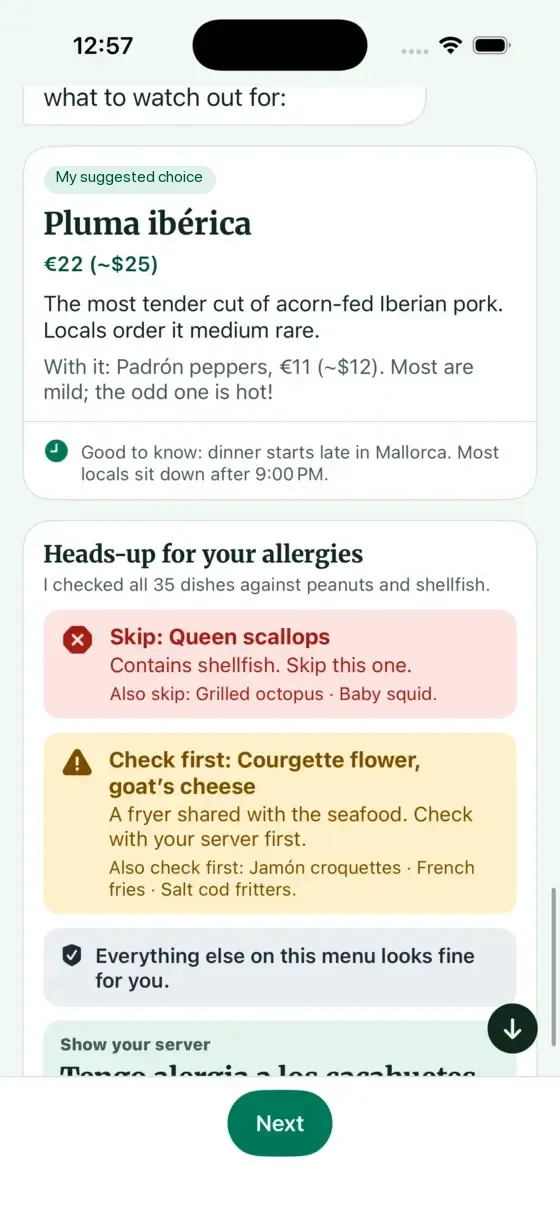
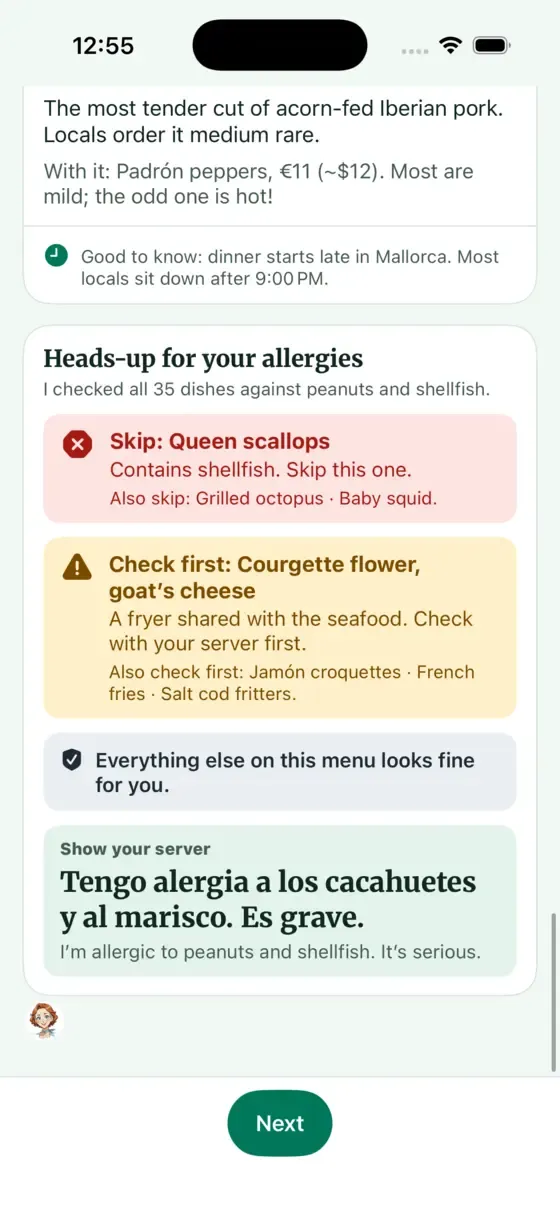
Remember the clear line in Ask Lucy: Diet and Notes to Lucy shape Lucy’s written replies, tapas recommendations, and Spanish Show-your-server cards — they do not produce four-state Safety verdict cards. Safety verdicts (Safe, Caution, Unsafe, Unknown) run strictly for medical allergies saved behind explicit Health consent (so if you also carry a nut, egg, dairy, or wheat allergy, save it as an allergy with its Severity too).
Walk up to any handwritten pizarra or three-course Menú del día chalkboard and shoot up to 4 photos in one turn. Lucy unpacks regional dishes, calls out hidden ham or broth risks, converts euros into Home-first prices ($8.60 (€7.50)), and writes a clean full-screen Spanish Show-your-server card on the spot. Because Ask Lucy needs Wi-Fi or mobile data to reply (vaulted stone bodega snaps queue in her Offline outbox until signal returns), download an offline Spanish pack in Apple Translate or Google Translate as your zero-signal backup — and use their Conversation mode whenever a friendly bartender launches into rapid-fire spoken Spanish.
Cards to say or show
Tap any Spanish card to display it full screen to your waiter, tapas bartender, or bakery clerk.
Watch out for
- Never order 'ensalada mixta' or 'ensaladilla rusa' without checking: across Spain, a standard mixed salad almost always arrives topped with canned tuna (atún), and Russian potato salad routinely mixes tuna right into the mayo.
- Watch diced jamón on 'vegetable' plates: sautéed green beans (judías verdes), artichokes (alcachofas), broad beans (habas), peas (guisantes), and cold Cordoban salmorejo are traditionally finished with taquitos de jamón — ask 'sin jamón' every time.
- Beware chicken or fish stock in 'vegetable' paella and soups: arroz con verduras and classic lentejas or sopa de ajo often start with caldo de pollo, hueso de jamón, or fish fumet unless cooked at a vegetarian spot or confirmed vegetable stock (caldo de verduras).
- Traditional Spanish cheeses usually use animal rennet (cuajo animal): strict vegetarians avoiding animal rennet should check labels — or seek out Extremaduran Torta del Casar and Queso de la Serena, famously coagulated with wild cardoon thistle (cuajo vegetal).
- Watch shared tapas fryers: pimientos de Padrón, patatas bravas, and berenjenas con miel are naturally meat-free, though traditional bars often fry them in the same oil as croquetas de jamón or calamari — check if cross-contact matters to you.
Common questions
Is Spain easy for vegetarians in 2026?
Yes — far easier than its old ham-everywhere reputation suggests! Major cities like Madrid (Malasaña, Lavapiés, Chueca), Barcelona (Eixample, Gràcia, El Born), Valencia, and Seville pack dedicated vegetarian and vegan restaurants, while traditional tapas bars almost always serve unforgettable meat-free classics like pimientos de Padrón, patatas bravas, tortilla española, gazpacho, and pan con tomate once you know to check for jamón and tuna garnishes.
Why do 'vegetarian' salads in Spain often come with tuna?
In classic Spanish home and bar cooking, ensalada mixta (mixed salad) has a standard national recipe: lettuce, tomato, onion, olives, hard-boiled egg, asparagus, and a scoop of canned olive-oil tuna (atún). Likewise, ensaladilla rusa (potato salad) almost always mixes in tuna. Simply add 'sin atún' when ordering any salad.
Is gazpacho or salmorejo vegetarian and vegan?
Gazpacho — blended ripe tomatoes, cucumber, pepper, garlic, olive oil, sherry vinegar, and bread — is naturally vegetarian and vegan (just double-check garnishes). Salmorejo is thicker and richer with bread and olive oil, yet it is traditionally topped with hard-boiled egg AND diced cured jamón serrano — always ask for 'salmorejo sin jamón' (and 'sin huevo' if vegan).
Are patatas bravas and pimientos de Padrón always vegetarian?
Pimientos de Padrón (blistered green peppers with flaky sea salt) are naturally vegetarian and vegan. Patatas bravas are nearly always vegetarian, though check two things: the creamy garlic alioli drizzled alongside brava sauce in Barcelona and Valencia usually contains egg (relevant for vegans), and a few old-school Madrid bars enrich brava sauce with a splash of meat stock — plus both dishes may share fryer oil with ham croquettes or squid.
Does setting Diet to vegetarian in Ask Lucy show Safety verdict cards?
No. In Ask Lucy, Diet (vegetarian, vegan, pescatarian, or gluten free) and Notes to Lucy require no Health consent and shape Lucy's written replies, dish explanations, and Spanish Show-your-server cards without generating Safety verdict cards. Four-state Safety verdicts (Safe, Caution, Unsafe, Unknown) are reserved exclusively for medical allergies saved behind explicit Health consent.