Allergies & Diets · Spain
Celiac & Gluten-Free in Spain: FACE Network, Tapas Traps & Spanish Server Cards
Last updated
Spain pairs strict EU allergen menus with the FACE gluten-free network and Mercadona's legendary Sin Gluten aisles — yet croquetas, shared fryers, and bread-thickened salmorejo still catch travelers out. Here is how to eat safely.

On this page (11 sections)
- In short
- How it works
- Why Spain Is a Quiet Paradise for Celiac Travelers
- Spanish Tapas & Classics: Safe Bets vs. Hidden Traps
- Four Spanish Cross-Contact Rules Worth Memorizing
- A Quick Note on Spanish Gluten-Free Beer
- How to Use Ask Lucy Across Spanish Tapas Bars and Markets
- Cards to show
- Watch out for
- Common questions
- Use Lucy on the spot
How celiac-safe dining works across Spain
Spain is one of Europe's friendliest countries for celiac travelers: nearly every restaurant carries a mandatory EU 14 carta de alérgenos (allergen menu), FACE (Federación de Asociaciones de Celíacos de España) audits dedicated sin gluten venues nationwide, and Mercadona labels hundreds of Sin Gluten staples clearly. Your biggest risks are tapas cross-contact — shared fryers (freidoras), bread-thickened gazpacho/salmorejo, and pintxos perched on baguette slices.
- Gold-standard network
- FACE Restauración Sin Gluten + regional associations (Madrid ACMC, Catalonia Associació Celíacs de Catalunya (SMAP))
- Menu law to use
- EU 14 carta de alérgenos — printed icons on most menus or a full allergen binder on request
- Supermarket hero
- Mercadona (Hacendado products stamped 'SIN GLUTEN' on front) + El Corte Inglés & Carrefour
- Gluten-free beer in bars
- Estrella Galicia Sin Gluten, Daura Damm, Mahou Sin Gluten, San Miguel Sin Gluten — widely stocked
How it actually works on the spot
-
Ask for the 'carta de alérgenos' and say 'Soy celíaco/a' right away
Spanish waiters are used to both the allergen binder and the word 'celíaco/a.' Leading with it tells the kitchen you need cross-contact care — not just a dish that skips bread on the side.
-
Verify the fryer (freidora) before ordering patatas bravas or peppers
Naturally gluten-free tapas like patatas bravas, pimientos de Padrón, and even tortilla potatoes are frequently fried in the exact same oil as flour-dusted croquetas and calamares. Always ask for a dedicated gluten-free fryer or grilled (a la plancha) dishes.
-
Look for the FACE seal and regional celiac directories in big cities
Madrid, Barcelona, Seville, Valencia, and San Sebastián all boast dedicated 100% sin gluten bakeries, churrerías, and FACE-trained tapas bars — book a couple of those anchors each trip and use allergen menus for everyday stops.
Why Spain Is a Quiet Paradise for Celiac Travelers
Right behind Italy, Spain is one of the best countries in the world to travel with celiac disease. Waiters know the word celíaco without needing a ten-minute biology lecture, national fast-casual chains and neighborhood bars pour gluten-free beer without blinking, and supermarkets print “SIN GLUTEN” in bold, unmissable letters right across the front of everyday groceries.
Two pillars make Spain so workable:
- The FACE network and regional celiac groups. Spain’s national federation — FACE (Federación de Asociaciones de Celíacos de España) — trains and audits kitchens through FACE Restauración Sin Gluten, while regional associations in Madrid (ACMC), Catalonia (Associació Celíacs de Catalunya), and the Basque Country (EZE) certify hundreds of dedicated bakeries, tapas bars, and even gluten-free churrerías.
- Strict EU 14 menu compliance. Spain enforces EU Regulation No 1169/2011 visibly. Rather than hiding allergen notes in a dusty manager’s office, most Spanish restaurants print crisp allergen icons directly beside every dish on the menu — or hand over a complete carta de alérgenos the second you ask.
Where travelers trip up is rarely bad intent; it is the mechanics of a lively tapas bar, where fried croquetas, crusty bread, and cold tomato soups live inches apart.
Spanish Tapas & Classics: Safe Bets vs. Hidden Traps
Scan this quick cheat sheet before ordering rounds of tapas or raciones (and when dinner wraps up, check our Paying the Bill and Tipping in Spain guide so the check feels just as smooth):
| Spanish dish or term | What is inside | Gluten risk | What to verify on the spot |
|---|---|---|---|
| Croquetas / Calamares / Pescaíto frito | Béchamel + breadcrumbs or wheat batter | Unsafe | Classic wheat bombs — only order at dedicated sin gluten kitchens |
| Patatas bravas / Pimientos de Padrón | Potatoes / blistered green peppers | Cross-contact risk | Naturally GF ingredients, but confirm freidora separada (clean fryer) and check bravas sauce for flour! |
| Salmorejo / Gazpacho | Chilled Andalusian tomato soups | High risk | Salmorejo almost always blends soaked white bread; traditional gazpacho often does too — confirm “¿sin pan?” |
| Tortilla española | Egg, potato, olive oil (+ onion) | Often safe — check! | Verify potatoes weren’t fried in a shared fryer and no flour/beer was added to the batter |
| Paella / Arroz a banda | Saffron rice dishes | Often safe — check! | Confirm GF broth (caldo sin gluten) and spice packets — never mix up with wheat-noodle fideuà |
| Pulpo a la gallega / Gambas al ajillo | Octopus with paprika / garlic shrimp | Usually safe | Naturally GF cooking; skip the bread served alongside and verify clean pans |
| Jamón Ibérico / Queso Manchego | Cured ham / aged sheep cheese | Naturally GF | Order without breadsticks (picos / regañás); check chorizo and morcilla labels |
| Pintxos (Basque bar counters) | Small bites skewered on baguette | Cross-contact risk | Never just remove the bread — ask for hot kitchen plates prepared fresh sin pan |
| Churros / Porras | Fried wheat-dough pastries | Unsafe | Standard churrerías use wheat flour, though Madrid and Barcelona have dedicated 100% GF churro shops |
Four Spanish Cross-Contact Rules Worth Memorizing
- Always ask about the freidora (fryer). In a buzzing Andalusian or Madrid tapas bar, one deep fryer handles croquetas, boquerones fritos (flour-dusted anchovies), berenjenas con miel (battered eggplant), and French fries all evening. If the kitchen cannot confirm a dedicated gluten-free fryer (freidora separada), pivot to dishes cooked a la plancha (grilled on a clean flat-top) or al horno (oven-roasted).
- Watch the bravas sauce itself. Even if the potatoes hit clean oil, some Spanish salsa brava recipes use a tablespoon of wheat flour to thicken the smoky paprika tomato sauce. Check the allergen icon beside patatas bravas AND confirm the fryer.
- Skip picos and pan tumaca automatically. In Andalusia, bowls of tiny crunchy wheat breadsticks (picos or regañás) arrive right on top of your jamón or ensaladilla rusa. In Catalonia, pa amb tomàquet (tomato-rubbed bread) lands automatically unless you wave it off early with “sin pan ni picos, por favor.”
- Make Mercadona your secret weapon. Walking into a Mercadona supermarket feels like winning the celiac lottery: hundreds of everyday Hacendado products — from chilled gazpacho and jamón to muffins, tortillas, and ice cream — carry a clear “SIN GLUTEN” badge right on the front label. Big El Corte Inglés food halls and Carrefour hypermarkets also dedicate entire aisles to certified sin gluten foods.
A Quick Note on Spanish Gluten-Free Beer
Spain is famous for stocking Estrella Galicia Sin Gluten, Mahou Sin Gluten, San Miguel Sin Gluten, and Daura Damm in ordinary neighborhood bars. One careful heads-up for strict celiac travelers: many European gluten-free lagers are gluten-removed barley beers (enzymatically processed to test below 20 ppm, which meets EU/Spanish Sin Gluten legal standards and carries the crossed-grain logo in Europe). If your doctor advises avoiding gluten-removed barley altogether, stick to crisp Spanish wines (Rioja, Albariño, Cava), dry sidra (Asturian cider, naturally GF), or naturally grain-free spirits.
How to Use Ask Lucy Across Spanish Tapas Bars and Markets
Before you land in Madrid, Barcelona, or Seville, set up your Ask Lucy Profile on iPhone or iPad (iOS 26+):
- Save wheat/gluten as an allergy with
severeSeverity (requiring one-tap Health consent) so Lucy runs explicit four-state Safety verdicts (Safe, Caution, Unsafe, or Unknown) on menus and packaged labels. - Set Diet to
gluten freeand add a short line in Notes to Lucy (up to 2,000 characters): “Celiac disease — flag bread in soups, flour in bravas sauce, fideuà noodles, and shared tapas fryers.”
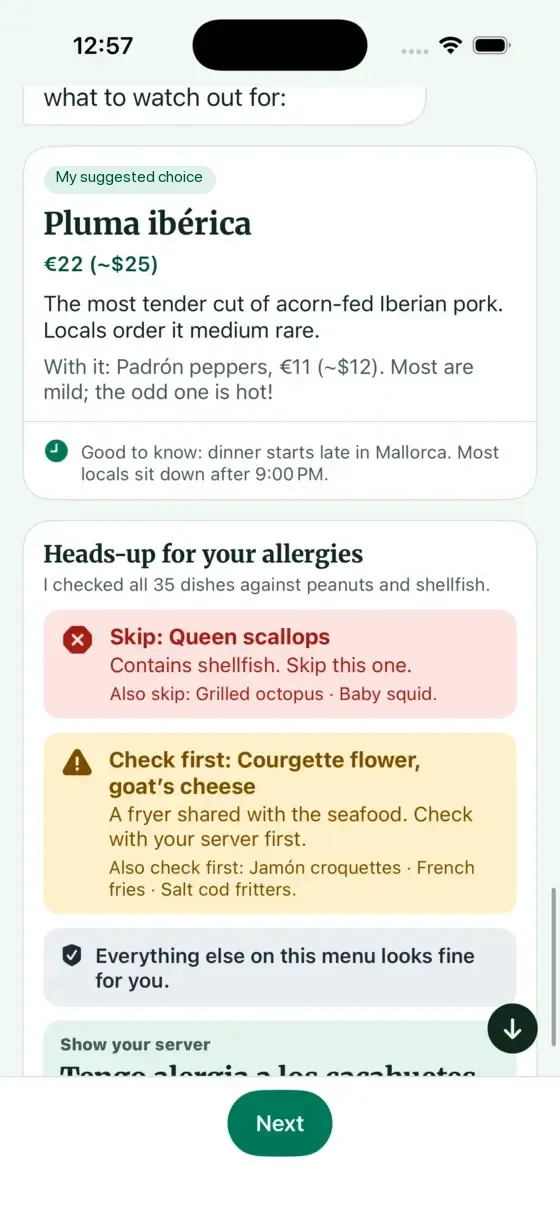
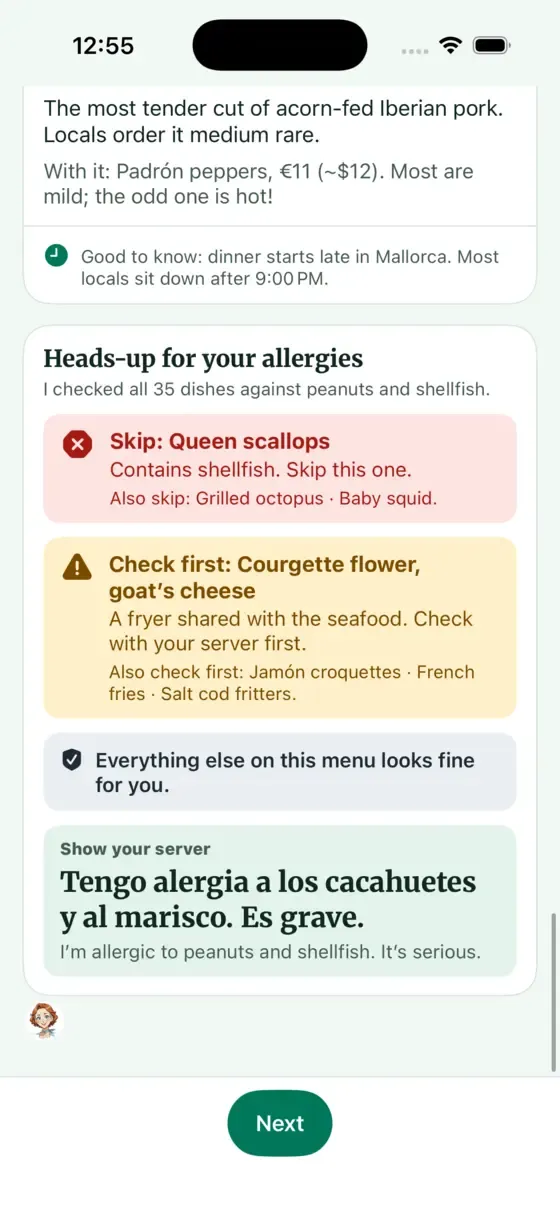
At a lively tapas bar, snap up to 4 photos in a single turn — the tapas menu, the allergen icon key, and the handwritten blackboard specials — and Lucy unpacks each dish, marks unverified items Caution or Unknown rather than guessing Safe, and writes a full-screen Spanish Show-your-server card asking specifically about clean fryers and separate prep.
Keep two honest backups ready: Ask Lucy requires Wi-Fi or mobile data to generate answers (photos snapped in subterranean brick tapas cellars queue safely in her Offline outbox and send once connectivity returns), and she is photo + text chat rather than live spoken interpreting. Tuck a laminated Spanish card into your wallet (see our Food Allergy Translation Cards Guide), download Spanish offline packs in Apple Translate or Google Translate before takeoff, and always confirm fryer separation directly with your server.
Cards to say or show
Tap any Spanish card to display it full screen for your waiter, bartender, or bakery clerk.
Watch out for
- Shared fryers ruin 'naturally gluten-free' tapas: croquetas (bechamel + breadcrumbs), calamares a la romana, and pescaíto frito are battered in wheat flour — and patatas bravas or fried eggplant often share the exact same oil.
- Salmorejo and traditional gazpacho are thickened with bread: iconic Andalusian cold tomato soups blend soaked white bread (pan) straight into the purée. Always verify restaurant bowls (many bottled supermarket gazpachos are labeled Sin Gluten).
- Fideuà is NOT paella: this Catalan and Valencian coastal classic looks identical to seafood paella in the same wide pan, but it is made with toasted wheat vermicelli noodles (fideos) instead of rice.
- Do not pick pintxos off the bread: at Basque pintxos bars in San Sebastián or Bilbao, cold counter tapas sit directly on sliced baguette. Ask the bartender for hot raciones cooked fresh in the kitchen without bread (sin pan).
- Check sausages and paella flavorings: pure Jamón Ibérico is naturally gluten-free (just pork and salt), but morcilla (blood sausage), spiced chorizo, and commercial stock cubes or paella spice packets can contain wheat starch or breadcrumbs.
Common questions
What is FACE in Spain and how does it help celiac travelers?
FACE (Federación de Asociaciones de Celíacos de España) is Spain's national celiac federation. It runs the 'FACE Restauración Sin Gluten' training and audit program for restaurants and licenses the 'Controlado por FACE' packaged-food seal (which applies an internal 10 ppm control alongside the EU's 20 ppm legal 'Sin Gluten' limit).
Is Spanish paella automatically gluten-free?
Traditional paella rice, olive oil, saffron, meat, and seafood contain no gluten — yet cross-contact and convenience shortcuts happen. Always verify that the restaurant uses gluten-free broth (caldo sin gluten) rather than wheat-containing stock cubes or spice mixes, and never confuse paella with fideuà (made with wheat noodles).
Can I find gluten-free beer in regular Spanish bars?
Yes — far more easily than in most countries. Everyday neighborhood bars, tapas spots, and supermarkets across Spain routinely stock Estrella Galicia Sin Gluten, Mahou Sin Gluten, San Miguel Sin Gluten, or Daura Damm (crafted to remove gluten; check your personal comfort with gluten-removed barley beers versus naturally grain-free options).
Why do celiac travelers rave about Mercadona supermarkets in Spain?
Mercadona, Spain's largest supermarket chain, works closely with Spanish celiac associations and stamps 'SIN GLUTEN' clearly right on the front of hundreds of everyday Hacendado private-label staples — from breads, croquetas, and empanadas to sauces, cured meats, and snacks.
Are menu allergen icons in Spain enough to prove a tapa is celiac-safe?
No. Spain's EU 14 allergen icons confirm whether gluten is an intentional recipe ingredient, not whether your food touches a shared fryer, bread-dusted grill, or communal prep board. Always pair the carta de alérgenos with a quick direct check on cross-contact.