Allergies & Diets · Mexico
Food Allergy Guide for Mexico: Mole Nut Traps, Tortillas & Mexican Spanish Cards
Last updated
From peanut-and-sesame mole sauces to 'nuez de la India' (cashews) and wheat-vs-corn tortillas, Mexican kitchens follow their own vocabulary. Here is how to read NOM-051 labels, dodge hidden traps, and show a crisp Mexican Spanish allergy card.

On this page (11 sections)
- In short
- How it works
- Why Mexican Spanish Matters More Than Textbook Spanish for Food Allergies
- The Mexican Allergen Cheat Sheet: Words & Kitchen Traps
- Five Sneaky Mexican Traps That Catch Travelers Every Week
- Naturally Safer Mexican Picks (Always Verify Prep!)
- How to Use Ask Lucy Safely Across Mexico
- Cards to show
- Watch out for
- Common questions
- Use Lucy on the spot
What food-allergic and celiac travelers must know in Mexico
Mexican cooking is built on fresh corn, beans, chilies, and herbs — yet hides major traps for nut, sesame, gluten, and dairy allergies. Rich moles and table-top salsa macha routinely blend peanuts (cacahuate), almonds, and sesame (ajonjolí); cashews are called 'nuez de la India'; northern and resort tortillas often use wheat flour instead of 100% corn (maíz); and cheese and crema land automatically unless you say 'sin queso y sin crema.' Use exact Mexican Spanish terms and confirm every sauce directly.
- Mexican nut words
- Cacahuate (peanut), nuez de la India (cashew), ajonjolí (sesame), pistache (pistachio)
- Packaged food law
- NOM-051 requires bold allergen declarations ('CONTIENE: ...') on supermarket & OXXO packs
- Biggest nut & sesame traps
- Mole sauces, salsa macha (chili oil), chiles en nogada (walnuts), mazapán candy (100% peanut!)
- Gluten & dairy defaults
- Ask '100% maíz, sin harina de trigo' for tortillas, and 'sin queso y sin crema' before plating
How it actually works on the spot
-
Use Mexican Spanish allergy words — not Spain or textbook Spanish
Say 'cacahuate' (not cacahuete), 'ajonjolí' (far more recognized than sésamo), and 'nuez de la India' for cashews. Using authentic local vocabulary gets instant comprehension from taqueros, market cooks, and Mexico City chefs alike.
-
Interrogate every dark sauce, chili oil, and mole before tasting
Tabletop jars of smoky red salsa macha are everywhere in Mexico City and Oaxaca — and almost always packed with peanuts, sesame, or almonds. Treat mole, pipián, encacahuatado, and salsa macha as unsafe for nut or sesame allergies unless the kitchen verifies the exact recipe.
-
Check tortilla grain, shared fryers, and automatic dairy toppings
Central and southern street tacos usually use naturally gluten-free corn (maíz), but northern states and tourist menus mix in wheat flour (harina de trigo) — and queso fresco plus crema get ladled over chilaquiles, enchiladas, and beans by default unless you stop them early.
Why Mexican Spanish Matters More Than Textbook Spanish for Food Allergies
Mexico is one of the world’s great food destinations — and surprisingly adaptable once you know where the landmines sit. Simple grilled meats, fresh lime, cilantro, avocados, pot beans, and genuine 100% corn masa give allergic travelers a huge, vibrant baseline to work with.
Where travelers run into trouble is assuming textbook Spanish covers Mexican kitchens. Walk into a Oaxaca market or a Mexico City fonda with a European Spanish allergy card asking about cacahuetes, anacardos, and sésamo, and you will get polite puzzled blinks. In Mexico, peanuts are cacahuates, cashews are nuez de la India (“nut of India”), sesame is ajonjolí, and pistachios are pistaches.
Pair authentic Mexican vocabulary with an eye for Mexico’s rich, multi-ingredient sauces — especially mole and salsa macha — and you can navigate everything from Playa del Carmen beach clubs to Mexico City tasting menus with far less stress.
The Mexican Allergen Cheat Sheet: Words & Kitchen Traps
Keep this quick reference handy for menus, street carts, and NOM-051 grocery backs at OXXO, La Comer, Chedraui, or Soriana:
| Allergen | Mexican Spanish to use | Where it hides in Mexico |
|---|---|---|
| Peanuts | Cacahuate | Mole poblano / negro, pollo encacahuatado, salsa macha (chili oil), mazapán candy, palanquetas, alegrías |
| Tree Nuts | Nueces, almendras, nuez de la India (cashew), nuez pecana, piñones, pistaches | Chiles en nogada (creamy walnut sauce!), mole sauces, salsa macha, ensalada de manzana, artisanal paletas |
| Sesame | Ajonjolí (more common than sésamo) | Mole sauces, pipián, salsa macha, cemita and burger buns, palanquetas |
| Wheat / Gluten | Gluten / Harina de trigo | Tortillas de harina (flour tortillas), bolillos / tortas, mole (thickened with bread/cookies!), chiles rellenos (flour-dusted egg batter), Baja pescado capeado, shared chip fryers, beer |
| Dairy | Lácteos (leche, queso, crema, mantequilla) | Automatic queso fresco / cotija / Oaxaca and crema on chilaquiles, enchiladas, sopes, elotes, frijoles; agua de horchata (often condensed/evaporated milk!), tres leches, flan |
| Shellfish & Fish | Mariscos (camarón, jaiba, pulpo, almeja) y pescado | Ceviche, aguachile, caldo de camarón, tacos de gobernador, micheladas (Clamato clam broth + salsa inglesa anchovy Worcestershire!) |
| Soy | Soya | Jugo Maggi and salsa de soya (frequently splashed onto aguachile, grilled meats, micheladas, and ceviche!) |
Five Sneaky Mexican Traps That Catch Travelers Every Week
- Tabletop salsa macha. Increasingly placed on tables right beside green and red salsas across Mexico City, Oaxaca, and resort towns, salsa macha looks like simple dark chili flakes steeped in oil. Look closer: almost every recipe blends toasted peanuts (cacahuates), sesame (ajonjolí), or almonds. If you have a nut or sesame allergy, never dip into a dark oily tabletop salsa without asking.
- Mole is a masterwork of stacked allergens. A single traditional Oaxacan or Pueblan mole can hold thirty ingredients — commonly uniting peanuts, almonds, sesame seeds, pumpkin seeds (pepitas), toasted bread or cookies (wheat), and chocolate. Even pipián (pumpkin-seed sauce) frequently mixes in sesame or peanuts. Always ask before ordering any mole dish.
- Corn vs. flour tortillas — and comal cross-contact. Traditional central and southern taquerías press 100% nixtamalized corn (maíz) tortillas, which are naturally gluten-free. Yet northern states (Sonora, Monterrey, Baja) and resort quesadillas default to wheat flour (harina de trigo), some factory-made “corn” tortillas mix in wheat flour so they don’t crack, and busy taquerías warm flour and corn tortillas on the exact same comal (flat griddle). Always ask “¿100 % maíz, sin harina de trigo?” and check the fryer before digging into totopos (tortilla chips).
- Automatic queso and crema. In Mexico, a crumble of salty queso fresco and a drizzle of crema are treated like salt and pepper — sprinkled onto chilaquiles, sopes, tostadas, enfrijoladas, and frijoles refritos even when the menu never lists them. Say “sin queso y sin crema” as you order, not after the plate lands.
- The Jugo Maggi & Salsa Inglesa splash. Coastal seafood shacks, burger joints, and steak marinades across Mexico love Jugo Maggi (hydrolyzed wheat/soy seasoning!) and salsa inglesa (Worcestershire sauce containing anchovies and sometimes barley malt). Celiac, soy-, and fish-allergic travelers should always ask if marinades or michelada mixes use either bottle.
Naturally Safer Mexican Picks (Always Verify Prep!)
Once you confirm clean surfaces and sauces, Mexico gives you a mouthwatering lineup of naturally simpler dishes:
- Tacos on verified 100% maíz tortillas (carne asada, pollo asado, carnitas — check marinade) with fresh pico de gallo, lime, and plain salsa verde (tomatillo, jalapeño, onion, cilantro — confirm no cacahuate or ajonjolí).
- Fresh guacamole (avocado, lime, onion, cilantro, salt — ask for cucumber slices or verified clean-fryer totopos).
- Frijoles de la olla (plain simmered pot beans — ask sin queso, and check whether frijoles refritos use lard/manteca or butter).
- Grilled fish or pollo a la plancha seasoned simply with garlic, lime, and olive oil (solo aceite, sal y limón).
- OXXO & supermarket snacks with Mexico’s NOM-051 allergen summary box clearly printed on the back. (And if you ever need antihistamines or OTC stomach relief during your trip, our Mexican Pharmacy Guide for Travelers walks through exact local names and pharmacy norms.)
How to Use Ask Lucy Safely Across Mexico
Before your flight, save your exact allergies and Severity (mild, moderate, or severe) in your Ask Lucy Profile on iPhone or iPad (iOS 26+) behind explicit one-tap Health consent — and set Diet (such as gluten free or vegetarian) if it applies. Add a short note in Notes to Lucy (up to 2,000 characters), like “Severe peanut, cashew & sesame allergy — flag mole, salsa macha, pipián, and mazapán.”
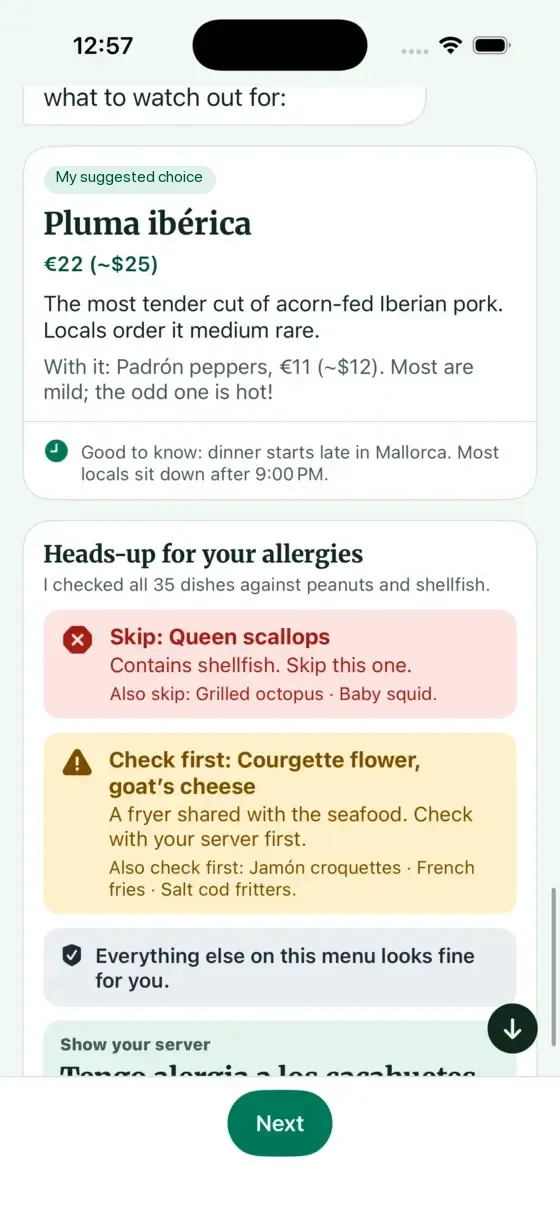
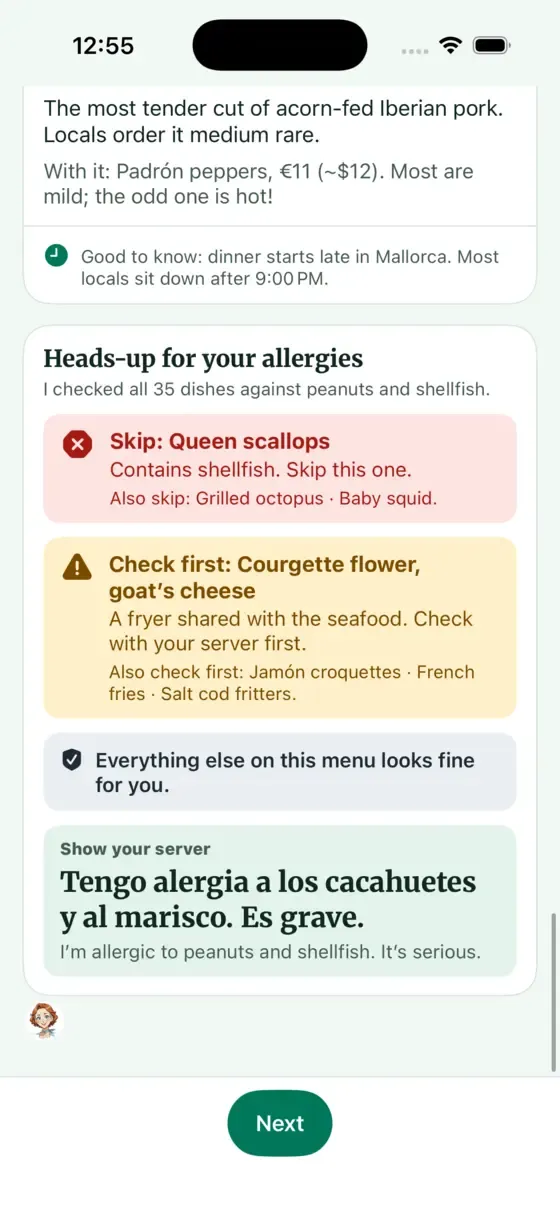
At a restaurant, market stall, or supermarket aisle, snap up to 4 photos in one turn — menus, daily specials, or NOM-051 ingredient labels — and Lucy checks your saved allergies with four explicit Safety verdicts (Safe, Caution, Unsafe, or Unknown — never guessing Safe from a dish name alone) and writes a clear Mexican Spanish Show-your-server card using cacahuate, nuez de la India, and ajonjolí.
Keep two honest travel backups ready: Ask Lucy requires Wi-Fi or mobile data to generate new answers (photos snapped in signal-free cenote towns or indoor markets wait in her Offline outbox and send once signal returns), and she is photo + text chat rather than live spoken interpreting. Carry a laminated Mexican Spanish card (see our Food Allergy Translation Cards Guide), pre-download Spanish offline packs in Apple Translate or Google Translate before takeoff, and confirm every sauce directly with the cook.
Cards to say or show
Tap any Mexican Spanish card to show it full screen to your waiter, taquero, or chef.
Watch out for
- Salsa macha sits right on restaurant tables — and is full of peanuts and sesame: this delicious dark-red Oaxacan/Veracruz chili oil looks like plain chili flakes in oil, yet nearly always blends roasted peanuts (cacahuate), sesame (ajonjolí), and sometimes almonds.
- Mole sauces stack multiple allergens at once: classic mole poblano and mole negro commonly combine peanuts, almonds, sesame seeds, toasted wheat bread or animal crackers (gluten!), chocolate, and lard — avoid unless a kitchen confirms every ingredient.
- Mexican mazapán is pure crushed peanuts, NOT almond marzipan: iconic round De la Rosa mazapán candies sold at every OXXO and checkout counter are made almost entirely of peanuts (cacahuate) and sugar.
- Horchata frequently contains dairy: while Spanish horchata is tiger-nut water, Mexican agua de horchata (rice-cinnamon drink) is routinely enriched with evaporated milk or sweetened condensed milk (leche evaporada / condensada).
- Corn tortillas are not always 100% corn — and tortilla chips share fryers: some commercial tortillerías blend a touch of wheat flour (harina de trigo) into corn masa for softness, and restaurant totopos (chips) often share frying oil with wheat-battered chiles rellenos or Baja fish tacos.
Common questions
What are the Mexican Spanish words for peanuts, tree nuts, and sesame?
Use cacahuate for peanut, ajonjolí for sesame, almendra for almond, nuez for walnut (and nuts generally), nuez pecana for pecan, pistache for pistachio, piñón for pine nut, and nuez de la India for cashew — a uniquely Mexican phrase that literal translation tools often miss.
Are mole sauces safe if I have a peanut, nut, or sesame allergy?
Almost never unless the chef confirms a nut- and seed-free recipe from scratch. Traditional mole poblano, mole negro, mole coloradito, and encacahuatado routinely contain peanuts, almonds, sesame seeds, pumpkin seeds (pepitas), and toasted bread or cookies (wheat).
Are street tacos in Mexico automatically gluten-free?
Authentic central and southern Mexican tacos made on 100% nixtamalized corn tortillas (tortillas de maíz) with simple grilled meat and salsa verde/roja are naturally gluten-free — but always verify! Northern Mexico and resort areas use wheat flour tortillas (tortillas de harina), some commercial corn tortillas add wheat flour for elasticity, and marinades or shared griddles (comales) can introduce cross-contact.
Does packaged food in Mexico label major allergens clearly?
Yes. Under Mexico's NOM-051 food labeling standard, packaged foods at supermarkets (Chedraui, Soriana, La Comer, Walmart) and OXXO convenience stores must list major allergens — including gluten, crustaceans, molluscs (moluscos), eggs, fish, peanuts (cacahuate), soy, milk, tree nuts, and sulfites — clearly beneath the ingredients ('CONTIENE: ...'). Note that sesame (ajonjolí) is NOT mandatory in Mexican CONTIENE: summary boxes, so sesame-allergic travelers should always inspect the full ingredient paragraph.
What Mexican drinks or cocktails hide unexpected allergens?
Watch two big ones: agua de horchata (Mexican rice water frequently blended with condensed or evaporated milk — unsafe for dairy allergies) and micheladas (beer cocktails seasoned with Worcestershire sauce/salsa inglesa containing anchovies and Clamato containing clam broth — unsafe for fish, shellfish, and gluten allergies).