
India, Fiji, Mauritius
Essential Hindi Phrases for Travelers
Last updated March 29, 2026
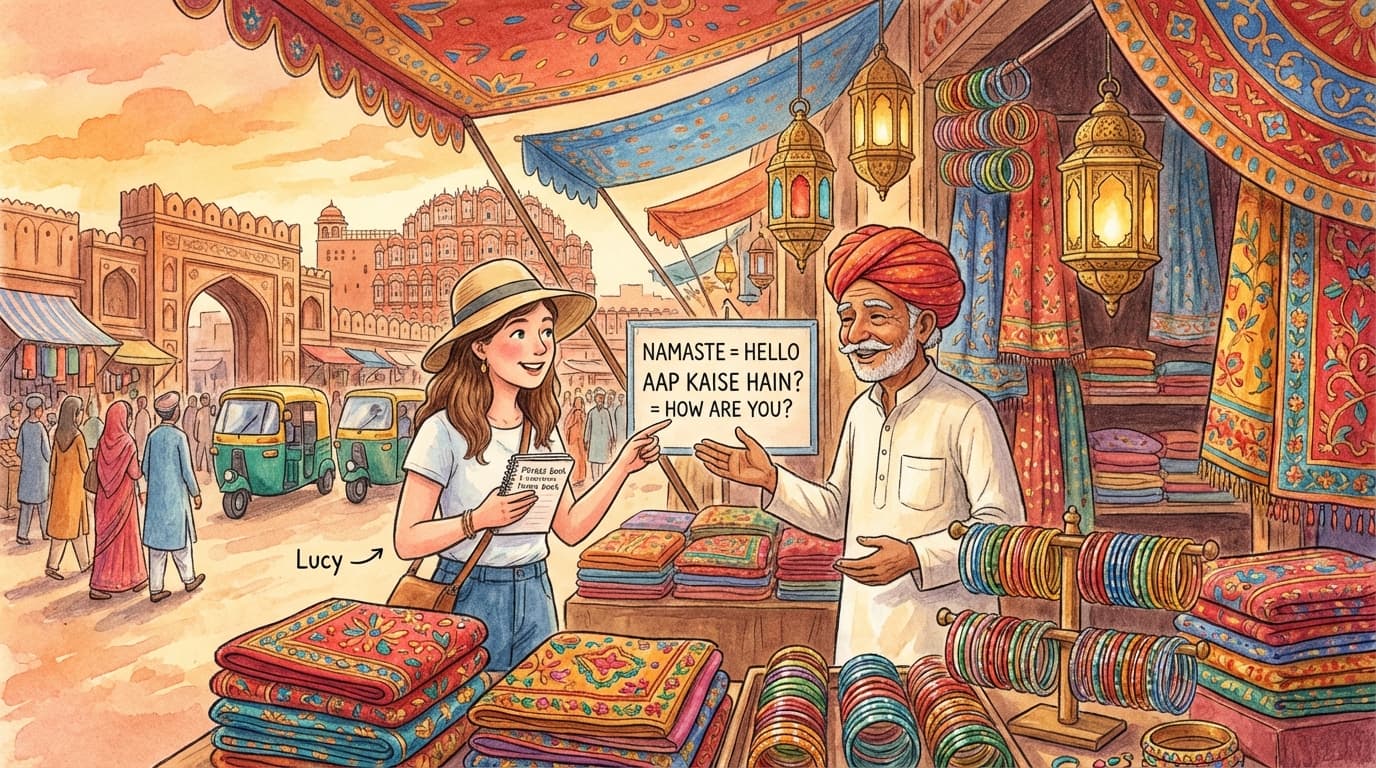
Hindi is one of India's two official languages (alongside English) and is understood by hundreds of millions across northern and central India. While English is widely spoken in Indian cities and tourism, Hindi phrases create instant warmth and connection. Indians are famously hospitable, and the effort of learning even 'Namaste' and 'Dhanyavaad' is met with genuine delight.
Why Learn Hindi Phrases for Travel?
India is a country of extraordinary diversity — over 20 official languages and hundreds of dialects. Hindi serves as the lingua franca across much of northern and central India, and basic Hindi phrases work in Delhi, Rajasthan, Uttar Pradesh, and many other states. English is widely spoken in cities, educated circles, and tourism, but Hindi creates connections that English doesn't — particularly in markets, local restaurants, and rural areas.
Hindi Script and Pronunciation
Hindi uses Devanagari script, which is phonetic and consistent — once you learn the characters, pronunciation is predictable. For travel purposes, you don't need to read Devanagari; learning romanized phrases works well. Hindi has aspirated consonants (a puff of air: 'bh', 'ch', 'dh', 'gh', 'kh', 'ph', 'th') that don't exist in English. The distinction between aspirated and unaspirated sounds changes meaning, but approximate pronunciation will be understood in context.
Eating in India
Indian cuisine is among the world's most diverse and flavourful. Each region has distinct traditions: Mughlai (rich, creamy) in the north, Rajasthani (desert-influenced, hearty), Gujarati (vegetarian, subtly sweet), South Indian (rice-based, coconut, lentils), and Bengali (fish, mustard, sweets). Thali meals — a complete set of dishes on a metal plate — are the best introduction, offering variety and value. Street food (chaat, samosas, dosa) is exceptional at busy stalls with high turnover. Always drink bottled water and verify the seal is intact.
Essential Phrases
| Phrase | English | Pronunciation |
|---|---|---|
| Namaste | Hello / Goodbye (respectful) | nah-mah-STAY |
| Dhanyavaad | Thank you | dhun-yah-VAHD |
| Haan / Nahin | Yes / No | hahn / nah-HEEN |
| Maaf kijiye | Excuse me / Sorry | mahf kee-jee-yeh |
| ...kahan hai? | Where is...? | kah-HAHN hay |
| Kitne ka hai? | How much is it? | KIT-nay kah hay |
| Bahut mahanga hai | It's too expensive | bah-HOOT mah-HEN-gah hay |
| Main samjha/samjhi nahin | I don't understand (m/f) | main SAHM-jhah nah-HEEN |
| Theek hai | OK / That's fine | TEEK hay |
Dining & Restaurant Phrases
| Phrase | English | Pronunciation |
|---|---|---|
| Bill dijiye | The bill, please | bill DEE-jee-yeh |
| Bahut swaadisht! | Very tasty! | bah-HOOT SWAH-deesht |
| Masaledar nahin | Not spicy | mah-SAH-leh-dahr nah-HEEN |
| Ek chai | One tea | ek CHY |
| Shakahari | Vegetarian | shah-kah-HAH-ree |
| Paani | Water | PAH-nee |
Emergency Phrases
| Phrase | English | Pronunciation |
|---|---|---|
| Madad karo! | Help! | MAH-dahd KAH-roh |
| Mujhe doctor chahiye | I need a doctor | MOOJ-heh DOK-ter chah-HEE-yeh |
| Police ko bulao | Call the police | poo-LEES koh boo-LAH-oh |
| Aspatal kahan hai? | Where is the hospital? | AHS-pah-tahl kah-HAHN hay |
Cultural Notes
- •Namaste (with palms pressed together) is universally appropriate and respected. It's used as both hello and goodbye, and avoids the cultural complexities of handshakes with the opposite gender.
- •The head wobble — a side-to-side tilting of the head — can mean yes, no, maybe, I understand, or I'm listening. Context matters. It's one of the most distinctive and confusing gestures for foreign visitors.
- •Eat with your right hand only. The left hand is considered unclean. This applies even to passing food or money.
- •India has a massive vegetarian population. 'Shakahari' (vegetarian) and 'maansahari' (non-vegetarian) are essential words for navigating menus. Many restaurants are entirely vegetarian.