
Northern Europe · Poland
Gdansk Travel Guide
Last updated March 29, 2026
Gdansk is a beautifully rebuilt Hanseatic port city — colourful merchant houses, amber shops, and a history from the Teutonic Knights to the Solidarity movement that ended communism.
How Do You Get to the Old Town?
Shuttle bus or taxi (10-15 euro). The Old Town is entirely walkable — main sights along a 1km stretch.
What Can You See in 6 Hours?
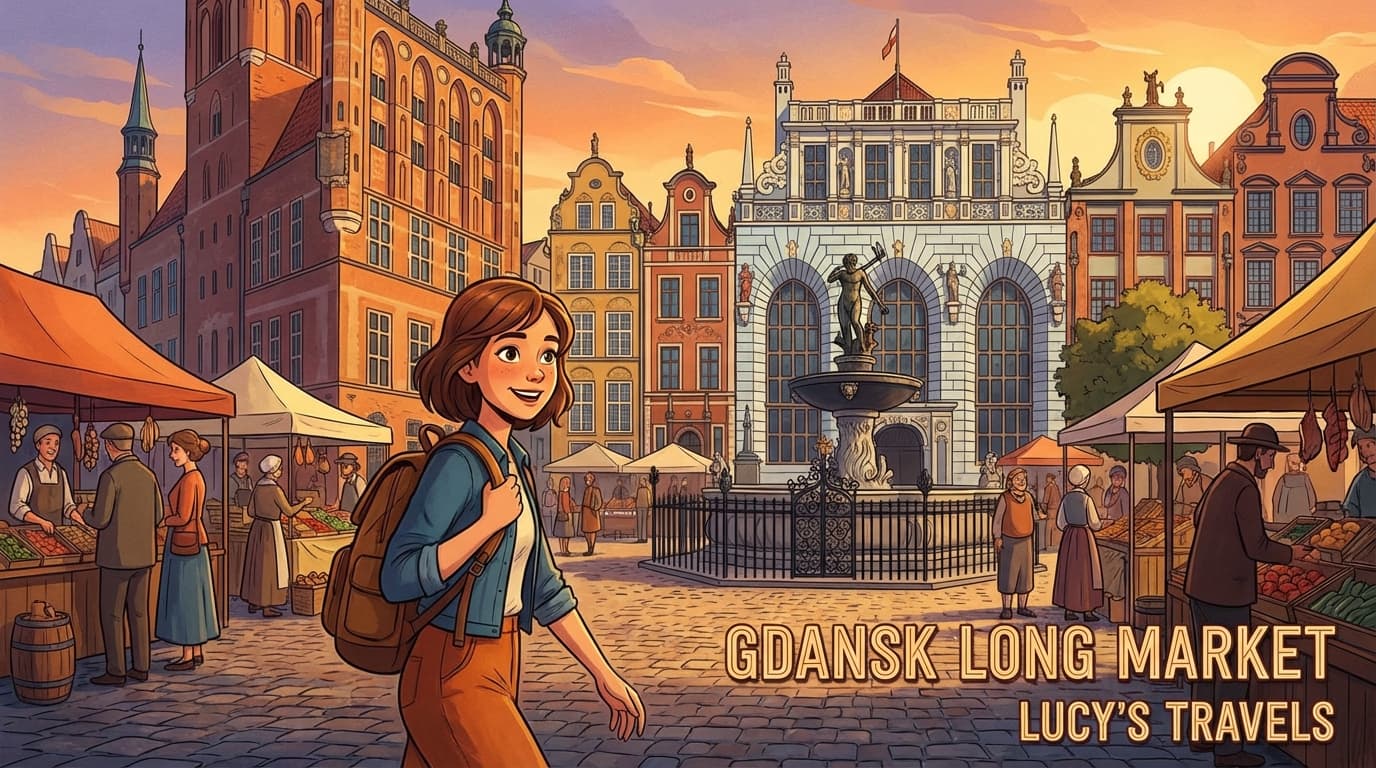
Long Market — Colourful merchant houses, Neptune's Fountain, Town Hall, and Artus Court.
Mariacka Street — Gothic gargoyles, amber shops, and St Mary's Church (largest brick church in the world).
European Solidarity Centre — The Solidarity story. Moving, interactive, and essential.
Westerplatte — Where WWII began. Memorial marking the site of the first German attack.
Where Should You Eat?
Pierogi: Dumplings with cheese and potato, meat, or fruit. 15-25 PLN a plate.
Zurek: Sour rye soup with sausage and egg. Tangy and uniquely Polish.
Goldwasser: Gdansk's signature liqueur with real gold flakes.
Is Gdansk Worth Exploring Independently?
Safe, affordable, English widely spoken. Ship excursions charge 60-80 euro for walks you can do yourself.
Useful Local Phrases
Dzien dobry
Good day
(jen DOH-bree)
Dziekuje
Thank you
(jen-KOO-yeh)
Ile to kosztuje?
How much?
(EE-leh toh kosh-TOO-yeh)
Rachunek, prosze
The bill, please
(rah-HOO-nek, PROH-sheh)
Local Tips
- •Gdansk is the amber capital of the world. Mariacka Street has the best selection.
- •The European Solidarity Centre tells the story of the movement that ended communism.
- •Poland is very affordable. Full lunch with beer 8-15 euro.
- •Poland uses the Zloty (PLN). Euros accepted but at poor rates.