
Italy
Italian Food Guide for Travelers
Last updated March 29, 2026
Italian cuisine is far more regional than most travellers expect. What you eat in Sicily bears little resemblance to a plate in Milan. Every region has its own pasta shapes, sauces, and specialities — and Italians take these distinctions seriously. Understanding even a few basics will transform your meals from tourist-trap spaghetti into the kind of food memories you talk about for years.
Understanding Italian Regional Cuisine
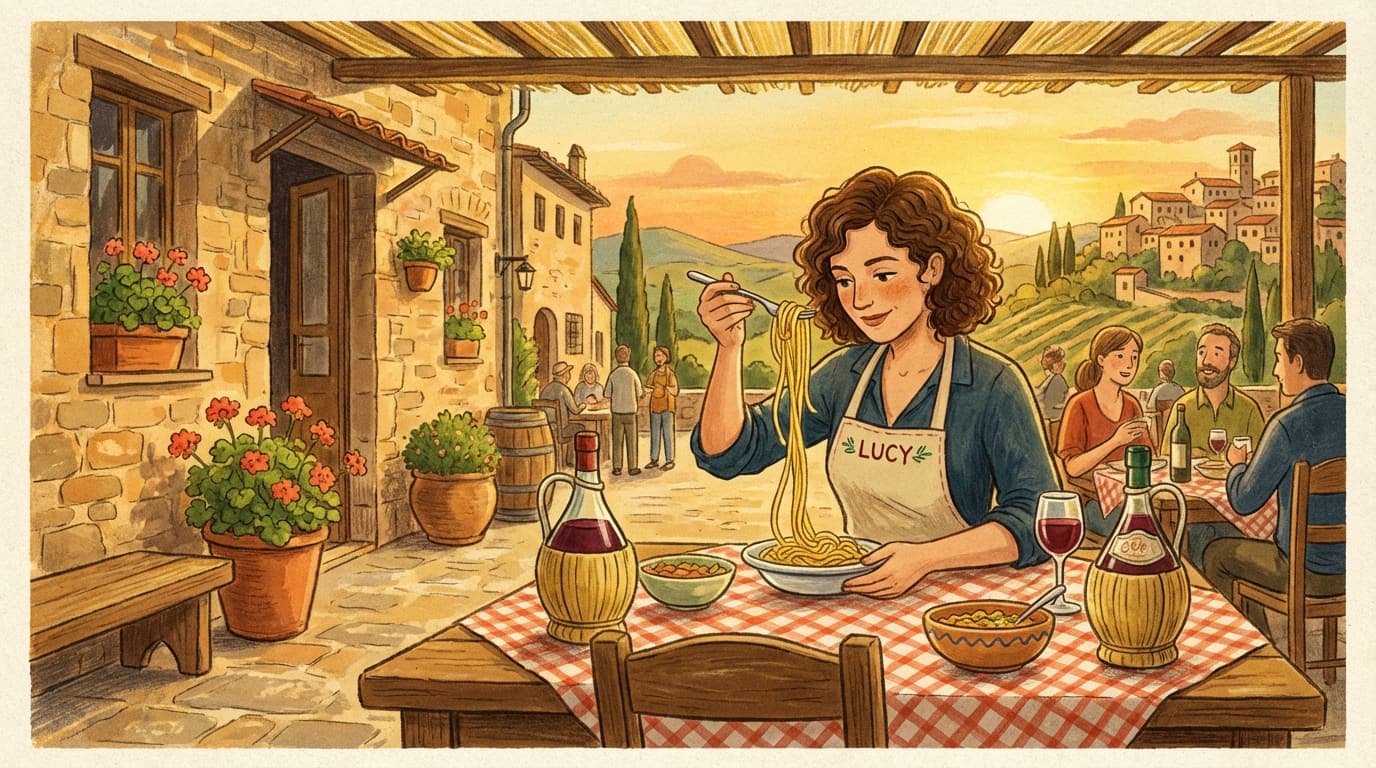
Italy doesn't have one cuisine — it has twenty. Each region fiercely guards its local specialities. In Rome, you'll eat carbonara and cacio e pepe. In Naples, it's all about pizza and seafood. Bologna claims ragu. Milan does risotto and ossobuco. Sicily goes big on seafood, aubergines, and pistachio. The golden rule: eat what's local to where you are.
How Italian Meals Work
A traditional Italian meal has four courses: antipasto, primo, secondo with a contorno, and dolce. Nobody expects you to order all four. Most Italians at lunch will have just a primo or a secondo. The important thing is not to order a primo and secondo on the same plate.
Navigating Menus and Avoiding Tourist Traps
Avoid restaurants with photos on the menu, waiters aggressively beckoning you in, or menus in six languages. Look for places where the menu is handwritten, where locals are eating, and where the menu is short — a short menu means fresh ingredients prepared daily. Lucy can translate any Italian menu instantly.
Tipping and Payment
Tipping is not expected in Italy. The coperto and servizio replace tipping. If service was exceptional, rounding up or leaving a couple of euros is appreciated but never required. Many smaller restaurants are cash-only, so always have some cash as backup.
Must-Try Dishes
Cacio e Pepe
$$Rome's signature pasta — just pecorino cheese, black pepper, and pasta water emulsified into a silky sauce. Deceptively simple and extraordinary when done right.
Contains gluten, dairy
Pizza Margherita
$The original Neapolitan pizza — San Marzano tomatoes, fresh mozzarella, basil, and olive oil on a blistered, chewy crust.
Contains gluten, dairy
Ossobuco alla Milanese
$$$Braised veal shanks in white wine and broth, finished with gremolata. A Milanese classic, usually served with risotto.
Contains meat; gluten-free if served with risotto
Bistecca alla Fiorentina
$$$A massive T-bone steak from Chianina cattle, grilled rare over hot coals. Shared between two in Florence.
Contains meat; naturally gluten-free
Arancini
$Deep-fried risotto balls stuffed with ragu, mozzarella, or pistachios. A Sicilian street food staple found at every bakery and bar.
Contains gluten, dairy
Gelato
$Italian ice cream with more milk and less cream than American-style. Look for natural colours and metal lids — signs of artisanal production.
Contains dairy; sorbetto flavours are dairy-free
Carbonara
$$Guanciale (cured pork cheek), egg yolks, pecorino romano, and black pepper. No cream — ever. A Roman commandment.
Contains gluten, dairy, eggs, pork
Focaccia di Recco
$Paper-thin crispy flatbread stuffed with oozing stracchino cheese. A Ligurian speciality nothing like regular focaccia.
Contains gluten, dairy
Menu Vocabulary
| Term | Meaning | Category |
|---|---|---|
| Antipasto | Starter/appetiser course | Courses |
| Primo | First course — pasta, risotto, or soup | Courses |
| Secondo | Main course — meat or fish | Courses |
| Contorno | Side dish — usually vegetables, ordered separately | Courses |
| Coperto | Cover charge per person — normal, not a scam | Dining |
| Alla griglia | Grilled | Cooking Methods |
| Fritto/a | Fried | Cooking Methods |
| Al forno | Baked/oven-roasted | Cooking Methods |
| Pesce | Fish | Proteins |
| Vitello | Veal | Proteins |
| Dolce | Dessert | Courses |
| Il conto | The bill | Dining |
Dietary Restriction Guide
Vegetarian
Italy is one of the easier European countries for vegetarians. Pasta with vegetable sauces (pomodoro, arrabbiata, aglio e olio), margherita pizza, caprese salad, and risotto are widely available. Ask for 'senza carne' (without meat). Watch for hidden meat in ragu sauces.
Vegan
Pasta with tomato sauce or aglio e olio is reliably vegan. Bruschetta, grilled vegetables, and bean soups work well. Say 'senza formaggio, senza burro'. Neapolitan pizza marinara is traditionally vegan.
Gluten-Free
Italy has excellent coeliac awareness thanks to high diagnosis rates. Many restaurants stock gluten-free pasta. Risotto is naturally gluten-free. Polenta dishes in the north are safe. Look for the AIC sticker.
Common Allergies
Nut allergies: pesto contains pine nuts; Sicilian desserts use almonds and pistachios. Dairy is pervasive. Shellfish is common coastal. Ask 'Sono allergico/a a...' (I am allergic to...).
Ordering Tips
- •Italian meals follow a strict order: antipasto, primo, secondo + contorno. You don't have to order every course — just a primo is perfectly acceptable.
- •Never ask for parmesan on seafood pasta — it's considered a serious faux pas.
- •Cappuccino is a breakfast drink only. After 11am, order espresso or caffe macchiato.
- •Coperto (cover charge) is standard and legal. Tipping is not expected but rounding up is appreciated.
- •Eating standing at the bar is cheaper than sitting at a table in many cafes.