Prices & Bills · Japan
Tipping in Japan: Exact Etiquette, Service Charges & The Rare Exceptions
Last updated
Leave extra yen on a Tokyo dinner table and your server will probably sprint down the street to give it back. Here is Japan's exact tipping rule for every situation — plus how to read サービス料, チャージ, and ryokan envelopes.

On this page (11 sections)
- In short
- How it works
- Why Leaving a Tip in Japan Backfires (in the Nicest Possible Way)
- Tipping in Japan: Situation-by-Situation Cheat Sheet
- Decoding サービス料 (Service Charge) vs. Tipping
- How the Rare Kokorozuke Envelope Custom Works
- Spot Fine Print Before You Pay with Ask Lucy
- Cards to show
- Watch out for
- Common questions
- Use Lucy on the spot
Tipping in Japan in 30 seconds
Do NOT tip in Japan — not in restaurants, izakayas, bars, taxis, salons, or standard hotels. Great service (omotenashi) is built into the menu price and the craft; leaving cash behind causes confusion and awkwardness. The only rare exceptions where a small gift is customary or accepted are luxury traditional ryokans (kokorozuke in a decorative pochibukuro envelope) and standout private English-speaking tour guides — and even there, it is never mandatory.
- General rule
- 0% everywhere — restaurants, taxis, bars, cafes, hotels, and spas
- Service charge (サービス料)
- 10%–15% added automatically at upscale hotel restaurants, fine dining & lounges — still add 0% on top
- Izakaya & bar fees
- お通し (¥300–¥500 starter) & チャージ (¥500–¥1,500 bar seat fee) are normal cover charges, not tips
- Rare exception rule
- If gifting a luxury ryokan attendant or private guide, NEVER hand bare cash — use a clean pochibukuro envelope
How it actually works on the spot
-
Pay the exact printed bill — down to the single yen
Whether a Tokyo taxi meter reads ¥1,480 or a ramen tab comes to ¥1,100, pay the exact figure and accept every coin of change. Telling a driver or server to 'keep the change' usually triggers genuine confusion rather than delight.
-
Place cash neatly on the little payment tray (カルトン)
At Japanese registers and hotel desks, set your bills or credit card gently onto the small blue, wooden, or leather tray sitting on the counter instead of thrusting money straight into the cashier's hand.
-
Spot サービス料, チャージ, and お通し before you worry about the bill
Upscale hotel restaurants and cocktail bars often add a 10%–15% サービス料 (service charge) or ¥500–¥1,500 チャージ (table charge), and izakayas add ¥300–¥500 for お通し. All three are transparent house fees printed on the menu — not hidden tourist tips.
-
Reward standout hospitality with warm words instead of bills
A sincere 'Gochisōsama deshita!' ('Thank you for the wonderful meal!') as you leave a restaurant — or a thoughtful online review naming the spot — means far more in Japan than leaving spare coins on the table.
Why Leaving a Tip in Japan Backfires (in the Nicest Possible Way)
If you arrive in Tokyo from North America, your hand will twitch toward your wallet every single time a ramen chef bows warmly, a taxi driver pops the automatic door open with spotless white gloves, or a hotel clerk sprints into the rain holding an umbrella for you. Resist the urge.
In Japan, tipping is not part of everyday culture. Exceptional attentiveness — called omotenashi (おもてなし) — is treated as the baseline pride of the craft, not an upgrade unlocked by extra cash. Leave two ¥500 coins beside your plate in Kyoto and your server will not pocket them with a smile; nine times out of ten, they will jog halfway down the block waving your “forgotten” money in the air, leaving both of you flustered.
Tipping in Japan: Situation-by-Situation Cheat Sheet
Bookmark this table and you will never hesitate at a register, cab door, or hotel desk again:
| Situation | Tip? | What to expect & do instead |
|---|---|---|
| Restaurants & cafes | No (0%) | Pay the exact bill at the register by the front door; say “Gochisōsama deshita!” on your way out. |
| Izakayas | No (0%) | Expect a standard ¥300–¥500 otōshi (お通し) seating cover with a tiny chef’s bite — normal for everyone, not a tip. |
| Bars & cocktail lounges | No (0%) | Many cozy bars list a table charge (チャージ, ¥500–¥1,500) or 10%–15% サービス料 on the menu — pay that exact total. |
| Taxis | No (0%) | Pay the meter down to the exact yen; drivers return exact change quickly and never expect rounded-up fares. |
| Standard hotels & porters | No (0%) | Do not tip bellhops, concierges, or leave bills on pillows for housekeeping — staff are trained not to accept cash. |
| Luxury ryokans (traditional inns) | Optional (rare) | Never required (most already add サービス料). If giving traditional kokorozuke (心付け) to your attendant (nakai-san), place ¥1,000–¥5,000 crisp bills inside a decorative pochibukuro (ポチ袋) envelope upon arrival. |
| Private English-speaking tour guides | Optional (accepted) | Not expected, though accepted for standout full-day private guiding: ¥2,000–¥5,000 inside a clean envelope at day’s end — never bare cash. |
| Hair salons, barbers & spas | No (0%) | The listed menu price is final; even a two-hour head spa or meticulous Tokyo haircut includes zero gratuity. |
Decoding サービス料 (Service Charge) vs. Tipping
Confusion usually creeps in on your first upscale hotel dinner or late-night Ginza cocktail bill, when an extra 10% or 15% line pops up beneath the subtotal. That line is サービス料 (sābisu-ryō, service charge) — and knowing the difference between three Japanese bill fees keeps every tab transparent:
サービス料(Service charge, usually 10%–15%): Charged automatically at five-star hotels, traditional fine-dining kaiseki rooms, high-end sushi counters, and refined lounges, on top of Japan’s 10% consumption tax (消費税). It is a fixed house fee disclosed at the bottom of the menu, not an invitation to tip more.チャージ/テーブルチャージ/席料(Table or seating charge, usually ¥500–¥1,500): Common at intimate craft-cocktail bars, jazz kissa, and tiny Golden Gai watering holes where space is scarce and guests nurse drinks slowly. Often includes a small bowl of mixed nuts or rice crackers.お通し(Otōshi, usually ¥300–¥500): The classic traditional izakaya seating appetizer — locals pay the exact same amount as visitors.
How the Rare Kokorozuke Envelope Custom Works
If you splurge on a classic high-end ryokan in Hakone, Kyoto, or Kanazawa where a dedicated room attendant (nakai-san) prepares your tatami room, serves a ten-course kaiseki dinner in-room, and lays out your futon, you may read about kokorozuke (心付け) — literally “attaching one’s heart.”
First, remember it is never mandatory, and if your booking already lists a サービス料 service charge, even most Japanese guests skip it. If you do wish to offer kokorozuke (or thank a stellar private day guide), follow three graceful rules:
- Buy a small decorative envelope (pochibukuro, ポチ袋) for ¥100–¥300 at any 7-Eleven, Daiso, or stationery shop. Never hand naked bills.
- Fold crisp, new notes neatly in thirds to fit inside a pochibukuro (or use a full-size white envelope if giving unfolded notes) — typically ¥1,000–¥3,000 per night at a ryokan, or ¥2,000–¥5,000 for a full-day private guide.
- Present it discreetly with both hands — ideally early in your ryokan stay with a soft “Kokoro bakari desu ga” (“Just a small token of appreciation”). If a host politely refuses, bow warmly and tuck it away without insisting.
Spot Fine Print Before You Pay with Ask Lucy
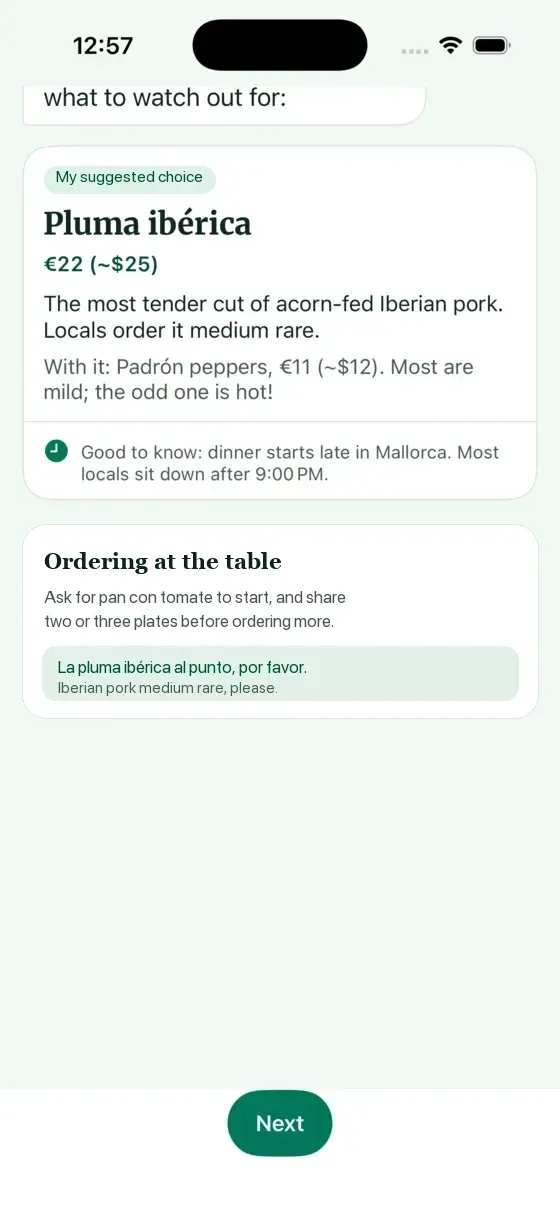
Japanese cocktail menus and restaurant receipts pack サービス料, テーブルチャージ, お通し, and 税込 vs 税抜 tax rules into tiny vertical footnotes at the bottom of the page. Point Ask Lucy on your iPhone at any Japanese menu footer or itemized receipt (up to 4 photos in one turn if the check spans slips). Lucy translates every line item clearly, flags table charges or service fees before you sit down, and shows the true total as a Home-first price ($62 (¥9,540)) at live exchange rates — zero guesswork and zero awkwardness at the counter.
Cards to say or show
Tap any card to show it full screen to servers, ryokan hosts, or cashiers.
Watch out for
- Never leave bills or coins on the table after paying: your server will assume you forgot your money and chase you down the sidewalk to hand it back.
- Never hand bare cash as a thank-you gift: in the rare cases where you give kokorozuke at a luxury ryokan or to a private guide, fold crisp new notes inside a clean envelope (pochibukuro, sold for ¥100–¥300 at convenience stores and stationery shops) and offer it with both hands.
- Do not confuse サービス料 (service charge) with a tipping prompt: a 10%–15% service charge at luxury hotel dining rooms and cocktail lounges is simply part of the fixed bill — you still add zero tip on top.
- Do not leave cash on hotel pillows for housekeeping: Japanese hotel housekeepers are strictly trained not to take guest cash; bills left on the bed will either sit untouched or wait neatly folded with a thank-you note that they cannot accept it.
- Check small print at late-night bars in Golden Gai or Ginza: a ¥500–¥1,500 チャージ (table/seating charge) is normal at tiny 8-seat bars — snap the door or menu sign with Ask Lucy before sitting down so you know the terms up front.
Common questions
Is it really offensive to tip in Japan?
Not 'angry' offensive, just genuinely awkward and confusing. In Japanese hospitality (omotenashi), delivering careful, attentive service is a source of professional pride already reflected in the listed price. Offering extra cash can accidentally imply the worker needs charity or force them to break company policy by refusing you.
What is サービス料 (sābisu-ryō) on my hotel or fine-dining receipt?
サービス料 is a mandatory 10% to 15% service charge levied by upscale hotels, luxury ryokans, fine-dining kaiseki/sushi restaurants, and high-end lounges — separate from Japan's 10% consumption tax (消費税). It is disclosed in small print on the menu, included automatically in your total, and never requires an extra tip.
Do I have to give kokorozuke (envelope money) at a traditional ryokan?
No — especially if your ryokan already charges a 10%–15% サービス料 (most modern luxury ryokans do). Kokorozuke (¥1,000–¥5,000 inside a clean pochibukuro envelope handed to your room attendant upon arrival) is an optional old-school gesture for deeply personalized, multi-course in-room service — skipping it is completely normal and polite.
Should I tip a private English-speaking tour guide in Japan?
It is never required, and guides are paid agreed rates. However, private guides who work regularly with international visitors understand the gesture — if a full-day private guide went far above and beyond, offering ¥2,000–¥5,000 neatly tucked inside a clean envelope at the end of the day is warmly received. If they politely decline, respect their refusal and leave them a glowing review instead.