
Tanzania, Kenya, Uganda, DRC, Rwanda, Burundi
Essential Swahili Phrases for Travelers
Last updated March 29, 2026
Swahili (Kiswahili) is East Africa's lingua franca, spoken by over 100 million people across multiple countries. It uses the Latin alphabet, has very consistent pronunciation, and is considered one of the easiest African languages for English speakers to learn. For safari travellers and visitors to Tanzania and Kenya, basic Swahili phrases create instant rapport with guides, hotel staff, and local communities.
Why Learn Swahili for Travel?
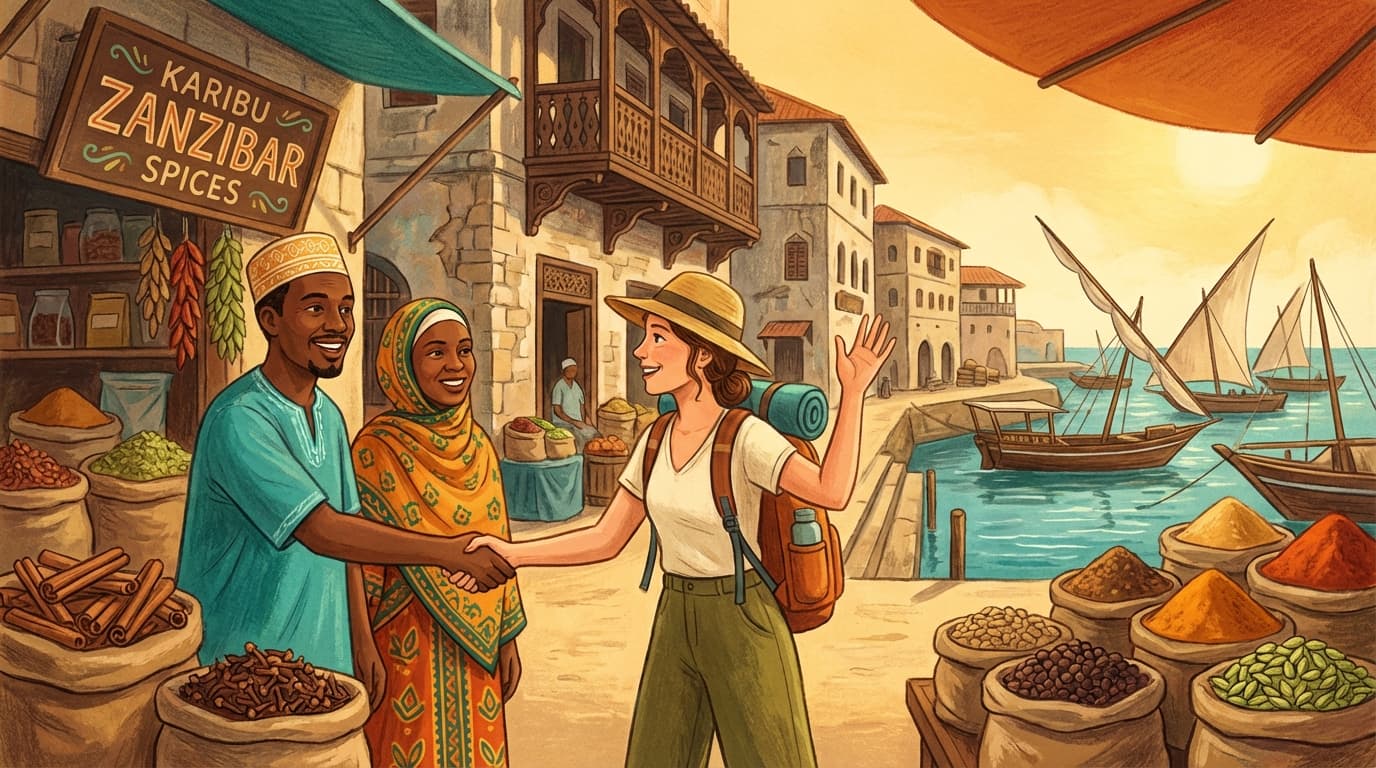
Swahili is one of the most useful languages in Africa, understood across Tanzania, Kenya, Uganda, and parts of the DRC, Rwanda, and Burundi. For safari travellers especially, Swahili phrases create a genuine connection with guides, camp staff, and local communities that English alone doesn't achieve. A 'Jambo' and 'Asante sana' show respect and effort that is warmly received.
Swahili Pronunciation
Swahili pronunciation is extremely consistent and phonetic. Every letter is pronounced, stress typically falls on the second-to-last syllable, and there are no tones. The only unfamiliar sounds for English speakers are the prenasalised consonants: MB, ND, NG, NJ, and NZ at the start of words. In 'Nzuri' (good), the N is lightly pronounced before the Z. Vowels are consistent: A (ah), E (eh), I (ee), O (oh), U (oo).
East African Food and Culture
East African cuisine is built on staples like ugali (stiff maize porridge — the base of most meals), nyama choma (grilled meat — a Kenyan favourite), pilau (spiced rice), and chapati (flatbread influenced by Indian cuisine). In coastal areas like Zanzibar, seafood and Swahili-Indian fusion dishes are extraordinary. On safari, lodge and camp food is typically excellent and surprisingly diverse. In local restaurants (known as 'hoteli' in Swahili), meals are communal, generous, and very affordable.
Essential Phrases
| Phrase | English | Pronunciation |
|---|---|---|
| Jambo | Hello (to tourists — simplified) | JAHM-boh |
| Habari? | How are you? / What's the news? | hah-BAH-ree |
| Nzuri | Good / Fine (reply to Habari) | n-ZOO-ree |
| Karibu | Welcome | kah-REE-boo |
| Asante (sana) | Thank you (very much) | ah-SAHN-teh (SAH-nah) |
| Tafadhali | Please | tah-fah-THAH-lee |
| Ndiyo / Hapana | Yes / No | n-DEE-yoh / hah-PAH-nah |
| Pole pole | Slowly slowly (relax, take it easy) | POH-leh POH-leh |
| Hakuna matata | No problems / Don't worry | hah-KOO-nah mah-TAH-tah |
| ...iko wapi? | Where is...? | EE-koh WAH-pee |
| Bei gani? | How much? / What's the price? | bay GAH-nee |
Dining & Restaurant Phrases
| Phrase | English | Pronunciation |
|---|---|---|
| Bili, tafadhali | The bill, please | BEE-lee, tah-fah-THAH-lee |
| Chakula kizuri! | Good food! | chah-KOO-lah kee-ZOO-ree |
| Maji, tafadhali | Water, please | MAH-jee, tah-fah-THAH-lee |
| Bia moja | One beer | BEE-ah MOH-jah |
| Bila pilipili | Without pepper/chilli | BEE-lah pee-lee-PEE-lee |
Emergency Phrases
| Phrase | English | Pronunciation |
|---|---|---|
| Msaada! | Help! | m-sah-AH-dah |
| Nahitaji daktari | I need a doctor | nah-hee-TAH-jee dahk-TAH-ree |
| Piga simu polisi | Call the police | PEE-gah SEE-moo poh-LEE-see |
| Hospitali iko wapi? | Where is the hospital? | hos-pee-TAH-lee EE-koh WAH-pee |
Cultural Notes
- •'Hakuna matata' is a real Swahili phrase used in daily life, not just a Disney invention. It means 'no worries' and reflects a genuine East African philosophy of patience and acceptance.
- •'Pole pole' (slowly slowly) is the Swahili approach to life — and the essential mindset for climbing Kilimanjaro, navigating markets, and adjusting to East African pace.
- •Greeting etiquette in East Africa involves extended exchanges. 'Habari?' (How are you?) should be answered with 'Nzuri' (good) and the greeting reciprocated. Taking time to greet properly shows respect.
- •On safari, your guide is your most valuable resource. A genuine 'Asante sana' (thank you very much) and appropriate tipping (usually $10-20/day for guides) goes a long way.