
Hong Kong, Macau, Guangdong Province (China)
Essential Cantonese Phrases for Travelers
Last updated March 29, 2026
Cantonese is the language of Hong Kong, Macau, and southern China's Guangdong province. It has six to nine tones (depending on how you count), making it even more tonal than Mandarin. Despite this complexity, travel Cantonese is rewarding to learn — Hong Kongers are passionate about their language and culture, and a few Cantonese phrases show respect that Mandarin or English alone doesn't convey.
Why Learn Cantonese for Hong Kong Travel?
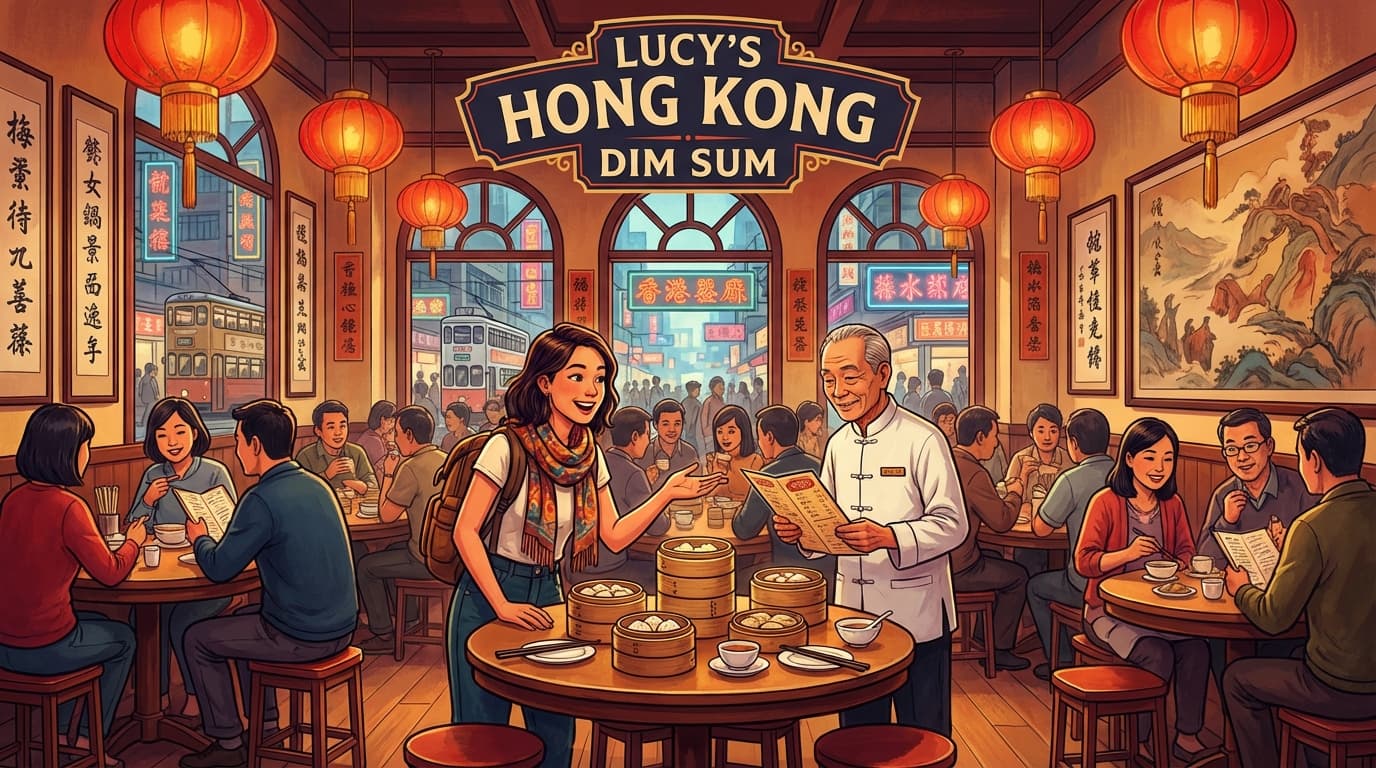
Hong Kong is a bilingual city (Cantonese and English), but Cantonese is the heart language. Markets, street food stalls, local restaurants, and neighbourhood shops operate primarily in Cantonese. While you can get by in English at hotels and tourist attractions, a few Cantonese phrases open up the real Hong Kong — the dai pai dong (open-air food stalls), the cha chaan teng (local cafe), and the neighbourhood life that makes this city extraordinary.
Cantonese Tones
Cantonese has six main tones — high flat, high rising, mid flat, low falling, low rising, and low flat. Don't panic. For travel purposes, focus on learning set phrases rather than mastering the tone system. Context and body language carry enormous weight, and Hong Kongers are used to hearing non-native Cantonese from mainland Chinese visitors. Your attempts will be understood and appreciated.
Dim Sum and Hong Kong Food Culture
Hong Kong is one of the world's greatest food cities. Dim sum is the quintessential experience — go to a traditional dim sum restaurant for breakfast or lunch, order har gow (shrimp dumplings), siu mai (pork dumplings), char siu bao (BBQ pork buns), and cheung fun (rice noodle rolls). Don't miss: wonton noodle soup, roast goose, egg tarts from a local bakery, and milk tea from a cha chaan teng. Street food in Mong Kok — fish balls, egg waffles, and stinky tofu — is an adventure in itself.
Essential Phrases
| Phrase | English | Pronunciation |
|---|---|---|
| Nei hou | Hello | nay HOH |
| Zou san | Good morning | dzoh SAHN |
| Baai baai | Bye bye | bye-bye |
| M goi | Thank you (for a service) / Excuse me | mm-GOY |
| Do ze | Thank you (for a gift) | doh-JEH |
| Hai / M hai | Yes / No | HIGH / mm-HIGH |
| ...hai bin dou? | Where is...? | high BEEN-doh |
| Gei do chin? | How much? | GAY-doh CHEEN |
| Teng m ming | I don't understand | tehng mm-MING |
Dining & Restaurant Phrases
| Phrase | English | Pronunciation |
|---|---|---|
| Maai daan | The bill, please | my-DAHN |
| Loeng wai | Two people (for seating) | LUHNG-why |
| Jau me toei gaai? | What do you recommend? | yow meh TOEY-guy |
| Ngo deoi...man gam | I'm allergic to... | ngoh DOEY...mun-GAHM |
| Yat bui be zau | One glass of beer | yaht BOO-ee BEH-jow |
| Hou hou sik! | Very delicious! | HOH-HOH-sik |
Emergency Phrases
| Phrase | English | Pronunciation |
|---|---|---|
| Gau meng! | Help! | GOW-ming |
| Ngo jiu tai ji sang | I need to see a doctor | ngoh YEW-tie yee-SAHNG |
| Giu ging caat | Call the police | GEW GING-chaht |
| Ji jyun hai bin? | Where is the hospital? | yee-YOON high BEEN |
Cultural Notes
- •Cantonese has two different 'thank yous': 'm goi' for services and actions (someone holds a door, a waiter brings food), and 'do ze' for gifts and treats (someone gives you a present).
- •Dim sum is a Cantonese art form. Point at carts as they pass, or mark the paper menu card. Tea service is central — tap two fingers on the table to say 'thank you' when someone pours your tea.
- •Hong Kong people speak Cantonese, not Mandarin, as their first language. Using Cantonese phrases rather than Mandarin shows cultural awareness that locals appreciate.
- •The Octopus card is used for everything in Hong Kong — trains, buses, ferries, convenience stores, restaurants. Get one immediately on arrival.