
Mediterranean · Croatia
Dubrovnik Travel Guide
Last updated March 28, 2026
Dubrovnik's Old Town is a perfectly preserved medieval fortress city perched above the Adriatic. Walking the ancient walls, exploring marble streets, and eating fresh seafood with a sea view — it's everything you imagined and more.
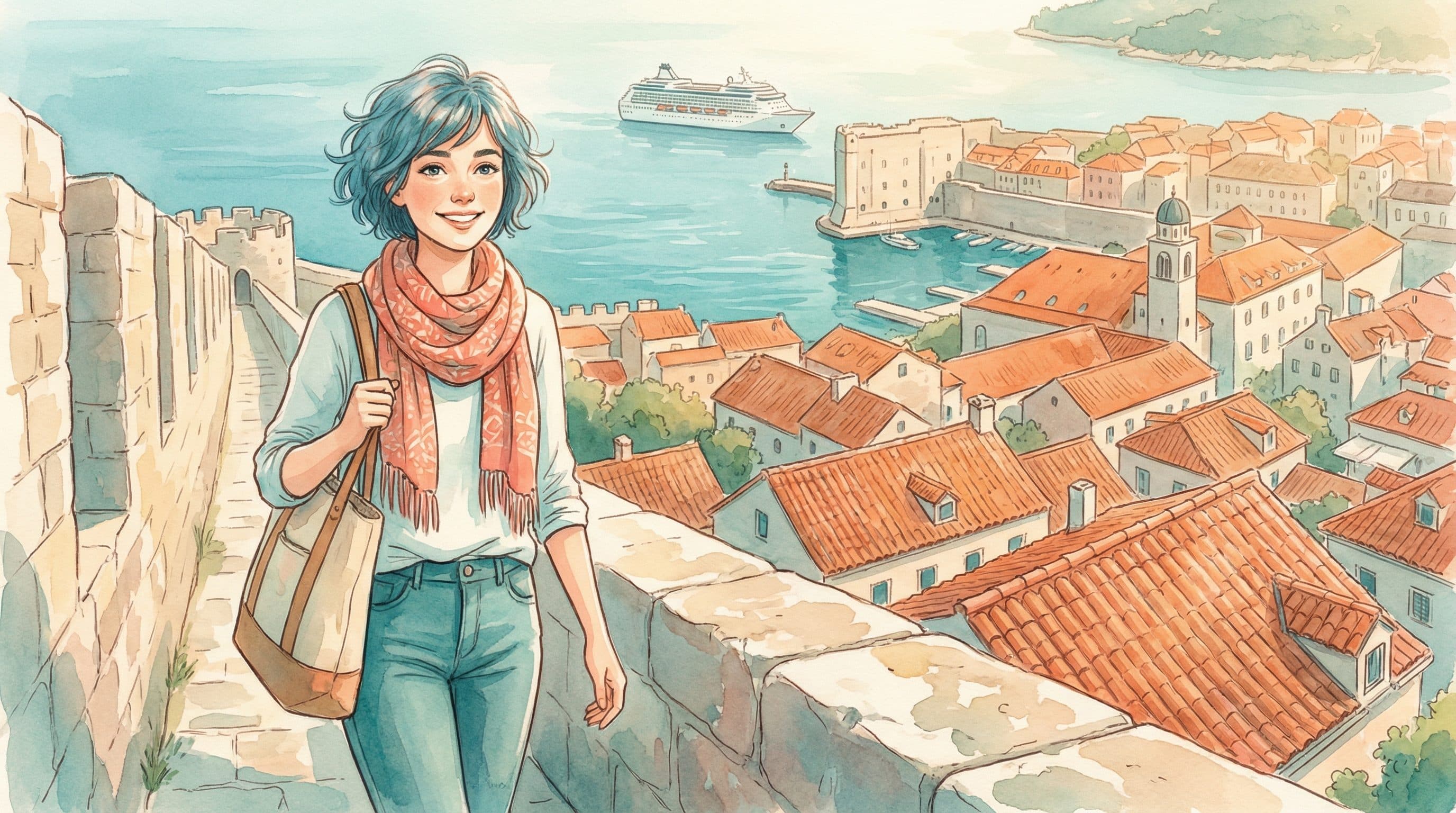
How Do You Get from the Cruise Port to Old Town?
Dubrovnik's cruise port at Gruž is about 3km northwest of the Old Town. You can't walk it comfortably (hilly road with no proper pavement). Take local bus 1A or 1B from the port — they run every 10-15 minutes and drop you at Pile Gate, the main entrance to the Old Town. The ride takes about 15 minutes and costs €2.
On busy cruise days, some ships tender passengers directly to the Old Port harbour, which drops you right inside the Old Town. Check with your ship the evening before.
What Can You See in 6 Hours?
City Walls Walk — The #1 thing to do in Dubrovnik. The 2km circuit around the medieval walls takes 1-2 hours and offers jaw-dropping views of terracotta rooftops and the Adriatic Sea. Go early to beat the heat and crowds.
Stradun (Placa) — The main limestone-paved street through the Old Town. Walk its full length, pop into side alleys, and soak in the atmosphere.
Fort Lovrijenac — The fortress outside the walls (Game of Thrones fans know it as the Red Keep). Short climb, incredible views, usually less crowded than the walls.
Buža Bar — A hidden cliff bar carved into the outer city walls. Find the small door marked "Cold Drinks" near the Jesuit church. Drinks with your feet dangling over the sea.
Cable Car to Mount Srđ — Panoramic views of the city, the islands, and the coastline. The café at the top is a perfect spot for a drink before heading back to the ship.
Where Should You Eat in Dubrovnik?
Seafood: Dubrovnik is all about fresh Adriatic seafood. Look for grilled fish (usually priced by the kilo — ask before ordering), black risotto (crni rižoto, made with cuttlefish ink), and buzara — shellfish in a white wine and garlic sauce.
Budget tip: Restaurants on Stradun are the most expensive. Walk outside the Ploče Gate to the Lazareti area, or climb up into the residential streets above Stradun for local konobas (taverns) at half the price.
Street food: Try burek (flaky pastry filled with cheese or meat) from any bakery — it's cheap, filling, and delicious. Pair it with a cold Ožujsko beer.
How Do You Read a Croatian Menu?
Croatian menus can be intimidating — the language looks nothing like what you're used to. Lucy reads Croatian perfectly and will explain that "hobotnica" is octopus, "škampi" is prawns, and "pršut" is the local dry-cured ham (similar to prosciutto). She'll flag fish and shellfish for allergy travellers and help you navigate daily specials written in Croatian script.
Is Dubrovnik Worth Exploring Independently?
Dubrovnik is one of the easiest cruise ports to explore on your own. The Old Town is compact and entirely pedestrian. Everything worth seeing is within a 20-minute walk. Ship excursions here are particularly poor value — they're essentially a bus ride to the walls (which you can do yourself for €2) followed by free time. Save your money, take the local bus, and spend the difference on an extraordinary seafood lunch.
Useful Local Phrases
Dobar dan
Good day
(DOH-bar dahn)
Hvala
Thank you
(HVAH-lah)
Koliko košta?
How much does it cost?
(KOH-lee-koh KOSH-tah)
Račun, molim
The bill, please
(RAH-choon, MOH-leem)
Gdje je...?
Where is...?
(G-dyeh yeh)
Imam alergiju na...
I have an allergy to...
(EE-mahm ah-LEHR-gee-yoo nah)
Local Tips
- •Walk the city walls early — arrive at the Pile Gate entrance when it opens (8am in summer). By 10am it's packed with cruise passengers.
- •Bring water and sunscreen for the walls walk. There's almost no shade and it takes 1-2 hours.
- •Restaurants inside the Old Town walls are expensive. Walk just outside the Ploče Gate for better-value meals with the same views.
- •Cash is useful for small purchases, but most places accept cards. Croatia uses the Euro.
- •The cable car to Mount Srđ offers spectacular views. Go late afternoon when cruise crowds have thinned.