Portuguese · Allergen Guide
Portuguese Food Allergen Guide: Eating Safely in Portugal
Last updated
Portuguese cooking celebrates honest coastal staples — charcoal-grilled fish, olive oil, garlic, and roasted meats — yet hides intense traps in seafood stews, egg-rich convent pastries, Algarve almond sweets, and complimentary lupin beans served beside your beer. Here is how to use Portugal's EU allergen laws and spot every local risk.

On this page (6 sections)
Ask for the EU 14 allergen list
EU law requires Portuguese restaurants to disclose 14 major allergens. Ask “Posso ver a lista de alergénios?” and confirm hidden shellfish broths, dairy, or nuts in sauces and pastries.
Your allergy, in Portuguese
Words to spot on the menu
- Peixe fish Fish
- Bacalhau salted cod Fish
- Marisco shellfish Shellfish
- Crustáceos crustaceans Shellfish
- Moluscos molluscs Shellfish
- Glúten gluten Wheat/Gluten
- Trigo wheat Wheat/Gluten
- Farinha flour Wheat/Gluten
- Ovos eggs Eggs
- Gema egg yolk Eggs
- Leite milk Dairy
- Queijo cheese Dairy
- Manteiga butter Dairy
- Natas cream Dairy
- Frutos de casca rija tree nuts Tree Nuts
- Amêndoa almond Tree Nuts
- Noz walnut Tree Nuts
- Tremoço lupin bean Lupin
- Tremoços pickled lupin beans Lupin
- Amendoim peanuts Peanuts
Where it hides
-
Skip
Fish: common dishes
Salted cod prepared hundreds of ways (bacalhau à Brás, bacalhau com natas, pastéis de bacalhau), grilled sardines (sardinhas assadas), fish stew (caldeirada)
-
Ask first
Fish: hidden in
Mixed fish-and-shellfish broths in arroz de marisco, cataplana stews, açorda bread soups, and traditional croquettes (rissóis or bolinhos)
-
Skip
Shellfish: common dishes
Seafood rice (arroz de marisco), Algarvian clam and pork stew (carne de porco à alentejana), copper-pot cataplana, garlic prawns (gambas ao alho), goose barnacles (percebes)
-
Ask first
Shellfish: hidden in
Clams simmered directly with pork in carne de porco à alentejana, shrimp or lobster stock powering seafood rice and fish stews (caldeirada), and shared oil used for breaded rissóis de camarão
-
Skip
Wheat/Gluten: common dishes
Bread baskets (couvert), bifana pork sandwiches, francesinha toastie, puff-pastry custard tarts (pastel de nata), breaded croquettes (rissóis, croquetes)
-
Ask first
Wheat/Gluten: hidden in
Stale bread thickened into açorda and migas soups, wheat flour dusted onto fried fish or whisked into bacalhau com natas béchamel and francesinha sauce, and bakery cross-contact
-
Skip
Eggs: common dishes
Pastel de nata custard tarts, ovos moles de Aveiro, toucinho do céu, bacalhau à Brás (cod scrambled with egg), queijadas
-
Ask first
Eggs: hidden in
Nearly every classic Portuguese convent sweet (doçaria conventual), egg-glazed pastry crusts, traditional egg-yolk threads (fios de ovos), and homemade mayonnaise
-
Skip
Dairy: common dishes
Creamy cod bake (bacalhau com natas), Serra da Estrela and Azeitão cheeses, francesinha (melted cheese), pastel de nata custard, queijadas de Sintra
-
Ask first
Dairy: hidden in
Butter sauces on grilled steaks (bife à portuguesa), cream in mushroom or seafood sauces, béchamel in cod gratin and rissóis, and cheese plates automatically set on the table as couvert
-
Skip
Tree Nuts: common dishes
Algarve marzipan and almond tarts (torta de amêndoa, Dom Rodrigo, morgado), almond cake (bolo de amêndoa), walnut sweets (bolo de noz)
-
Ask first
Tree Nuts: hidden in
Ground almond flour replacing wheat in many southern Portuguese pastries and convent desserts, toasted almond slivers on roasted desserts, and nut liqueurs (amarguinha bitter almond liqueur)
-
Skip
Lupin: common dishes
Pickled yellow lupin beans (tremoços) served free in bowls with beer at cafés, tascas, and football bars
-
Ask first
Lupin: hidden in
Complimentary bar snacks placed right on the counter beside olives and peanuts, plus lupin flour occasionally blended into specialty European pastries or gluten-free baked goods — cross-reactive for some peanut-allergic diners
-
Skip
Peanuts: common dishes
Salted bar peanuts (amendoins) beside beer, imported desserts, some modern fusion spots in Lisbon and Porto
-
Ask first
Peanuts: hidden in
Open bar snack bowls beside tremoços (lupin — a legume linked to peanut cross-reactivity), commercial ice-cream toppings, and packaged pastry glazes
Safer to order
- Usually fine Charcoal-grilled chicken (Frango assado na brasa / piri-piri) Simple rotisserie or charcoal-grilled chicken seasoned with salt, garlic, olive oil, and optional chili — ask for boiled potatoes instead of shared-fryer fries and skip butter basting Free from: wheat, gluten, eggs, dairy, fish, shellfish, nuts, peanuts, lupin (confirm no butter baste or shared fryer)
- Usually fine Grilled Iberian black pork (Secretos de porco preto grelhados) Tender Alentejo pork strips grilled plain over charcoal with coarse sea salt and served with plain rice or boiled potatoes Free from: wheat, gluten, eggs, dairy, fish, shellfish, nuts, peanuts, lupin
- Usually fine Caldo verde soup (verify chouriço) Portugal's beloved kale, potato, onion, and olive-oil soup — naturally free of gluten, dairy, eggs, seafood, and nuts (confirm the optional chouriço sausage ingredients) Free from: wheat, gluten, eggs, dairy, fish, shellfish, nuts, peanuts, lupin (check or omit chouriço)
- Usually fine Whole grilled sea bass or bream (Robalo / Dourada grelhada) Fresh Atlantic fish grilled whole with sea salt and olive oil alongside boiled potatoes and greens — skip butter sauce and confirm separate grill space from shellfish Free from: wheat, gluten, eggs, dairy, nuts, peanuts, lupin (contains fish; confirm no shellfish on the same grill)
- Usually fine Tomato and onion salad (Salada de tomate) Sun-ripened sliced tomatoes, red onion, oregano, Portuguese olive oil, and vinegar — confirm no tuna or fresh cheese is added Free from: wheat, gluten, eggs, dairy, fish, shellfish, nuts, peanuts, lupin
- Usually fine Garlic-wine pork cutlet on a plate (Bifana no prato — no bread) Thin pork slices simmered in garlic, white wine, and paprika plated with plain rice instead of the wheat roll — ask for no mustard if sensitive Free from: wheat, gluten, eggs, dairy, fish, shellfish, nuts, peanuts, lupin (order 'no prato' without bread)
No pre-verified swap is listed for this allergen yet — show the card below so your server can confirm every sauce and oil with the kitchen.
Tenho alergias alimentares. Pode verificar os ingredientes deste prato, por favor?
TEN-yoo ah-lehr-ZHEE-ahs ah-lee-men-TAH-resh. POH-deh veh-ree-fee-KAR oosh een-greh-dee-EHN-tesh DESH-teh PRAH-too, poor fah-VOR?
I have food allergies. Could you check the ingredients in this dish, please?
How Allergen Laws Work in Portugal
Portugal enforces EU Regulation 1169/2011, which requires every sit-down restaurant, neighborhood tasca, bakery, and supermarket to disclose the 14 major EU allergens: gluten-containing cereals, crustaceans, molluscs, fish, eggs, milk, peanuts, tree nuts, soy, celery, mustard, sesame, sulfites, and lupin.
At the table, simply ask: “Posso ver a lista de alergénios?” (May I see the allergen list?). Newer restaurants in Lisbon, Porto, and the Algarve print allergen symbols or letter keys right beside each dish, while older family tascas keep a written allergen sheet behind the bar and will gladly walk back to the kitchen to verify your plate. For celiac travelers, Portugal’s national association (APC — Associação Portuguesa de Celíacos) certifies gluten-free restaurants and bakeries nationwide, and supermarkets like Continente and Pingo Doce stock clearly marked sem glúten aisles.
The 4 Biggest Hidden Allergen Traps in Portuguese Cuisine
- Shellfish and fish hiding in broths — and pork dishes. Coastal classics like caldeirada (fisherman’s stew), arroz de marisco (seafood rice), and copper-pot cataplana layer shrimp, clam, and fish stocks together into one bubbling base. Watch closely for carne de porco à alentejana: despite “pork” right in the name, it is braised directly with clams (amêijoas). And bacalhau (salted cod) turns up shredded inside croquettes (pastéis de bacalhau) and cream bakes (bacalhau com natas).
- The pastelaria triple threat (eggs, wheat, and dairy). Portugal’s iconic pastelarias descend from medieval monastery kitchens that had oceans of leftover egg yolks. Pastel de nata, ovos moles de Aveiro, queijadas, and pão de ló combine eggs, dairy, and wheat pastry with tight glass-case cross-contact.
- Almonds (amêndoa) across Algarve sweets. Head south to Faro, Lagos, or Tavira and ground almonds replace flour across local pastries (torta de amêndoa, morgado, Dom Rodrigo, and bright fruit-shaped marzipan doce fino). Even after-dinner liqueur amarguinha is almond-based.
- Lupin beans (tremoços) on the bar counter. Those cheerful yellow pickled beans served free beside a cold imperial beer are lupin beans — one of the EU’s 14 mandatory allergens. Because lupin sits in the same legume family as peanuts, peanut-allergic travelers can experience cross-reactions. Notice too that Portuguese waiters often drop bread, butter, olives, cheese, and tremoços on your table as couvert (a paid appetizer platter if touched) — ask to have unsafe dishes removed right away.
Ordering Simply at a Portuguese Tasca
The easiest path to safe dining in Portugal is the charcoal grill (na brasa or grelhado). A plate of plain grilled frango assado (chicken), secretos de porco preto (Iberian black pork), or whole grilled Atlantic sea bass (robalo) with boiled potatoes (batata cozida) and olive oil skips thickeners, cream sauces, and breading altogether. Just confirm the grill is cleaned between fish, shellfish, and meat — and ask for sem manteiga (no butter) if you are dairy-free.
Using Ask Lucy Safely in Portugal
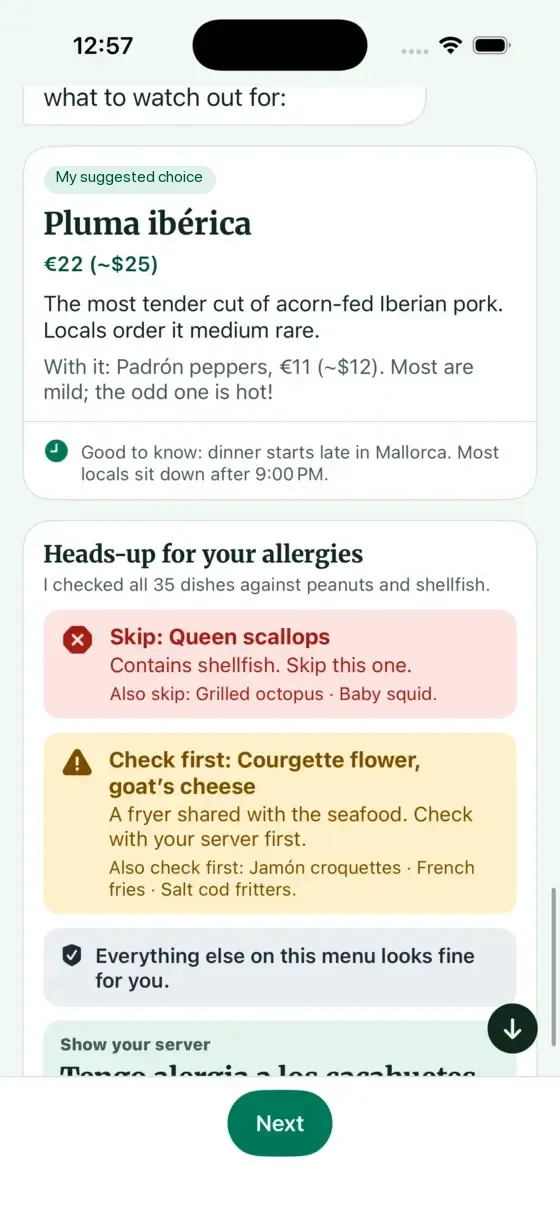
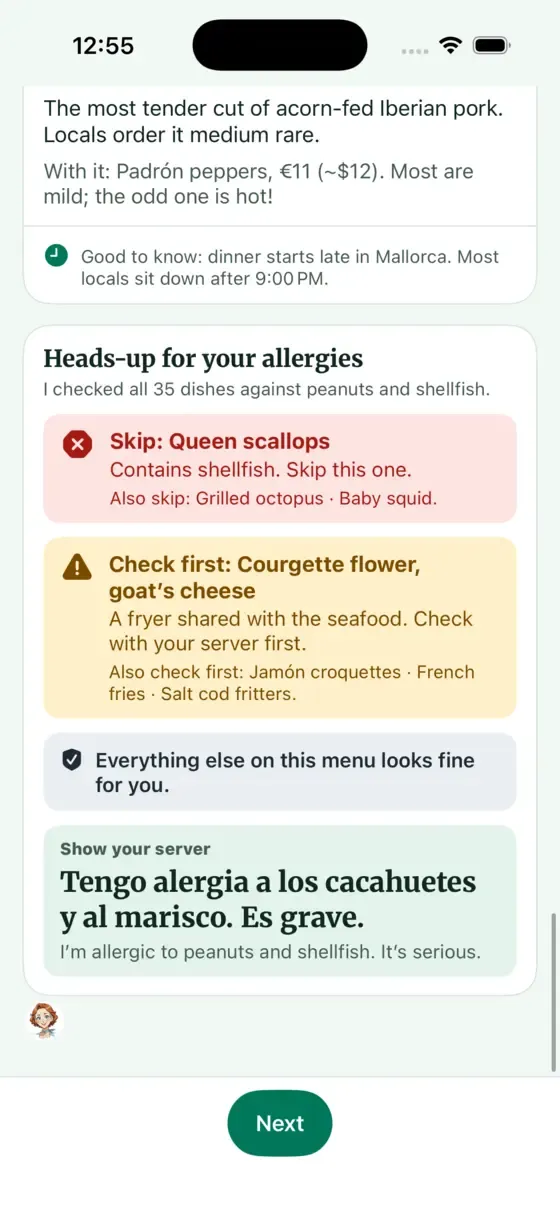
Before you fly into Lisbon or Porto, add your allergies and Severity (mild, moderate, or severe) to your Ask Lucy Profile (explicit one-tap Health consent required). At a traditional tasca with a handwritten daily specials board — or when scanning a lista de alergénios binder — snap up to 4 photos in a single turn on your iPhone or iPad. Lucy unpacks local dish names, runs four-state Safety verdicts (Safe, Caution, Unsafe, or Unknown — never guessing Safe on a dish name alone), converts euro prices into your home currency first, and prepares a full-screen Portuguese Show-your-server card.
For stone-walled wine cellars or coastal villages with weak signal, keep a downloaded Apple Translate or Google Translate Portuguese offline pack on hand (Ask Lucy’s Offline outbox queues photos when offline and sends them once signal returns). No app or guide replaces medical advice or direct kitchen verification — always confirm severe allergies with your server and carry your prescribed emergency medication (such as an EpiPen).
Continue planning your meals with our Portuguese Food Guide and Portuguese Phrases for Travelers.
Frequently asked questions
Must Portuguese restaurants provide an allergen list?
Yes. Under EU Regulation 1169/2011, every restaurant, café, and pastelaria in Portugal must provide information on the 14 major allergens (including gluten, crustaceans, molluscs, fish, eggs, milk, tree nuts, peanuts, soy, celery, mustard, sesame, sulfites, and lupin). Ask for 'a lista de alergénios' — many modern menus print allergen icons, and traditional tascas keep a reference binder behind the counter.
What are tremoços, and why do allergic travelers need to watch for them?
Tremoços are brined yellow lupin beans served in bowls all across Portugal as a classic beer snack. Lupin is one of the EU's 14 mandatory declared allergens because it is a legume that can trigger severe reactions — especially in people with existing peanut allergies due to cross-reactivity. Politely ask the server to remove the couvert bowl if you are sensitive.
Is carne de porco à alentejana safe for shellfish allergies?
No! Even though the name starts with pork (carne de porco), this famous Portuguese dish is traditionally cooked with whole clams (amêijoas) simmered right into the garlic-and-wine sauce. Always double-check traditional meat stews and coastal soups for hidden clams or seafood stock.
Can I eat at a Portuguese pastelaria with egg, dairy, or wheat allergies?
Traditional pastelarias are very challenging for egg, milk, and wheat allergies. Portugal's convent-sweet heritage (doçaria conventual) — pastel de nata, ovos moles, queijadas, bola de Berlim — relies heavily on egg yolks, wheat pastry, and milk or cream, with wide counter cross-contact. In Lisbon and Porto, look for dedicated gluten-free or vegan bakeries instead.
Are almonds common in Portuguese desserts?
Very common, especially in the Algarve and southern Portugal. Regional specialties like Dom Rodrigo, morgado, bolo de amêndoa, and decorative marzipan sweets (doce fino) use ground almonds as a main structural ingredient — and bitter almond liqueur (amarguinha) is a popular digestif.