
South Korea
Korean Food Guide for Travelers
Last updated March 29, 2026
Korean food is bold, fermented, and communal. Every meal comes with banchan (side dishes), kimchi is served at every sitting, and BBQ culture is a social event. The depth of flavour from fermentation and chilli will convert even cautious eaters.
Banchan: The Free Side Dishes
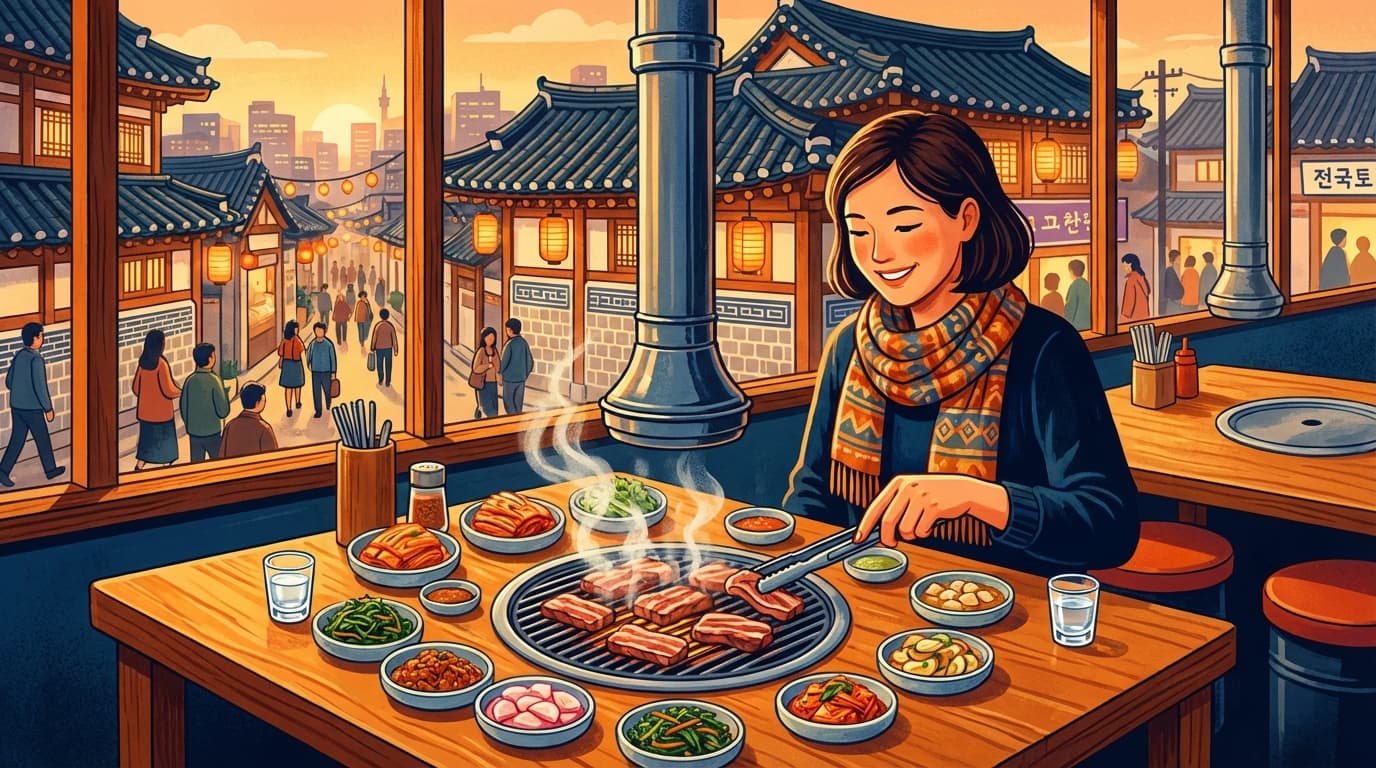
Every meal comes with 3-12 side dishes including kimchi, pickled vegetables, japchae. They're free, replenished on request, and often the best part of the meal.
Korean BBQ Etiquette
Raw meat comes with a built-in grill. Youngest person usually mans it. Wrap meat in lettuce with garlic, ssamjang, and banchan. Eat in one bite.
Street Food and Markets
Gwangjang Market: bindaetteok, mayak kimbap, tteokbokki. Night markets and pojangmacha serve anju with soju.
Drinking Culture
Soju and beer are staples. Somaek (soju + beer) is popular. Rules: pour for others, receive with two hands, turn away from elders when drinking.
Must-Try Dishes
Korean BBQ
$$Grill marinated beef (bulgogi), pork belly (samgyeopsal), or short ribs (galbi) at your table.
Contains meat, soy; lettuce wraps gluten-free
Bibimbap
$Rice with vegetables, meat, egg, and gochujang. Mix everything before eating.
Contains eggs, soy; can be vegetarian
Kimchi Jjigae
$Fermented kimchi stew with pork, tofu, and vegetables. Spicy and comforting.
Contains meat, soy, shellfish (shrimp paste)
Tteokbokki
$Chewy rice cakes in fiery gochujang sauce. Sweet, spicy, addictive.
Contains gluten (some), soy
Japchae
$Glass noodles stir-fried with vegetables, sesame oil, and soy sauce.
Contains soy; sweet potato noodles gluten-free
Fried Chicken (Chikin)
$Double-fried for extra crunch, tossed in sweet-spicy or garlic soy sauce.
Contains gluten, meat, soy
Sundubu Jjigae
$Soft tofu stew with seafood in spicy broth, with raw egg cracked in.
Contains soy, eggs, seafood
Kimbap
$Rice rolled in seaweed with vegetables, pickled radish, and meat.
Contains soy, eggs, seaweed
Menu Vocabulary
| Term | Meaning | Category |
|---|---|---|
| Banchan | Free side dishes: replenished on request | Dining |
| Gogi | Meat | Proteins |
| Haemul | Seafood | Proteins |
| Bap | Rice | Staples |
| Guk/Tang | Soup/stew | Courses |
| Jjigae | Stew (thicker than guk) | Courses |
| Gui | Grilled | Cooking Methods |
| Jeon | Pan-fried pancake | Cooking Methods |
| Anju | Food eaten with alcohol | Dining |
| Gyesan | The bill | Dining |
Dietary Restriction Guide
Vegetarian
Bibimbap without meat, vegetable jeon, tofu stews, and temple food are good options. Banchan often includes eggs/fish. Say 'gogi ppaeju seyo'.
Vegan
Temple food (sachal eumsik) is entirely plant-based. Bibimbap and japchae can be vegan. Kimchi often has shrimp paste, sauces often have fish sauce.
Gluten-Free
Rice, BBQ meats without marinade, japchae (sweet potato noodles), and most stews without noodles are gluten-free. Soy sauce and gochujang contain wheat.
Common Allergies
Soy is in almost everything. Shellfish in kimchi (shrimp paste). Sesame oil ubiquitous. Say allergy in Korean or English (widely understood in Seoul).
Ordering Tips
- •Banchan are free and unlimited. Ask for refills.
- •The eldest eats first. Wait for them to start.
- •Soju is poured for others, never yourself. Hold glass with two hands when receiving.
- •Korean BBQ is a group activity. Most places require minimum two people.
- •Tipping is not customary in South Korea.