German · Allergen Guide
German Food Allergen Guide: Eating Safely in Germany
Last updated
Germany's strict EU allergen labeling means almost every printed restaurant menu already carries footnote codes for all 14 major allergens — a huge head start once you know how to read them. Still, traditional German kitchens lean hard on wheat breading, roux gravies, dairy, mustard, and an unexpected national staple: celery root (Sellerie).

On this page (6 sections)
Check the numbered allergen codes
German restaurants follow EU 14 allergen rules and print letter/number codes beside dishes. Ask “Haben Sie eine Allergenkarte?” and confirm flour-thickened sauces, cream, mustard, or celery root (Sellerie).
Your allergy, in German
Words to spot on the menu
- Gluten gluten Wheat/Gluten
- Weizen wheat Wheat/Gluten
- Roggen rye Wheat/Gluten
- Gerste barley Wheat/Gluten
- Sellerie celery root Celery
- Knollensellerie celeriac Celery
- Senf mustard Mustard
- Senfsaat mustard seed Mustard
- Milch milk Dairy
- Sahne cream Dairy
- Käse cheese Dairy
- Butter butter Dairy
- Eier eggs Eggs
- Eigelb egg yolk Eggs
- Schalenfrüchte tree nuts Tree Nuts
- Haselnüsse hazelnuts Tree Nuts
- Mandeln almonds Tree Nuts
- Erdnüsse peanuts Peanuts
- Sulfite sulfites Sulfites
- Schwefeldioxid sulfur dioxide Sulfites
Where it hides
-
Skip
Wheat/Gluten: common dishes
Breaded Schnitzel (Wiener Art), Spätzle egg noodles, bread dumplings (Semmelknödel), pretzels (Brezeln), Maultaschen, and wheat beer (Weißbier / Weizenbier)
-
Ask first
Wheat/Gluten: hidden in
Flour-thickened dark meat gravies (Bratensoße), barley malt in regular German beers and dark sauces, breadcrumbs inside meatballs (Frikadellen / Buletten), and dusted trout (Forelle Müllerin Art)
-
Skip
Celery: common dishes
Root-vegetable soup bases (Suppengrün), hearty stews (Eintopf), beef broth (Rinderbrühe), Waldorf-style salads
-
Ask first
Celery: hidden in
Nearly every traditional German stock (Gemüsebrühe, Fleischbrühe), dark roast gravies, potato salads, and commercial Bratwurst or Currywurst spice mixes — one of Germany's most overlooked allergens
-
Skip
Mustard: common dishes
Sausages served with sweet or sharp mustard (Senf), beef rouladen (Rinderroulade), Königsberger Klopse, warm Bavarian potato salad (Kartoffelsalat)
-
Ask first
Mustard: hidden in
Vinaigrettes, mayonnaise-based northern potato salads, marinades for braised meats (Sauerbraten), remoulade served with fish, and pickled cucumbers (Gewürzgurken)
-
Skip
Dairy: common dishes
Cheese noodles (Käsespätzle), creamy mushroom sauce (Jägersoße / Rahmsoße), Obatzda beer-cheese dip, Quark desserts, Black Forest cake (Schwarzwälder Kirschtorte)
-
Ask first
Dairy: hidden in
Clarified butter (Butterschmalz) used to fry Schnitzel, herb butter (Kräuterbutter) melted onto steaks, cream stirred into soups and red cabbage, and milk powder in some sausages
-
Skip
Eggs: common dishes
Spätzle noodles, Schnitzel breading wash, bread dumplings (Semmelknödel), potato pancakes (Kartoffelpuffer), Kaiserschmarrn
-
Ask first
Eggs: hidden in
Binding agent in meat patties (Frikadellen), mayonnaise in northern potato salad, hollandaise sauce on white asparagus (Spargel), and glossy pretzel or strudel glazes
-
Skip
Tree Nuts: common dishes
Marzipan (Lübecker Marzipan), Lebkuchen gingerbread, roasted candied almonds (gebrannte Mandeln), hazelnut pastries (Nussecken), Stollen
-
Ask first
Tree Nuts: hidden in
Nearly every German bakery counter (Bäckerei) and Christmas market (Weihnachtsmarkt) stall, ground hazelnuts in cakes and chocolate spreads, walnut oil in salads, and crushed nut crusts
-
Skip
Peanuts: common dishes
Bar peanut snacks (Erdnussflips), modern Asian-fusion restaurants, specialty bakery glazes
-
Ask first
Peanuts: hidden in
Packaged snack mixes, confectionery counters at Christmas markets, and shared nut-roasting equipment at gebrannte Mandeln stalls
-
Skip
Sulfites: common dishes
German white wines (Riesling), sparkling Sekt, mulled wine (Glühwein), dried fruit in Stollen and Sauerbraten gravy
-
Ask first
Sulfites: hidden in
Wine-braised Sauerkraut and red cabbage (Rotkohl), wine vinegar dressings, pre-peeled commercial potatoes or fries, and apple spritzers or ciders
Safer to order
- Usually fine Crispy roast pork knuckle without gravy (Schweinshaxe — ohne Soße) Slow-roasted pork knuckle seasoned simply with salt, garlic, and caraway — order without gravy (ohne Soße) and pair with plain boiled potatoes Free from: wheat, gluten, dairy, eggs, celery, mustard, nuts, peanuts, sulfites (order without gravy and confirm spice rub)
- Usually fine Half roast chicken (Halbes Hähnchen / Hendl) Beer-garden staple roasted crisp with salt and paprika — ask the kitchen to confirm the spice mix has no celery salt and choose boiled potatoes over shared-fryer fries Free from: wheat, gluten, dairy, eggs, mustard, nuts, peanuts, sulfites (verify spice blend skips celery)
- Usually fine Plain grilled steak without herb butter (Rumpsteak — ohne Kräuterbutter) Unbreaded beef or pork steak cooked simply with salt and pepper — skip herb butter and creamy pepper sauces Free from: wheat, gluten, dairy, eggs, celery, mustard, nuts, peanuts, sulfites (request without butter or sauce)
- Usually fine Grilled whole trout (Forelle vom Grill — ohne Butter) Fresh trout grilled plain with lemon and herbs — avoid 'Müllerin Art' (which dusts the fish in wheat flour and fries it in butter) Free from: wheat, gluten, dairy, eggs, celery, mustard, nuts, peanuts, sulfites (skip flour dusting and butter)
- Usually fine Plain boiled potatoes & simple sauerkraut (Salzkartoffeln mit Sauerkraut) Classic German sides — confirm the sauerkraut was not simmered with white wine (sulfites) or broth containing celery Free from: wheat, gluten, dairy, eggs, mustard, nuts, peanuts (verify sauerkraut skips wine and stock)
- Usually fine Sliced white radish or crisp green salad (Radi / Grüner Salat — Essig & Öl) Refreshing Bavarian beer-garden radish or fresh greens dressed simply with plain oil and vinegar instead of creamy mustard dressing Free from: wheat, gluten, dairy, eggs, celery, mustard, nuts, peanuts (skip wine vinegar if sulfite-sensitive)
No pre-verified swap is listed for this allergen yet — show the card below so your server can confirm every sauce and oil with the kitchen.
Ich habe Lebensmittelallergien. Könnten Sie bitte die Zutaten dieses Gerichts prüfen?
ikh HAH-buh LAY-bens-mit-tel-ah-lehr-GEE-en. KURN-ten zee BIT-tuh dee TSOO-tah-ten DEE-zes geh-RIKHTS PRUE-fen?
I have food allergies. Could you please check the ingredients in this dish?
How Germany’s Allergenkarte System Works
Germany is one of the most structured countries in Europe for reading restaurant allergens — once you crack its footnote code. Under EU Regulation 1169/2011, every beer hall, bakery, café, and Gasthaus must disclose the 14 major EU allergens (gluten cereals, crustaceans, eggs, fish, peanuts, soy, milk, tree nuts, celery, mustard, sesame, sulfites, lupin, and molluscs).
On most German menus (Speisekarten), you will notice tiny superscript letters and numbers next to dish names — like Wiener Schnitzel (a, c, g, 2). Typically, letters indicate allergens (for example, a = gluten, c = eggs, g = milk) while numbers indicate additives (preservatives, antioxidants, flavor enhancers). Never memorize one restaurant’s letters, because individual restaurants sometimes swap letters for numbers or vary their lettering order — always check the legend printed at the bottom or back page, or ask “Haben Sie eine Allergenkarte?” (Do you have an allergen menu?).
The 5 Hidden Traps in Traditional German Kitchens
- Celery root (Sellerie) in stocks and sausages. In Germany, celeriac (Knollensellerie) is built into Suppengrün, the aromatic base behind almost every soup, clear broth, dark roast gravy (Bratensoße), and savory Bratwurst spice mix. If you have a celery allergy, never assume a plain-looking meat sausage or potato soup is celery-free without checking the Allergenkarte.
- Mustard (Senf) beyond the sausage plate. Mustard isn’t just squeezed beside Bratwurst. It is stirred straight into Bavarian warm potato salad (Kartoffelsalat), brushed inside Rinderrouladen beef rolls, and whisked into everyday salad dressings and remoulade sauces.
- Wheat and gluten in sauces, dumplings, and Weißbier. Beyond the obvious pretzels, Schnitzel breading, and Spätzle noodles, German kitchens thicken dark Soßen with wheat roux, bind Semmelknödel dumplings with bread rolls, dust pan-fried trout (Müllerin Art) in flour, and brew Weißbier directly from wheat (and standard beers from barley). For celiac grocery shopping, chains like Rewe, Edeka, and dm drugstores stock clearly labeled glutenfrei breads, pasta, and snacks (certified by DZG, the German Celiac Society).
- Dairy hidden in frying fats and garnishes. Authentic Wiener Schnitzel is traditionally pan-fried in clarified butter (Butterschmalz), grilled steaks arrive topped with melting Kräuterbutter, and Rahmsoße or Käsespätzle lean heavily on heavy cream and mountain cheese.
- Hazelnuts and almonds in Bäckereien and Christmas markets. German bakeries and winter Weihnachtsmarkt stalls are heaven for marzipan (Mandeln), hazelnut pastries (Haselnüsse), Lebkuchen, and Stollen — with high shared-tray and shared-tong cross-contact.
Ordering Smart in a Beer Hall or Gasthaus
When a heavy menu looks coated in breading and creamy sauces, look for the unadorned grill and roast classics: Schweinshaxe ohne Soße (crispy pork knuckle without gravy), Halbes Hähnchen (roast chicken — verify the spice rub skips celery), plain Rumpsteak ohne Kräuterbutter, and Salzkartoffeln (plain boiled potatoes). German waitstaff take direct, clear communication seriously — stating your exact allergen up front gets a straightforward answer from the kitchen.
Using Ask Lucy Safely in Germany
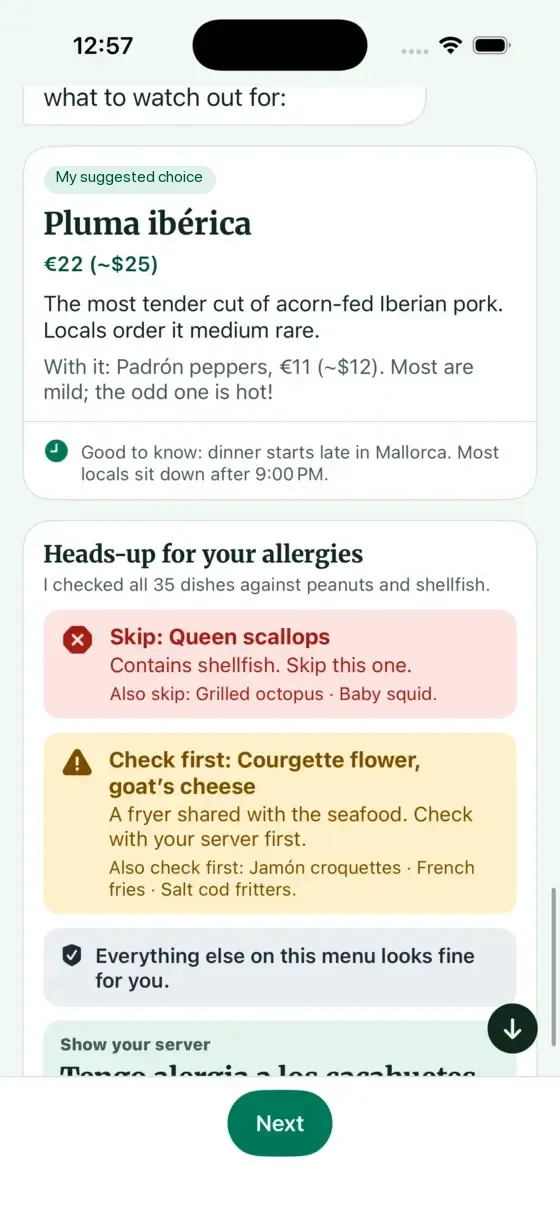
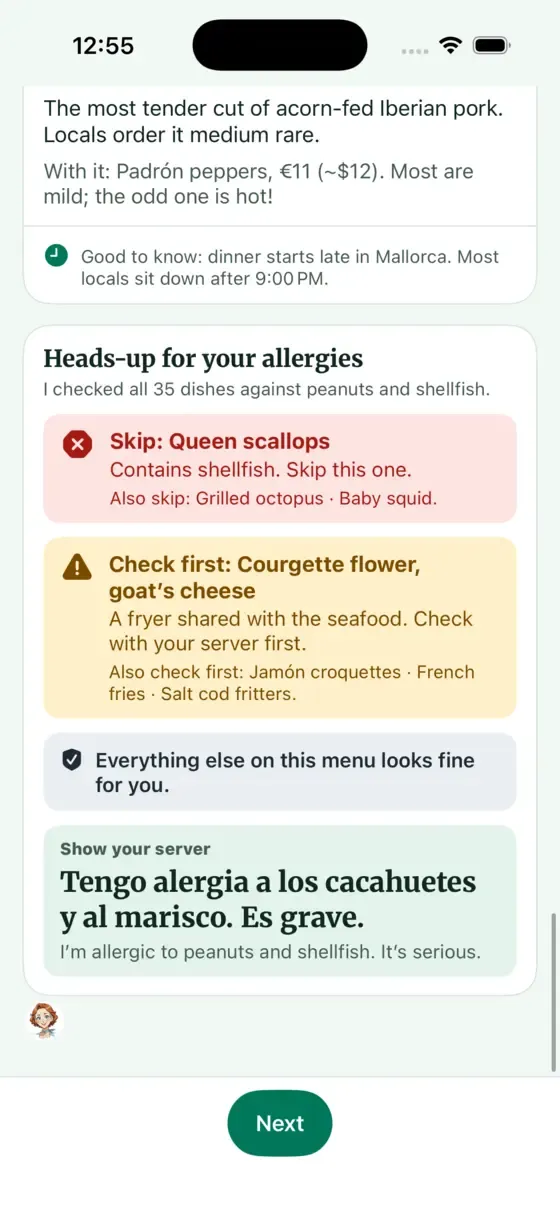
Decoding tiny superscript a, c, g, i, j footnotes across a three-page beer-hall menu while juggling the legend on the back page is tedious. With Ask Lucy on iPhone or iPad, save your allergies and Severity (mild, moderate, or severe) once in your Profile (behind explicit one-tap Health consent). Snap both the menu page and the footnote legend together — up to 4 photos in one turn. Lucy cross-references the codes and dish ingredients against your profile using explicit four-state Safety verdicts (Safe, Caution, Unsafe, or Unknown — never labeling an unchecked dish Safe), converts euro prices into your home currency first, and writes a full-screen German Show-your-server card.
For cellar Ratskeller dining rooms where cellular reception disappears, download Apple Translate or Google Translate German offline packs as a no-signal backup (Lucy’s Offline outbox queues shots taken offline and sends them once signal returns). Remember: no app or guide replaces medical advice or direct kitchen verification — always confirm severe allergies with your server and carry your prescribed emergency medication (such as an EpiPen).
Keep exploring local dishes and vocabulary with our German Food Guide and German Phrases for Travelers.
Frequently asked questions
What do the little letters and numbers next to German menu items mean?
Under EU Regulation 1169/2011 and German food law (LMIV), restaurants list footnotes beside each dish — typically letters (A through N) for the 14 major allergens and numbers (1, 2, 3...) for food additives like colorings or preservatives. Flip to the back page or bottom margin of the Speisekarte to find the legend, or ask 'Haben Sie eine Allergenkarte?' (Do you have an allergen menu?).
Why is celery (Sellerie) such a big deal in Germany?
Celeriac (Knollensellerie) is one of the pillars of German Suppengrün — the classic soup-vegetable bundle simmered into vegetable broths, beef stocks, dark roast gravies, potato salads, and commercial Bratwurst seasoning blends. Because celery is one of the EU's 14 declared allergens, German menus flag it reliably, so check the Sellerie code before ordering any soup, sauce, or sausage.
Is traditional German beer gluten-free?
No. Traditional German Pilsner, Helles, Dunkel, and Kölsch are brewed from barley malt (Gerste), and Weißbier (Weizenbier) adds malted wheat (Weizen) — all contain gluten. Celiac travelers should ask for certified gluten-free beer (glutenfreies Bier, increasingly available in supermarkets like Rewe and Edeka), apple cider (Apfelwein / Cidre), or wine.
Are Bavarian potato salads safe for mustard or egg allergies?
Be careful with regional styles. Southern Bavarian Kartoffelsalat is tossed in warm broth, vinegar, oil, and mustard (often egg-free, though frequently containing both mustard and celery-based stock). Northern German potato salad relies heavily on egg mayonnaise and mustard. Always check the menu's Allergenkarte codes first.
How risky are German bakeries and Christmas markets for nut allergies?
Very high cross-contact risk. German Bäckereien display pastries side by side using shared tongs, and hazelnuts, almonds, and marzipan appear in Nussecken, Stollen, Lebkuchen, and cakes. At a Weihnachtsmarkt (Christmas market), roasting gebrannte Mandeln (candied almonds) fill the air and nearby stalls share prep counters — stick to sealed supermarket products or dedicated allergy-safe cafés.