
Lucy vs Google Translate for Thai
Last updated March 30, 2026
Thai script is one of the most visually complex writing systems travellers encounter — 44 consonants, 15 vowel symbols, and 4 tone marks combine into flowing characters with no spaces between words. Thailand's legendary street food culture means menus are often hand-painted signs or laminated sheets with Thai-only text. Google Translate has improved for Thai, but the script's complexity and Thailand's diverse food vocabulary push general translators to their limits.
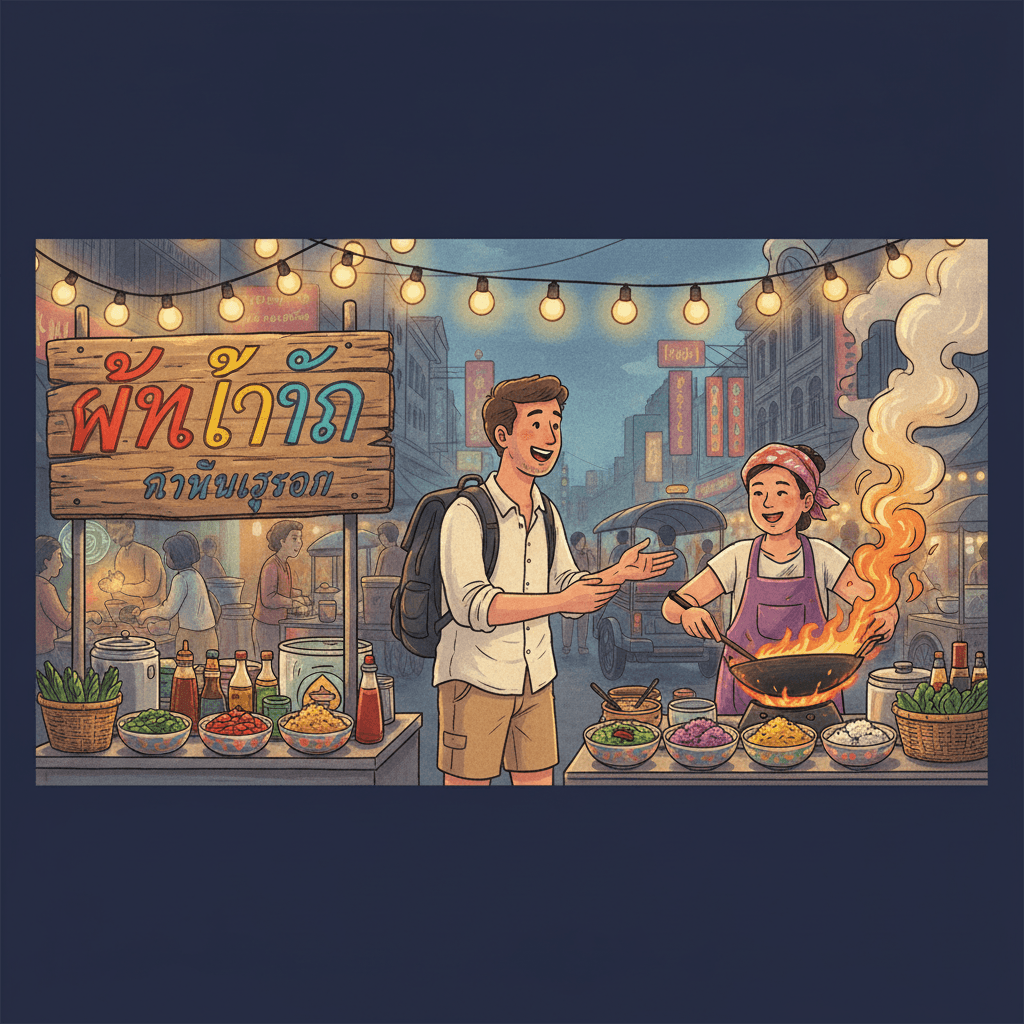
The Thai Script Challenge
Thai script looks impenetrable to Western eyes. Characters flow together without spaces between words, vowels can appear above, below, before, or after consonants, and tone marks change word meanings entirely. Google Translate's OCR has improved for printed Thai, but hand-painted street food signs — the ones you actually need to read — remain a significant challenge.
Lucy's OCR is optimised for the real-world conditions travellers face: faded signs, hand-painted menus on food carts, laminated sheets with grease stains, and the colourful but hard-to-read Thai fonts used at markets and stalls.
Street Food: Thailand's Greatest Challenge
Thailand's street food is among the world's best — and most dangerous for allergy sufferers. Peanuts appear in pad thai, satay sauce, and som tam. Shrimp paste (gapi) hides in curry pastes, dipping sauces, and stir-fries. Fish sauce is in virtually every savoury dish. Tree nuts appear in desserts and some curries. Shellfish appears where you'd least expect it.
At a Bangkok street stall, there's no English menu, no ingredient list, and often no common language with the cook. Point Lucy at the Thai sign above the wok, and she tells you exactly what's in the dish — including the allergens hiding in the sauce.
Google's Thai Translation Problems
Thai is a tonal language where the same syllable with different tones means completely different things. This creates frequent mistranslations in food contexts. Google may translate a dish name that means 'stir-fried morning glory' as something confusing, or miss the distinction between similar-sounding dishes with very different ingredients.
Lucy sidesteps this problem by recognising Thai dish names as food entities, not just strings of words. She knows that 'khao pad' is fried rice, 'tom yum' is a hot and sour soup, and 'larb' is a spicy minced meat salad — regardless of how the tones render in OCR.
Navigating Thai Food Culture
Lucy explains the customs that make Thai dining less intimidating: how to order by pointing and using numbers, how the condiment tray works (fish sauce, chilli flakes, sugar, vinegar), that Thai food is meant to be shared, and that asking for 'mai pet' (not spicy) is perfectly acceptable. Google Translate can convert these phrases but doesn't explain the cultural context that makes ordering natural.
Feature Comparison
| Feature | Lucy | Google Translate | Notes |
|---|---|---|---|
| Menu Photo Translation | Excellent | Fair | Lucy explains Thai dishes in detail — ingredients, spice levels, and preparation. Google often mistranslates Thai food terms because of the tonal language and contextual meaning of words. |
| Handwritten Text | Excellent | Fair | Thai street food stalls use hand-painted signs and handwritten menus. Thai handwriting is particularly challenging for OCR. Lucy handles it more reliably than Google. |
| Cultural Context | Excellent | Fair | Lucy explains Thai food culture — how to order at a street stall, the balance of sweet-sour-salty-spicy, the role of condiments, and how to adjust spice levels. Google provides no cultural guidance. |
| Allergen Detection | Excellent | N/A | Thai cuisine uses peanuts (pad thai, satay sauce), shellfish (shrimp paste in curry pastes), fish sauce (in nearly everything), and tree nuts extensively. Lucy flags these hidden allergens. Google doesn't. |
| Conversation Memory | Excellent | N/A | Lucy remembers that you can't eat peanuts and applies this knowledge across every Thai restaurant and food stall. Google starts fresh each time. |
| Offline Capability | Good | Good | Both offer offline Thai. Important for street markets and rural Thailand where connectivity is unreliable. |
| Price | Good | Excellent | Google is free. Lucy's Thai food intelligence and allergen safety are invaluable for navigating Thailand's street food scene safely. |
Our Verdict
Google Translate's Thai capabilities have improved but remain unreliable for food-specific translation — the tonal nature of Thai and the contextual meaning of food words produce frequent errors. Lucy understands Thai food at an ingredient level, explaining that 'som tam' is green papaya salad pounded with dried shrimp, peanuts, and fish sauce, and that 'gaeng keow wan' contains shrimp paste in the curry base even when ordering the chicken version. For navigating Thailand's extraordinary street food scene safely, Lucy is essential.