
Best Translation App for India in 2026
Last updated March 30, 2026
India is the world's most linguistically complex country: 22 official languages, each with its own script, spoken across 28 states with distinct regional cuisines. Hindi in Devanagari script dominates the north, but Tamil in Tamil Nadu, Bengali in West Bengal, Kannada in Karnataka, and Malayalam in Kerala each use entirely different scripts. A traveller moving from Delhi to Mumbai to Kerala to Kolkata encounters four different alphabets and four different culinary traditions. No other country demands as much from a translation app.
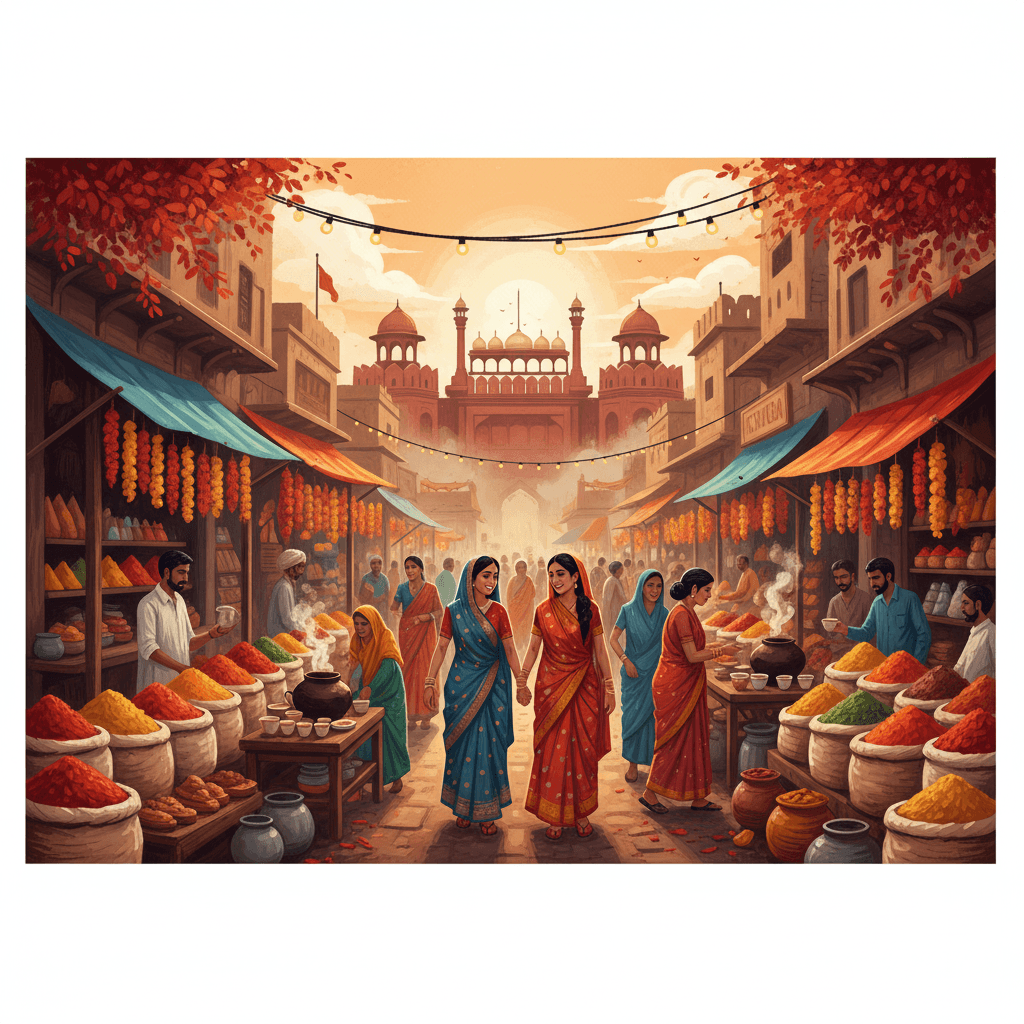
Why India Is the Ultimate Translation Challenge
No country on Earth presents a more complex translation environment than India. Hindi (Devanagari script) is widely spoken in the north and central regions, but a traveller going south encounters Tamil (curving, ornate script), Kannada (rounded script), Telugu (similar to Kannada), and Malayalam (highly complex, cursive). Each language is as different from Hindi as French is from Russian. A single Indian trip can cross four language boundaries, each with its own alphabet.
Indian food mirrors this linguistic diversity: Punjabi cuisine in the north is tandoor-based, butter-rich, and bread-heavy. Rajasthani food is adapted to desert conditions with dried lentils and preserved ingredients. Bengali cuisine celebrates fish and mustard. Kerala food is coconut-based, with seafood and rice. Tamil cuisine features dosas, idlis, and sambar. No other country has regional food variation at this scale.
Top Translation Apps Compared for India
Google Translate — Best for Indian language coverage. Supports Hindi, Tamil, Bengali, Telugu, Kannada, Malayalam, Marathi, Gujarati, Urdu, Punjabi, and more with camera translation. Essential for reading signs and menus across India's many scripts. No food expertise.
Ask Lucy — Best for Indian dining. Explains regional thali compositions, decodes restaurant menus with ingredient detail, and flags allergens in dairy-heavy northern cooking, nut-rich Mughlai dishes, and mustard-based eastern preparations. Essential for travellers with dietary restrictions in a country where dairy and nuts are everywhere.
Apple Translate — Supports Hindi with on-device processing. Limited to one Indian language. Not sufficient for multi-region India travel.
DeepL — No Indian language support. Not useful for India travel.
India-Specific Challenges Each App Handles Differently
The thali is India's signature dining format — a round platter with small bowls of different dishes, rice or bread, and accompaniments. A Gujarati thali might include 10-12 items; a Rajasthani thali even more. The dishes change daily and are named in the regional language. Understanding what you are eating requires either a patient waiter or a food-intelligent translation app. Lucy explains each component: 'dal makhani' (black lentils in cream and butter — contains dairy), 'aloo gobi' (potato and cauliflower — typically vegan), 'raita' (yoghurt with cucumber — contains dairy).
The vegetarian/non-vegetarian distinction is unique to India: restaurants are often strictly vegetarian (green dot on signage) or serve both ('non-veg'). Jain restaurants follow even stricter rules, avoiding root vegetables and garlic. Lucy understands these distinctions and helps vegetarian and vegan travellers navigate a food culture that is simultaneously one of the most vegetarian-friendly in the world and one where hidden dairy (ghee, paneer, yoghurt, cream) is almost impossible to avoid without expert guidance.
How Lucy Specifically Helps in India
Lucy understands Indian food regionally. She knows that 'biryani' in Hyderabad is layered with dum-cooked meat and saffron rice (different from Lucknowi biryani or Kolkata biryani, each with distinct spicing). She knows that 'dosa' in Tamil Nadu is a crispy crepe made from rice and lentil batter (naturally gluten-free but check for accompanying chutneys with nuts). She knows that 'fish curry' in Kerala uses coconut milk, in Bengal uses mustard, and in Goa uses vinegar and chilli. This regional food intelligence is what makes Lucy invaluable in a country where 'Indian food' is as meaninglessly broad as 'European food.'
Verdict: Best Translation App for India Travel
For India, you need two apps: Google Translate for its unmatched Indian language and script coverage, and Lucy for its unmatched Indian food intelligence. Google reads the menu; Lucy tells you what the food actually is, whether it is safe for your dietary needs, and what makes each regional dish special. India is too linguistically diverse for any single app to dominate, but this combination covers every situation a traveller encounters.
Feature Comparison
| Feature | Lucy | Various | Notes |
|---|---|---|---|
| Menu Photo Translation | Excellent | Good | Lucy explains 'paneer tikka masala' with ingredient detail and flags dairy in paneer, ghee, and cream. Google translates the Hindi text but assumes knowledge of Indian cuisine. |
| Hindi & Regional Script Accuracy | Good | Excellent | Google supports 12+ Indian languages with camera translation. Lucy focuses on food vocabulary across major Indian languages. |
| Cultural Context | Excellent | Fair | Lucy explains thali structure, vegetarian vs non-veg restaurant distinction, and regional dining customs (eating with hands in the south, bread-based meals in the north). |
| Allergen & Dietary Safety | Excellent | N/A | Lucy flags dairy (ghee, paneer, yoghurt) in most Indian dishes, tree nuts in korma and Mughlai cuisine, sesame in some breads, and mustard oil in Bengali and eastern cooking. |
| Offline Capability | Good | Good | Essential for rural areas and budget restaurants. Google offers offline packs for most Indian languages. |
| Multi-Script Support | Good | Excellent | Google supports Devanagari, Tamil, Bengali, Telugu, Kannada, Malayalam, Gujarati, and more. Lucy handles the most common food-related scripts. |
| Price / Value | Good | Excellent | Google is free and supports more Indian languages than any other app. Lucy's food and dietary intelligence adds critical value for travellers with restrictions. |
Our Verdict
India's linguistic diversity is unmatched, and Google Translate's support for 12+ Indian languages and scripts gives it an advantage in raw coverage. But for the dining experience — navigating thalis, understanding regional spice profiles, and managing dairy-heavy or nut-laden Indian cuisine with dietary restrictions — Lucy provides food intelligence that generic translation cannot match. The ideal India toolkit: Google Translate for script recognition across India's many languages, Lucy for every restaurant and food stall.