
Lucy vs Google Translate for Spanish
Last updated March 30, 2026
Spanish is spoken across more than 20 countries, and the food culture varies enormously — from tapas bars in Seville to ceviches in Lima to taquerias in Mexico City. Regional vocabulary, slang, and dish names change dramatically between Spain and Latin America. Google Translate handles standard Spanish well, but the regional food vocabulary that travellers actually encounter requires deeper understanding.
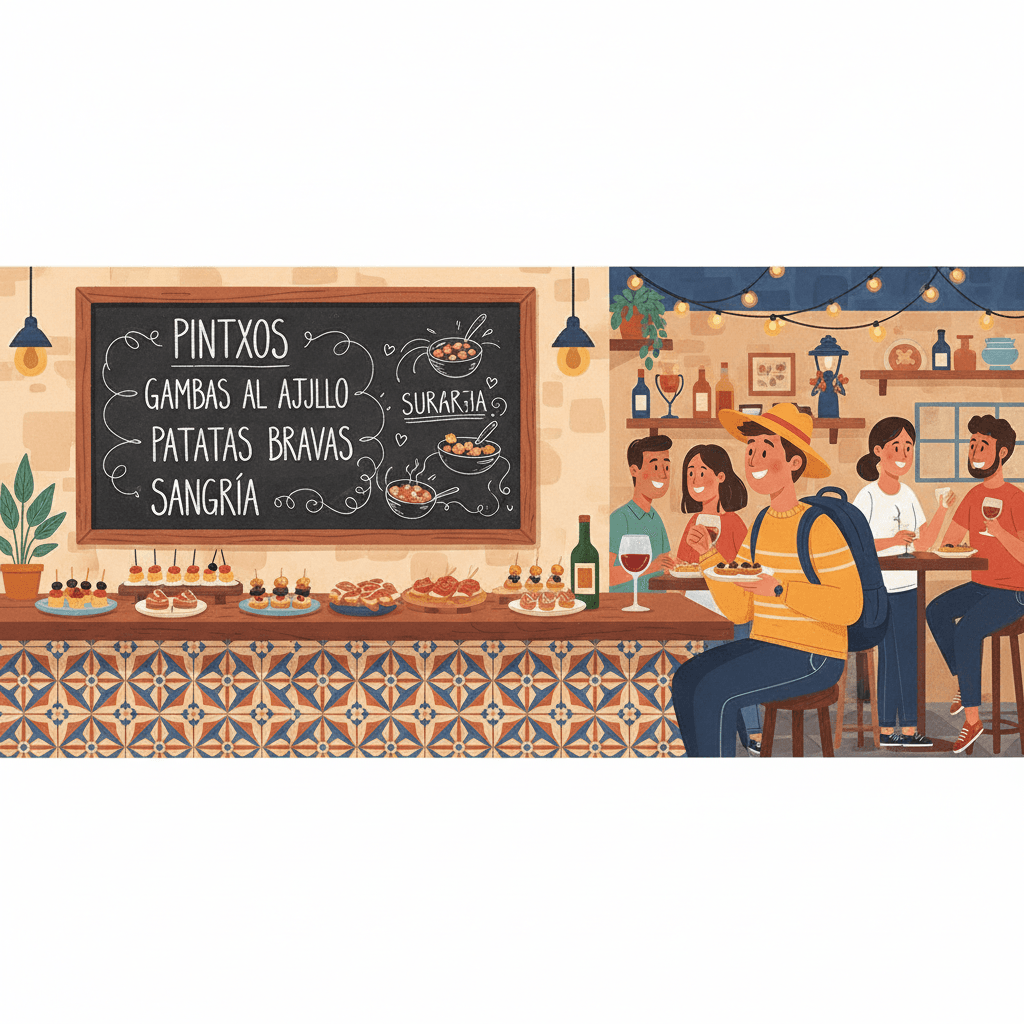
One Language, Many Food Cultures
Spanish is the second most-spoken native language in the world, but 'Spanish food' is a misnomer. The cuisine of Andalucia bears little resemblance to Basque Country cooking. A Mexican taqueria menu has almost nothing in common with an Argentine parrilla. Peruvian ceviche and Cuban ropa vieja share a language but not a culinary tradition.
Google Translate treats all Spanish as identical. Lucy understands regional context — she knows whether you're reading a menu in Spain, Mexico, Peru, or Argentina, and adjusts her explanations accordingly.
The Tapas Bar Test
Spanish tapas bars are one of the world's great dining experiences — and one of the most confusing for non-Spanish speakers. Menus list dozens of small dishes with names like 'pimientos de padron,' 'boquerones en vinagre,' and 'croquetas de jamon.' Google translates these as 'Padron peppers,' 'anchovies in vinegar,' and 'ham croquettes' — technically correct but unhelpfully sparse.
Lucy adds the context that matters: 'Pimientos de padron — small green peppers blistered in olive oil and finished with coarse salt. Most are mild, but about one in ten is spicy — the Russian roulette of tapas. Gluten-free, vegan.' That's a translation worth having.
Regional Allergen Traps
Spanish and Latin American cuisines hide allergens in unexpected places. Romesco sauce (Catalonia) contains almonds and hazelnuts. Mole (Mexico) can contain peanuts, chocolate, and sesame. Paella often includes shellfish even in 'mixed' versions. Churros are deep-fried wheat dough. Many Spanish sauces use bread as a thickener.
Lucy catches these hidden ingredients across every regional variation. Google Translate gives you the dish name in English and leaves the allergen discovery to chance.
Spain vs Latin America: Different Dining Worlds
Lucy explains the cultural differences that affect your dining experience. In Spain, dinner starts at 9pm or later. In Mexico, the main meal (comida) is at 2pm. In Spain, a 'tortilla' is a thick potato omelette — order one in Mexico and you'll get a flatbread. Lucy navigates these differences automatically, preventing the confusion that ruins meals and creates embarrassing moments.
Feature Comparison
| Feature | Lucy | Google Translate | Notes |
|---|---|---|---|
| Menu Photo Translation | Excellent | Good | Lucy explains Spanish and Latin American dishes in full — what 'gambas al ajillo' actually is, how 'mole' is prepared, what 'ceviche mixto' contains. Google gives literal translations that miss the culinary meaning. |
| Handwritten Text | Excellent | Fair | Spanish tapas bars use chalkboard menus with handwritten daily specials. Lucy reads Spanish cursive reliably. Google's OCR often misses accent marks in handwriting. |
| Cultural Context | Excellent | Fair | Lucy explains tapas ordering etiquette, the difference between a 'tapa' and a 'racion,' late Spanish dining hours, and regional customs. Google translates without context. |
| Allergen Detection | Excellent | N/A | Spanish cuisine hides shellfish in paella, nuts in romesco and mole sauces, and dairy in many tapas. Lucy flags these. Google has no allergen awareness. |
| Conversation Memory | Excellent | N/A | Lucy remembers your preferences whether you're in Barcelona or Buenos Aires. Google doesn't carry context between sessions. |
| Offline Capability | Good | Good | Both offer offline Spanish. Useful for rural Spain and areas of Latin America with spotty connectivity. |
| Price | Good | Excellent | Google is free. Lucy's regional Spanish food intelligence and allergen detection are worth the subscription for food-focused travellers. |
Our Verdict
Google Translate handles standard Spanish text well — it's a widely-supported language. But Spanish food culture is so regionally diverse that literal translation fails constantly. Lucy knows that 'tortilla' means something completely different in Spain (potato omelette) versus Mexico (flatbread), that 'mole' is a complex sauce with dozens of ingredients including chocolate and chillies, and that 'gambas al ajillo' contains shellfish and garlic in olive oil. For tapas bars, mercados, and taquerias, Lucy is the informed dining companion that Google cannot be.