
Lucy vs Google Translate for Mandarin Chinese
Last updated March 30, 2026
Mandarin Chinese uses thousands of characters with no phonetic clues for English speakers, making restaurant menus in China completely opaque without a translation tool. Chinese cuisine is extraordinarily diverse — Sichuan, Cantonese, Shanghainese, Hunan, and dozens more regional styles each have unique dishes and preparation methods. Google Translate has improved dramatically for Chinese, but food-specific translation remains a major gap.
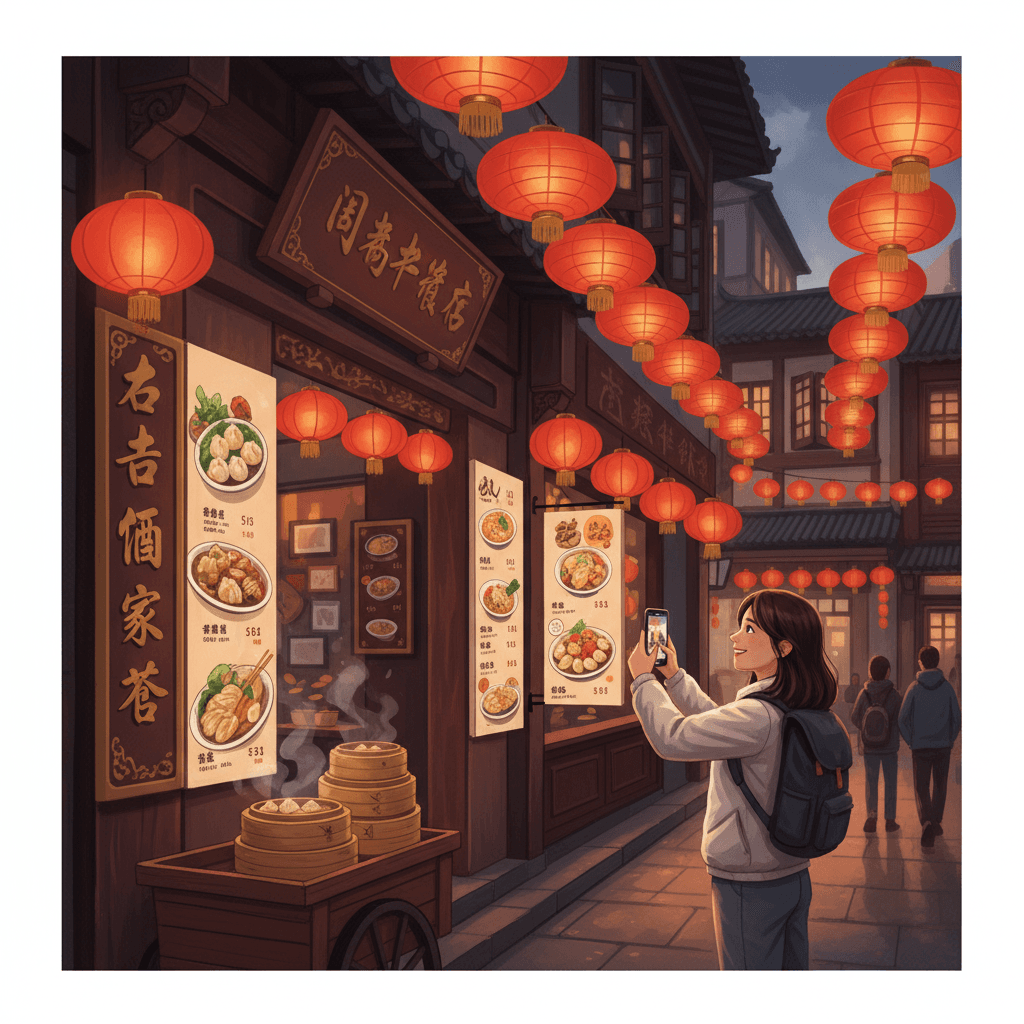
The Chinese Character Challenge
Chinese uses thousands of unique characters, and a typical restaurant menu may contain characters that even intermediate Chinese learners don't recognise. There are no phonetic clues — unlike Japanese katakana or Korean hangul, Chinese characters give no hint of pronunciation to English speakers. Without a translation tool, a Chinese menu is completely impenetrable.
Google Translate's camera mode reads printed Chinese characters well. But Chinese restaurant menus in local establishments — the ones serving the best food — are often handwritten on walls, printed in stylised fonts, or use regional shorthand that Google's OCR misreads.
Eight Great Cuisines, Thousands of Dishes
China's culinary tradition is formally divided into eight great regional cuisines, each with distinct flavour profiles and cooking techniques. Sichuan is fiery and numbing. Cantonese is subtle and fresh. Shanghainese is sweet and rich. Hunan is hot and sour. Google Translate doesn't distinguish between these — it translates characters without understanding which regional tradition you're eating.
Lucy recognises regional context. When you photograph a menu in Chengdu, she explains Sichuan preparations — the 'mala' numbing spice, the use of Sichuan peppercorns, the chilli oil that pools in every dish. In Guangzhou, she shifts to explaining Cantonese dim sum categories, steaming techniques, and the significance of fresh ingredients.
Hidden Allergens in Chinese Cooking
Peanut oil is the default cooking oil in many Chinese regions. Soy sauce is in virtually everything. Sesame oil finishes most dishes. Dried shrimp appears in fried rice, stir-fries, and dumpling fillings. Wheat-based wrappers enclose dumplings, spring rolls, and buns. For allergy sufferers, Chinese cuisine requires constant vigilance.
Lucy identifies these ingredients automatically. When you photograph a menu item, she doesn't just translate the name — she lists the typical ingredients and flags allergens, even the ones that aren't explicitly mentioned on the menu because they're assumed (like peanut oil for frying).
Ordering Culture in China
Lucy explains that Chinese meals are ordered for the table (not individually), that you should balance flavours and textures across dishes, that rice comes last (not with the meal), and that the host always pays. She explains how to navigate a dim sum cart, how to read a Chinese tea menu, and that leaving a small amount of food on your plate signals you've had enough.
Feature Comparison
| Feature | Lucy | Google Translate | Notes |
|---|---|---|---|
| Menu Photo Translation | Excellent | Good | Lucy explains Chinese dishes by region and cooking method — what 'mapo tofu' actually tastes like, how 'kung pao chicken' is prepared, what makes Cantonese dim sum different from Shanghainese. Google translates characters but often produces awkward food names. |
| Handwritten Text | Excellent | Fair | Many local Chinese restaurants use handwritten menus or hand-painted wall menus. Handwritten Chinese characters are extremely difficult for OCR. Lucy outperforms Google on these real-world menus. |
| Cultural Context | Excellent | Fair | Lucy explains Chinese dining customs — lazy Susan etiquette, how to order for a group, tea ceremony basics, and regional eating styles. Google provides no cultural context. |
| Allergen Detection | Excellent | N/A | Chinese cuisine uses peanuts extensively (kung pao, dan dan noodles), sesame (in oils and sauces), soy (ubiquitous), shellfish (dried shrimp in many dishes), and wheat (in noodles and dumplings). Lucy catches hidden allergens. Google doesn't. |
| Conversation Memory | Excellent | N/A | Lucy remembers your preferences as you explore different regional cuisines across China. Google treats every interaction as new. |
| Offline Capability | Good | Good | Both offer offline Chinese. Google's offline Chinese OCR is decent for printed characters. Important in areas with restricted internet access. |
| Price | Good | Excellent | Google is free. Lucy's Chinese regional food expertise and allergen detection are critical for safely navigating China's vast food landscape. |
Our Verdict
Google Translate has improved significantly for Chinese character recognition and handles basic translation competently. But Chinese cuisine is so vast and regionally diverse that literal character-by-character translation frequently produces confusing or misleading results. Lucy understands that 'hong shao rou' isn't just 'red cooked meat' but pork belly braised in soy sauce and sugar, that 'xiao long bao' are delicate soup dumplings from Shanghai, and that peanut oil lurks in many Sichuan stir-fries. For eating safely and adventurously in China, Lucy's food intelligence is transformative.