
Lucy vs Google Translate for Korean
Last updated March 30, 2026
Korean uses Hangul — a phonetic alphabet designed to be logical and learnable, yet still foreign to most Western travellers. Korean food culture is one of the world's most vibrant, from BBQ restaurants to pojangmacha street food tents to the elaborate banchan side dishes that accompany every meal. Google Translate handles Hangul adequately, but Korean food terminology and the unique dining customs require contextual intelligence.
Hangul: Logical but Still Foreign
Hangul is often called the world's most scientifically designed alphabet — King Sejong created it in 1443 specifically to be learnable. Each character block represents a syllable with consonants and vowels arranged in a logical pattern. Google Translate reads Hangul well because of this systematic structure.
But reading Hangul and understanding Korean food are very different skills. Google translates 'doenjang-jjigae' as 'soybean paste stew' — technically correct but utterly uninformative. Lucy tells you: 'Doenjang-jjigae — fermented soybean paste stew with tofu, courgette, mushrooms, and chilli. Rich, earthy, deeply savoury. A comfort food staple served bubbling hot. Contains soy, may contain shellfish (some recipes include dried shrimp).'
Korean BBQ: Where Context Matters Most
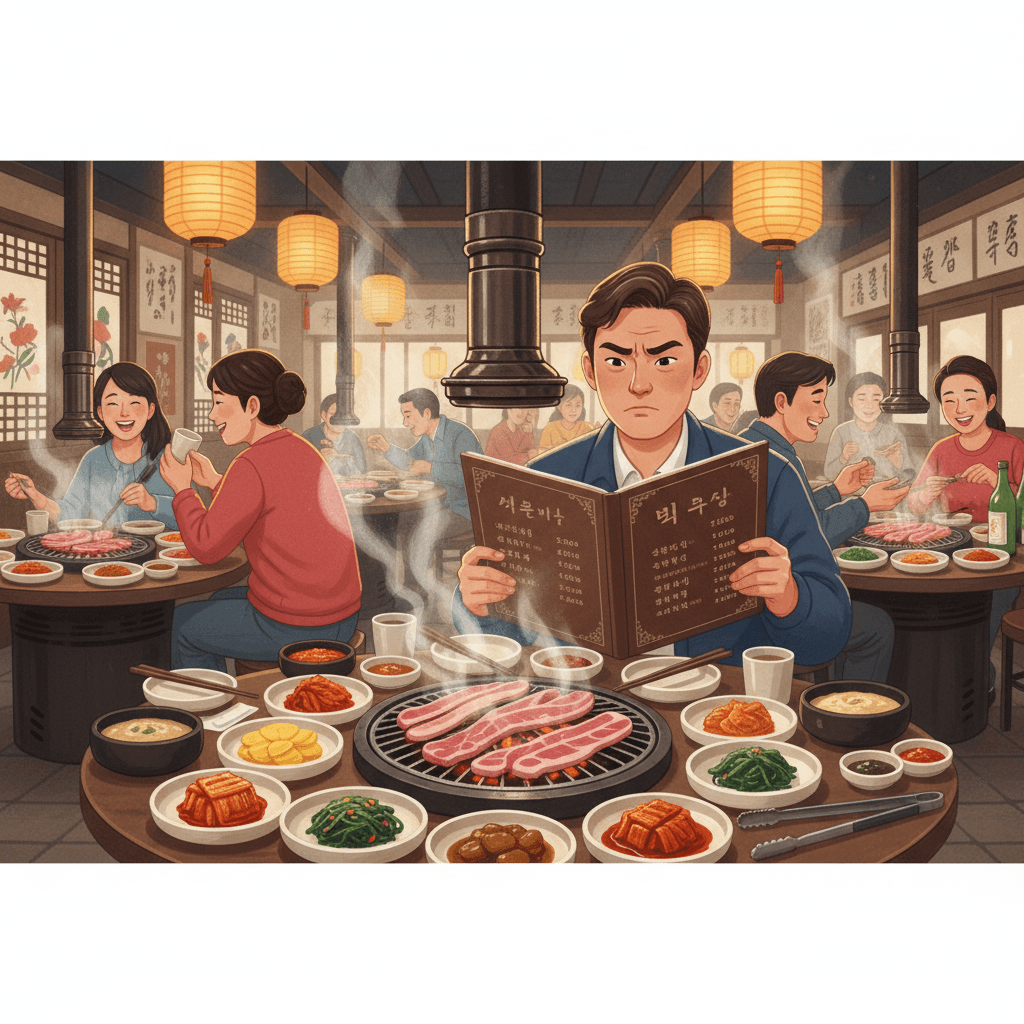
A Korean BBQ menu lists cuts of meat and marinades that literal translation cannot explain. 'Chadolbaegi' (thinly sliced beef brisket), 'galbi' (marinated short ribs), 'samgyeopsal' (thick pork belly), and 'moksal' (pork neck) each have distinct textures and flavours. Google translates these as 'beef,' 'ribs,' 'pork belly,' and 'neck meat' — accurate but useless for choosing.
Lucy explains each cut, how it's grilled, what condiments to use (wrap in lettuce with ssamjang paste and garlic), and the etiquette of Korean BBQ — the youngest person handles the grilling, you never pour your own soju, and you call the staff with the table button when you need more banchan.
Allergens in Korean Cuisine
Korean cuisine is built on fermented condiments — gochujang (red pepper paste, contains wheat), doenjang (soybean paste), and ganjang (soy sauce). Sesame oil and seeds appear in virtually every dish. Kimchi often contains shrimp paste (jeotgal). Wheat noodles appear in many soups and stir-fries. Fish sauce and dried seafood flavour countless dishes.
Lucy catches these ubiquitous allergens. When you photograph a menu, she flags the soy in the marinade, the sesame in the dressing, and the shrimp paste in the kimchi — ingredients that aren't listed because every Korean assumes you know they're there.
Banchan Culture Explained
Lucy explains that the small dishes arriving before your meal are banchan — complimentary side dishes that are refillable for free. She identifies each one: kimchi, japchae (glass noodles), namul (seasoned vegetables), radish, egg roll. She notes which contain allergens and explains that asking for refills (by pressing the call button) is expected, not rude. Google Translate has no concept of this foundational Korean dining tradition.
Feature Comparison
| Feature | Lucy | Google Translate | Notes |
|---|---|---|---|
| Menu Photo Translation | Excellent | Good | Lucy explains Korean dishes in full — what cuts of meat a BBQ restaurant offers, what's in each jjigae (stew), and what banchan side dishes contain. Google translates Hangul but misses food context. |
| Handwritten Text | Excellent | Fair | Korean pojangmacha tents and local restaurants use handwritten menus on walls and plastic banners. Lucy handles handwritten Hangul better than Google. |
| Cultural Context | Excellent | Fair | Lucy explains Korean BBQ etiquette (the youngest person grills), soju drinking customs, banchan refill rules, and how to use the call button at Korean restaurants. Google translates without context. |
| Allergen Detection | Excellent | N/A | Korean food uses sesame oil and seeds extensively, soy in every marinade and sauce, shellfish in many broths and kimchi, and wheat in gochujang. Lucy flags these. Google doesn't. |
| Conversation Memory | Excellent | N/A | Lucy remembers your dietary restrictions whether you're at a BBQ in Gangnam or a market in Busan. Google starts fresh each time. |
| Offline Capability | Good | Good | Both offer offline Korean. Useful for underground metro stations and rural Korean towns. |
| Price | Good | Excellent | Google is free. Lucy's Korean food expertise and allergen detection are essential for safely navigating Korea's ingredient-dense cuisine. |
Our Verdict
Google Translate reads Hangul competently — Korean's logical alphabet is actually easier for OCR than Chinese or Japanese characters. But Korean food culture is incredibly complex, with BBQ cuts, stew varieties, fermented condiments, and banchan traditions that literal translation fails to convey. Lucy explains that 'samgyeopsal' is thick-cut pork belly you grill yourself, that 'sundubu-jjigae' is a bubbling soft tofu stew with varying spice levels, and that the dozen small dishes arriving before your meal (banchan) are free and refillable. For Korean BBQ alone, Lucy is worth it.