
Lucy vs Google Translate for Japanese
Last updated March 30, 2026
Japanese is one of the most challenging languages for travellers, with three writing systems — kanji, hiragana, and katakana — plus an entirely different sentence structure from English. From handwritten izakaya menus to the elaborate kaiseki course names at traditional restaurants, Japan's food culture demands more than literal translation. Here's how Lucy and Google Translate compare for Japanese travel.
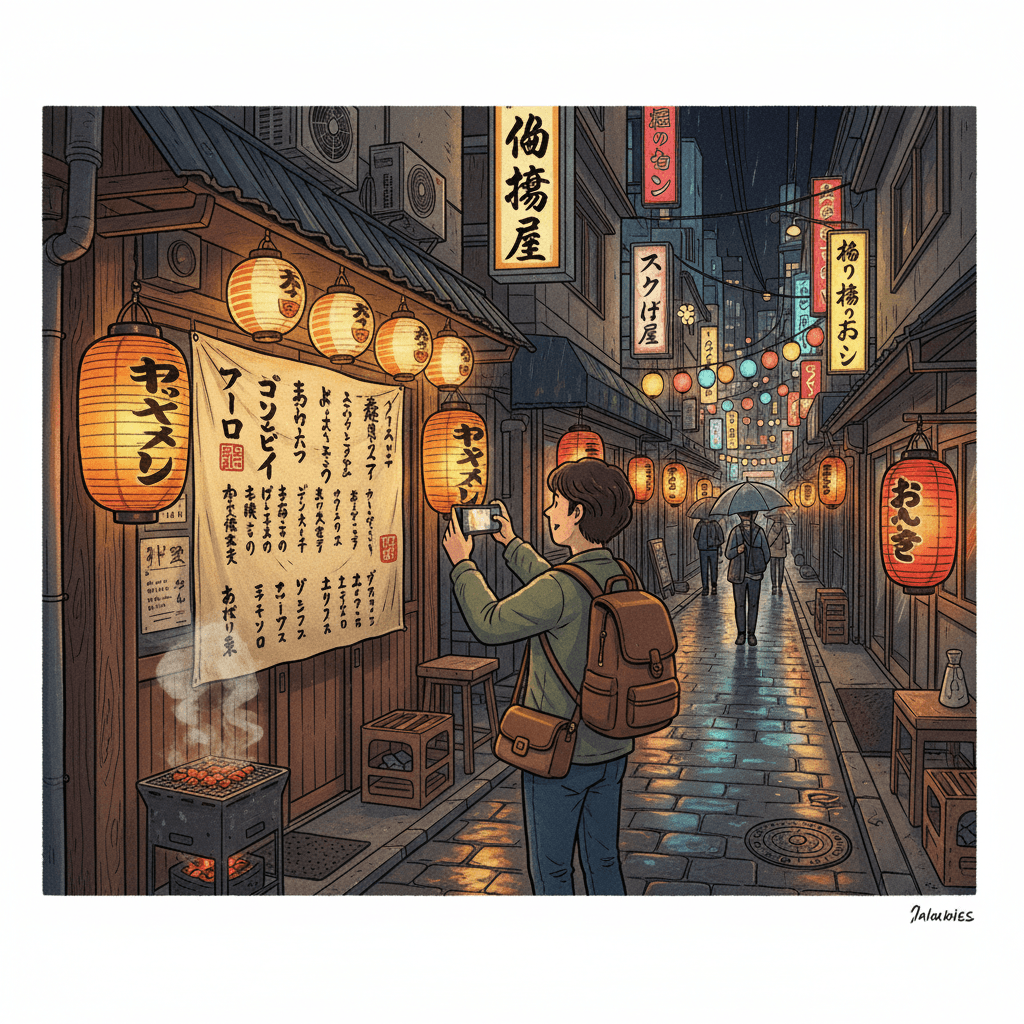
The Japanese Translation Challenge
Japanese presents a unique challenge for translation apps. Three writing systems coexist — kanji (Chinese-derived characters), hiragana (native Japanese syllabary), and katakana (used for foreign loan words) — often mixed within a single sentence. Food menus add another layer of complexity: seasonal dishes, regional specialities, and cooking techniques that have no direct English equivalent.
Google Translate handles standard printed Japanese reasonably well for simple sentences. But point it at a handwritten izakaya specials board and the results range from awkward to incomprehensible. 'Grilled thing on stick' doesn't help you understand that you're looking at yakitori — and it certainly doesn't tell you which skewers contain chicken skin versus chicken liver.
Izakaya Menus: Where Lucy Shines
Izakayas — Japan's beloved casual pubs — are where most travellers eat. The menus are often handwritten on wooden boards or paper strips, changed daily based on what's fresh. Google Translate's OCR struggles with handwritten Japanese, and even when it reads the characters correctly, it translates food terms literally without culinary context.
Lucy reads the same handwritten menu and tells you: 'Nankotsu karaage — deep-fried chicken cartilage, crispy and crunchy. A classic izakaya snack. Contains wheat (batter) and soy (sauce).' That's the difference between staring at a menu in confusion and ordering like a regular.
Hidden Allergens in Japanese Cuisine
Japanese cuisine is a minefield for allergy sufferers. Dashi — the foundational broth in nearly everything — is made from bonito fish flakes and kombu seaweed. Soy sauce appears in virtually every savoury dish. Wheat is in tempura batter, ramen noodles, and even some soy sauces. Shellfish-derived seasonings hide in unexpected places.
Google Translate cannot warn you about these hidden ingredients because it translates words, not food knowledge. Lucy understands Japanese cuisine at an ingredient level, flagging allergens that even careful travellers miss.
Beyond the Menu: Cultural Navigation
Japan's dining culture has unwritten rules that translation alone doesn't cover. Lucy explains that you should say 'sumimasen' to get a waiter's attention (not wave or make eye contact), that tipping is considered rude, that slurping ramen is polite, and that some restaurants require you to buy a ticket from a vending machine before sitting down. Google Translate tells you none of this.
Feature Comparison
| Feature | Lucy | Google Translate | Notes |
|---|---|---|---|
| Menu Photo Translation | Excellent | Good | Lucy identifies Japanese dishes by name, explains ingredients, and describes preparation methods. Google translates kanji literally — often producing nonsensical results for food terminology. |
| Handwritten Text | Excellent | Fair | Izakaya specials boards and small restaurant menus are often handwritten in cursive Japanese. Lucy handles handwritten kanji and hiragana far better than Google's OCR, which struggles with brush-style characters. |
| Cultural Context | Excellent | Fair | Lucy explains Japanese dining customs — chopstick etiquette, how to order at an izakaya, the significance of seasonal ingredients in kaiseki. Google provides no cultural guidance. |
| Allergen Detection | Excellent | N/A | Japan uses soy, shellfish, and wheat extensively — often hidden in dashi broth, soy sauce, and mirin. Lucy flags these hidden allergens. Google has no allergen awareness. |
| Conversation Memory | Excellent | N/A | Lucy remembers your dietary preferences across sessions. Google Translate treats every interaction as isolated. |
| Offline Capability | Good | Good | Both offer offline Japanese language packs. Google's offline OCR for Japanese is competent but loses context. |
| Price | Good | Excellent | Google Translate is completely free. Lucy's subscription provides deeper food intelligence and allergen safety. |
Our Verdict
Google Translate handles basic Japanese text adequately, but Japan's food culture — with its handwritten menus, seasonal specialities, and hidden allergens in dashi and soy-based sauces — demands the kind of contextual understanding that only Lucy provides. For travellers exploring izakayas in Tokyo's backstreets or kaiseki restaurants in Kyoto, Lucy is the difference between confusion and confidence.