
Lucy vs Google Translate for Italian
Last updated March 30, 2026
Italy is the world's most popular food destination, and Italian menus are filled with regional dishes that vary dramatically from north to south. A Roman trattoria menu reads nothing like a Sicilian one. Handwritten daily specials, dialect words, and centuries-old dish names make literal translation inadequate. Here's how Lucy compares to Google Translate for the Italian dining experience.
Why Italian Menus Defeat General Translators
Italian menus are not just lists of food — they're expressions of regional identity. 'Cacio e pepe' in Rome is a specific pasta preparation. 'Orecchiette alle cime di rapa' in Puglia refers to a particular ear-shaped pasta with broccoli rabe. 'Pici all'aglione' in Tuscany describes hand-rolled thick spaghetti with garlic tomato sauce. Google Translate turns these into gibberish — 'little ears at the tops of turnip' helps nobody.
Lucy understands Italian food at a regional level. She knows that 'bistecca alla fiorentina' is a massive T-bone steak specific to Florence, that 'arancini' in Sicily are fried rice balls (and that the filling varies by city), and that 'cicchetti' in Venice are the local equivalent of tapas.
The Trattoria Experience
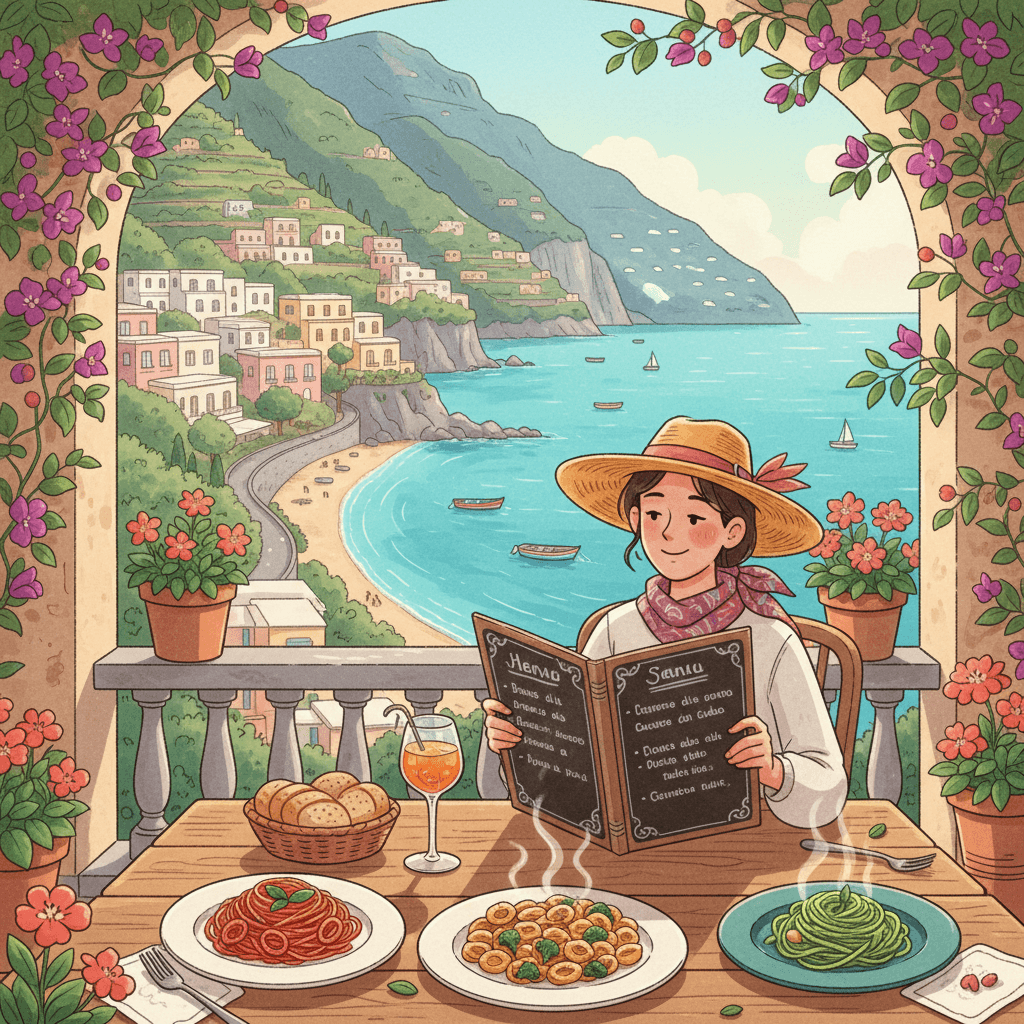
Real Italian restaurants — trattorias, osterias, and local ristoranti — often have handwritten daily specials that represent the best food in the house. These specials use seasonal, regional ingredients and dialect words that even printed-Italian translators struggle with. Lucy reads these handwritten menus and provides the context you need to order the best dish on the board.
Google Translate often fails entirely on handwritten Italian, producing garbled results that leave travellers defaulting to pizza and pasta — missing the authentic regional dishes that make Italian food extraordinary.
Hidden Allergens in Italian Cuisine
Italian cuisine hides allergens in beloved classics. Pesto genovese contains pine nuts and Parmesan (dairy). Carbonara is made with eggs and cured pork. Fresh pasta contains eggs (dried pasta typically doesn't). Many sauces use anchovies as a base flavour without listing them. Parmesan appears in dishes where you wouldn't expect it.
Lucy flags these hidden ingredients automatically. When you photograph a menu with 'spaghetti alla puttanesca,' Lucy tells you it contains anchovies, capers, and olives — information Google Translate would never provide.
Dining Culture That Translation Misses
Lucy explains that 'coperto' is a cover charge (not a tip), that Italians eat courses in order (skipping courses is fine, but don't order a primo as a secondo), that espresso is for after the meal, and that asking for Parmesan on seafood pasta is a cultural faux pas. This dining intelligence makes the difference between a tourist experience and an authentic Italian one.
Feature Comparison
| Feature | Lucy | Google Translate | Notes |
|---|---|---|---|
| Menu Photo Translation | Excellent | Good | Lucy explains regional Italian dishes — cacio e pepe, pici all'aglione, caponata — with preparation details and ingredients. Google translates literally, producing 'cheese and pepper' instead of explaining the dish. |
| Handwritten Text | Excellent | Fair | Italian trattorias often have handwritten daily specials on chalkboards or paper menus. Lucy handles the cursive Italian handwriting that Google's OCR frequently misreads. |
| Cultural Context | Excellent | Fair | Lucy explains Italian dining structure — antipasti, primi, secondi, contorni — and regional customs like coperto charges and when to order espresso (never cappuccino after 11am). Google provides no context. |
| Allergen Detection | Excellent | N/A | Italian cuisine uses hidden dairy (Parmesan in pesto), pine nuts (pesto genovese), anchovies (in many sauces), and eggs (fresh pasta). Lucy catches these. Google doesn't. |
| Conversation Memory | Excellent | N/A | Lucy remembers your preferences — no mushrooms, dairy-free — and applies them across every Italian restaurant. Google starts fresh every time. |
| Offline Capability | Good | Good | Both offer offline Italian. Google's offline quality is decent for printed text but misses food nuance. |
| Price | Good | Excellent | Google is free. Lucy's Italian food expertise and allergen detection justify the subscription for serious food travellers. |
Our Verdict
Google Translate handles basic Italian text competently, but Italian food culture is intensely regional — a dish from Emilia-Romagna is nothing like the same name in Calabria. Lucy understands these regional differences, explains what you're actually ordering, and catches hidden allergens in classics like pesto (pine nuts, dairy) and carbonara (eggs, pork). For anyone who travels to Italy to eat — which is everyone — Lucy transforms the dining experience.