
Understanding Japanese Menu Items: A Complete Guide
The Lucy Team
We're the team behind Ask Lucy — travellers, food lovers, and language enthusiasts building an AI companion that helps you explore the world with confidence.
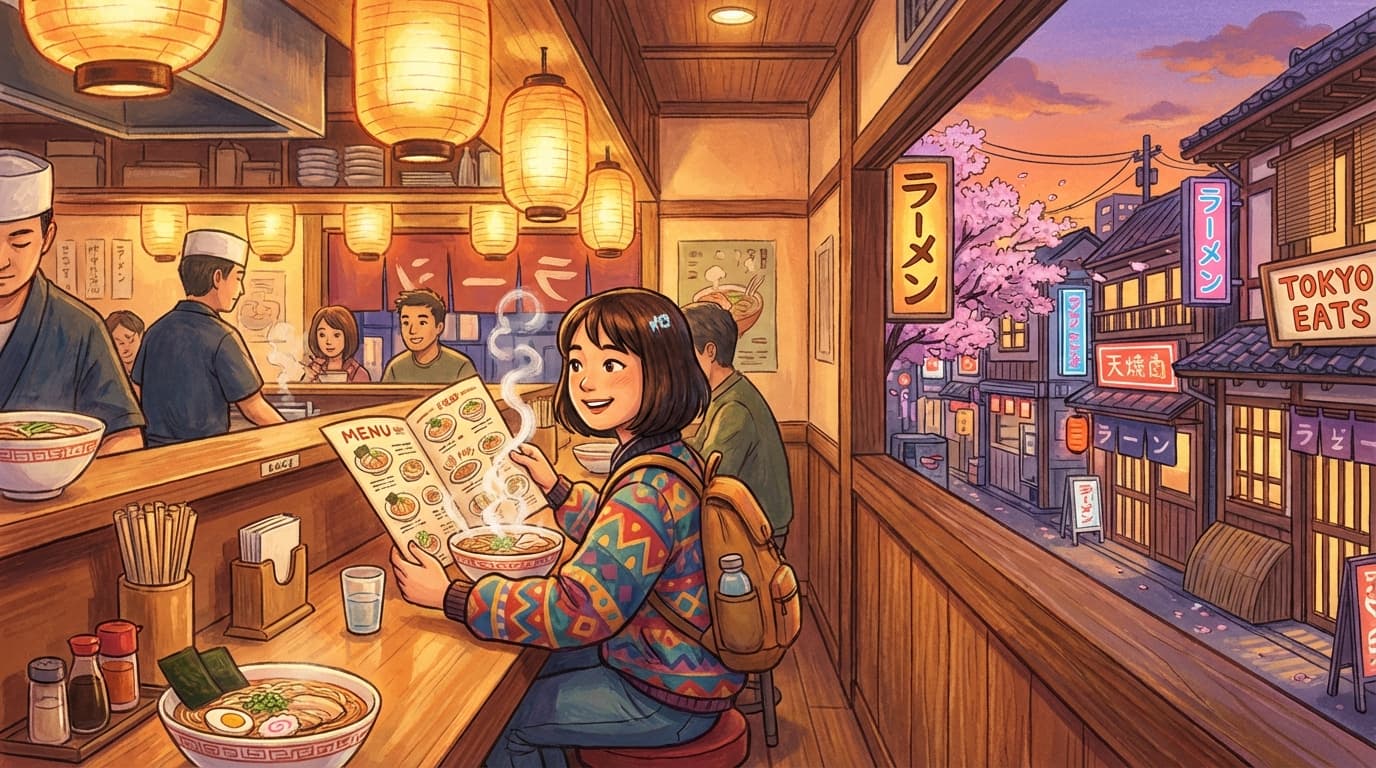
Why Japanese Menus Look Intimidating But Are Not
Japanese menus often use a mix of kanji, hiragana, and katakana — three different writing systems. That looks overwhelming, but the good news is that many restaurants use plastic food displays (sampuru) outside, picture menus, or ticket vending machines that make ordering straightforward even without reading Japanese.
Still, understanding the basics of what common menu items mean will dramatically improve your dining experience and help you discover dishes you would otherwise skip.
Essential Japanese Menu Categories
Gohan-mono — Rice dishes. Includes donburi (rice bowls), onigiri (rice balls), and curry rice.
Men-rui — Noodle dishes. Ramen, udon, soba, and yakisoba.
Yakimono — Grilled items. Yakitori (grilled chicken skewers), yakiniku (grilled meat).
Agemono — Fried items. Tempura, tonkatsu (breaded pork cutlet), karaage (fried chicken).
Sashimi/Sushi — Raw fish served sliced or on vinegared rice.
Nimono — Simmered dishes. Often root vegetables and proteins braised in dashi broth.
Ordering Tips for Travelers
At ramen shops and many casual restaurants, you order from a ticket machine near the entrance. Insert money, press the button for your dish, and hand the ticket to the staff. No Japanese needed.
At izakaya (Japanese pubs), ordering is more social. Dishes are small and shared. Start with a drink — most izakaya expect you to order a beverage first. Then order a few plates at a time.
How Lucy Helps with Japanese Menus
Lucy reads kanji, hiragana, and katakana fluently. Photograph a Japanese menu and she will translate every item, explain unfamiliar dishes, and warn you about common allergens like soy, wheat, fish, and shellfish that appear in nearly every Japanese meal.