
What Every Thai Menu Symbol Means
The Lucy Team
We're the team behind Ask Lucy — travellers, food lovers, and language enthusiasts building an AI companion that helps you explore the world with confidence.
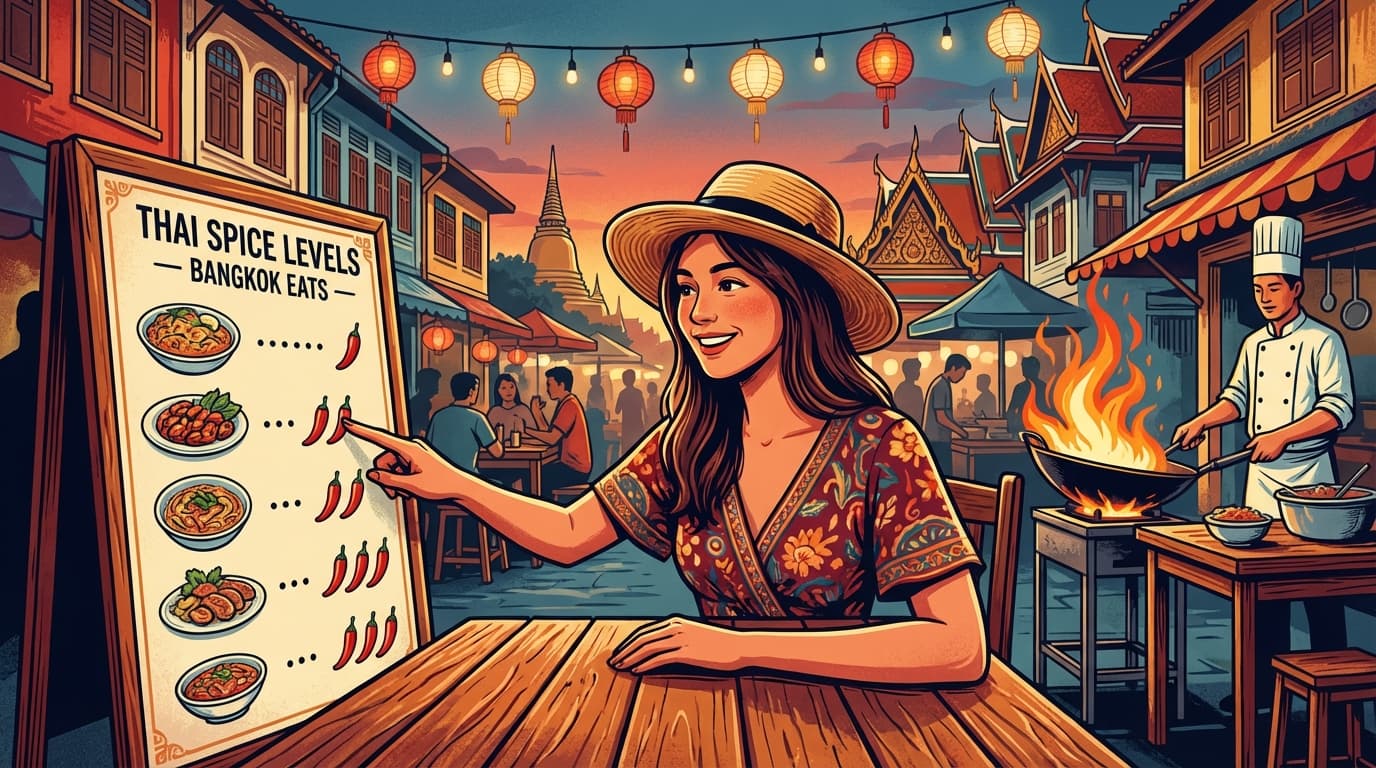
How Thai Menus Are Organized
Thai restaurant menus typically group dishes by protein (chicken, pork, seafood, vegetarian) or by cooking method (stir-fried, curry, soup, salad). In tourist areas, menus usually have English translations, but street food stalls and local restaurants may have Thai script only.
Many Thai menus use chili symbols to indicate spice level — one chili for mild, two for medium, three for hot. But Thai mild is still quite spicy by Western standards. If you want genuinely mild food, ask for "mai pet" (not spicy).
Essential Thai Dish Names
Pad Thai — Stir-fried rice noodles with egg, tofu, peanuts, and tamarind sauce. The national dish.
Tom Yum — Spicy and sour soup with shrimp or chicken, lemongrass, and galangal.
Som Tam — Green papaya salad. Spicy, sour, sweet, and salty all at once.
Gaeng Keow Wan — Green curry. Coconut milk-based with Thai basil. Often quite hot.
Khao Pad — Fried rice. Simple, safe, and available everywhere.
Larb — Minced meat salad with lime, fish sauce, and chili. Northeastern specialty.
Allergen Warnings for Thai Food
Thai cuisine uses peanuts extensively — in pad thai, satay sauces, and som tam. Fish sauce and shrimp paste appear in nearly every savory dish, even those without visible seafood. Soy sauce is common in stir-fries. Coconut milk is used in all curries.
If you have a nut allergy, tell the cook "mai sai thua" (no peanuts). For shellfish, say "mai sai kung" (no shrimp). Lucy can generate these phrases for you and flag allergens automatically when translating Thai menus.
Using Lucy for Thai Menus
Thai script is beautiful but completely impenetrable to most travelers. Lucy reads Thai script instantly, translates dish names with full descriptions, and warns you about peanuts, shellfish, and other allergens hidden in sauces and pastes.