
How to Read a Foreign Menu When You Have Food Allergies
The Lucy Team
We're the team behind Ask Lucy — travellers, food lovers, and language enthusiasts building an AI companion that helps you explore the world with confidence.
Why Dining Abroad with Food Allergies Feels Daunting
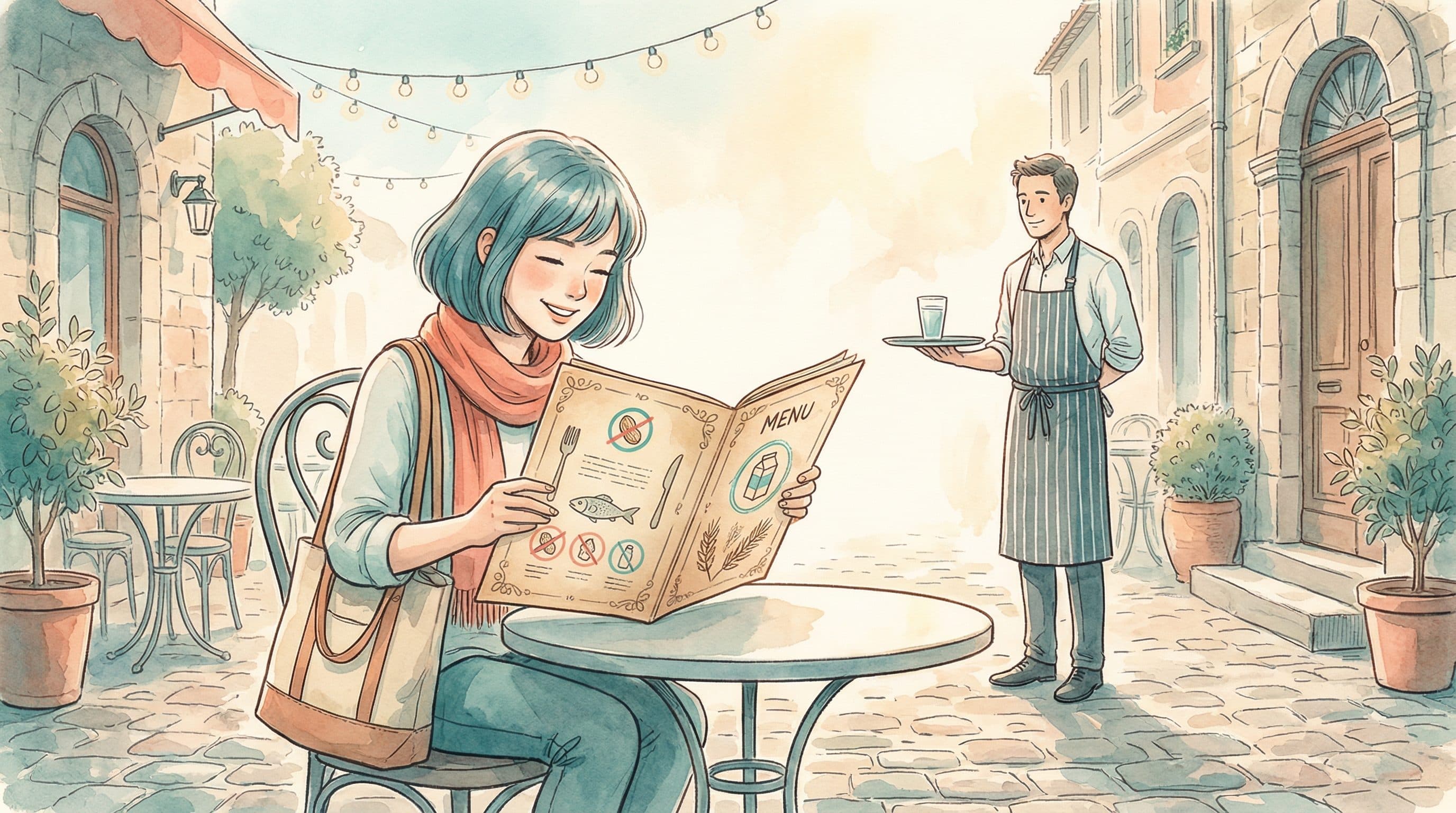
If you travel with food allergies, you already know the feeling. You're standing outside a beautiful little restaurant in a cobblestone lane, and the menu is completely in another language. Maybe it's handwritten on a chalkboard. Maybe there's no English translation at all. Your stomach tightens — and not from hunger.
You're not alone. Millions of travellers manage food allergies abroad every year, and with a little preparation, you can dine out confidently — even when you can't read a word on the menu. This guide walks you through exactly how to do it.
How Do You Prepare Before You Leave Home?
Preparation is the single biggest thing you can do for safe dining abroad. Here's what to do before you board the plane — or the cruise ship.
Learn the words for your allergens in the local language. Write them down and keep them on your phone. For common allergies like nuts, dairy, gluten, and shellfish, a simple card in the local language can save your life.
Research the local cuisine. Every cuisine has common ingredients. Italian food relies heavily on wheat and cheese. Thai food often uses peanuts and fish sauce. Knowing the base ingredients helps you spot risks before you even sit down.
Download a photo translation app. Apps like Lucy let you snap a photo of any menu — even handwritten ones — and get a full translation with dietary warnings highlighted. It's the fastest way to understand what you're ordering.
Carry allergy cards. Printed cards in the local language that explain your allergies are invaluable. Hand them to your waiter before ordering.
What Should You Do When You're at the Restaurant?
You've done your homework. Now you're sitting at a table in a restaurant abroad. Here's how to handle the menu with confidence.
Step 1: Don't panic if it's only in the local language. Most restaurants — especially in tourist areas — are used to visitors who don't speak the language. Take your time. No one is rushing you.
Step 2: Photograph the menu. Use a photo translation app to snap the entire menu. Lucy, for example, will translate every item and flag potential allergens based on your saved dietary profile. It works even on handwritten chalkboard menus.
Step 3: Show your allergy card to the waiter. Point to your card and say "allergia" (Italian), "alergia" (Spanish), or "allergie" (French). Staff in most European restaurants take allergies seriously and will guide you to safe dishes.
Step 4: Ask about hidden ingredients. Some dishes use allergens in sauces, stocks, or dressings that aren't obvious from the menu description. When in doubt, ask. A photo translation app can help you phrase the question in the local language.
What Are the Common Allergen Traps in Popular Cuisines?
Every cuisine has hidden allergen risks that even experienced travellers miss. Here are the most common traps by region.
Italian cuisine: Almost everything involves wheat (pasta, bread, breading) and dairy (cheese, cream sauces). Even "plain" grilled dishes may be finished with butter. If you have a nut allergy, watch for pesto — it's made with pine nuts.
French cuisine: Butter and cream are in nearly everything. Shellfish stock is common in sauces, even in dishes that don't appear to contain shellfish. Ask about "beurre" (butter) and "crème" (cream) in every dish.
Greek cuisine: Sesame is everywhere — in bread, dips, and pastries. Nuts appear in desserts and salads. Feta cheese is added to dishes you wouldn't expect.
Japanese cuisine: Soy sauce contains wheat. Fish and shellfish stock (dashi) is in most soups and sauces. Sesame oil is a common cooking ingredient.
How Does Lucy Help You Dine Safely Abroad?
Lucy was built with travellers like you in mind. When you photograph a menu, she doesn't just translate the words — she understands the context. She knows that "frutti di mare" means seafood, that "nocciole" means hazelnuts, and that "impanato" means breaded with wheat flour.
Tell Lucy about your allergies once, and she remembers them on every trip. She'll flag risky dishes automatically and suggest safe alternatives. It's like having a knowledgeable local friend who always has your back.
Quick Tips for Safe Dining Abroad
Eat where locals eat — they know which restaurants take allergies seriously.
Avoid buffets — cross-contamination is common and ingredients are rarely labelled.
Learn to say "I have a food allergy" in the local language. It opens doors.
Carry your EpiPen or medication at all times — don't leave it at the hotel or on the ship.
When in doubt, choose simple grilled dishes with visible ingredients.
You Can Dine Abroad with Confidence
Food allergies don't have to limit your travel adventures. With a little preparation, the right tools, and a willingness to communicate, you can enjoy incredible meals in any country. The world's kitchens are waiting for you — and with Lucy by your side, you'll always know exactly what's on your plate.