
Chinese Restaurant Menu Translation Tips
The Lucy Team
We're the team behind Ask Lucy — travellers, food lovers, and language enthusiasts building an AI companion that helps you explore the world with confidence.
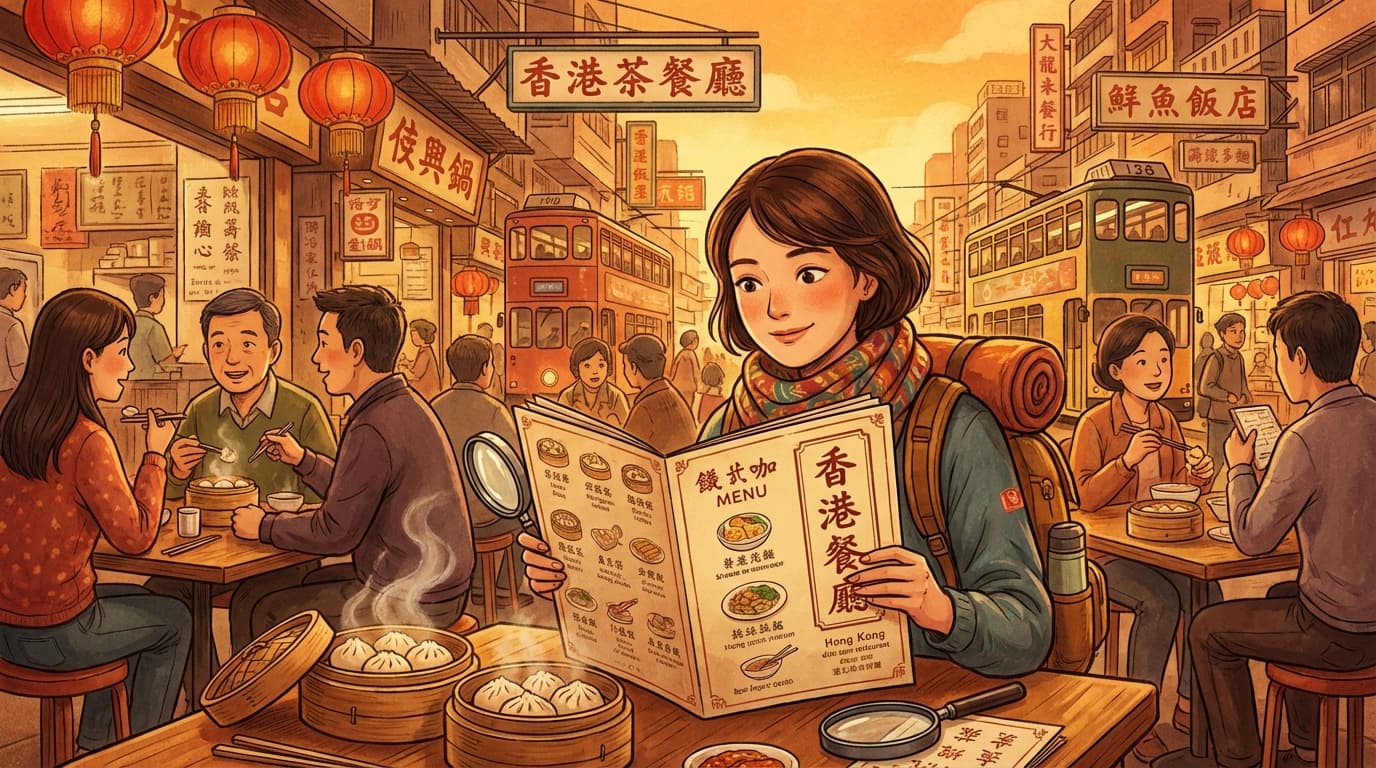
Why Chinese Menus Are Uniquely Challenging
Chinese restaurant menus can be intimidating for several reasons. They are often very long — 100 or more dishes is common. Dish names are frequently poetic or metaphorical: "Ants climbing a tree" is actually a noodle dish with minced pork, and "husband and wife lung slices" is chilled beef in chili oil. The actual ingredients are hidden behind literary tradition.
Additionally, Chinese cuisine varies enormously by region. A Sichuan restaurant and a Cantonese restaurant have almost nothing in common besides rice.
Key Chinese Menu Categories
Liang cai — Cold appetizers. Cucumber salad, sliced beef, pickled vegetables.
Re cai — Hot dishes. The main section with stir-fries, braises, and steamed dishes.
Tang — Soups. Often light, served as a palate cleanser.
Zhu shi — Staples. Rice, noodles, dumplings, and buns.
Dian xin — Dim sum items. Small steamed, fried, or baked snacks.
Cooking Method Characters to Recognize
Learning a few Chinese characters for cooking methods makes menus far more navigable. Chao means stir-fried. Zheng means steamed. Shao means braised or roasted. Zha means deep-fried. Kao means grilled or roasted.
Combine these with protein characters — ji for chicken, niu for beef, yu for fish — and you can decode a surprising number of dishes.
How Lucy Handles Chinese Menus
Lucy reads simplified and traditional Chinese characters and translates them with full context. She explains what poetic dish names actually mean, describes the cooking method and ingredients, and flags allergens like peanuts, soy, wheat, and shellfish that are pervasive in Chinese cooking.