
Arabic Restaurant Menus: What You Need to Know
The Lucy Team
We're the team behind Ask Lucy — travellers, food lovers, and language enthusiasts building an AI companion that helps you explore the world with confidence.
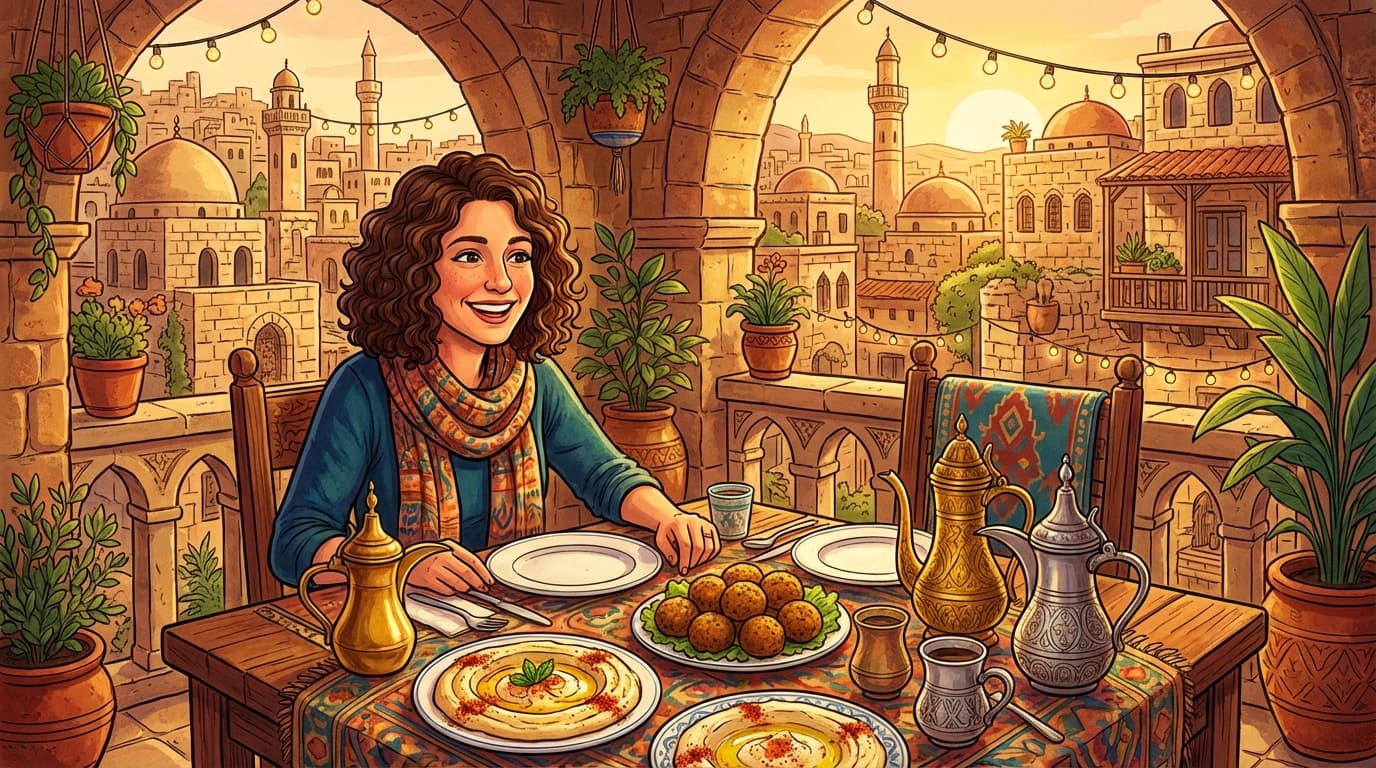
The Rich World of Arabic Cuisine
Arabic cuisine spans a vast region and varies significantly from country to country. Lebanese food emphasizes fresh herbs and olive oil. Egyptian food is hearty and filling. Gulf cuisine uses more spices and rice. What they share is a love of communal dining, generous portions, and incredible hospitality.
Common Meze Dishes
Hummus — Chickpea dip with tahini, lemon, and garlic. Served with flatbread.
Mutabbal/Baba ghanoush — Smoky roasted eggplant dip with tahini.
Fattoush — Salad with toasted bread pieces, vegetables, and sumac dressing.
Kibbeh — Fried or baked bulgur wheat shells stuffed with spiced minced meat.
Tabbouleh — Parsley salad with bulgur wheat, tomato, mint, and lemon.
Warak enab — Stuffed grape leaves filled with rice, herbs, and sometimes meat.
Main Courses and Grills
Arabic grills are magnificent. "Mashawi" refers to a mixed grill platter — usually lamb, chicken, and kofta. "Shawarma" is thinly sliced rotisserie meat in bread. "Mansaf" is Jordanian lamb with fermented yogurt sauce over rice. "Kabsa" is Saudi spiced rice with meat.
Meals often end with Arabic coffee (strong, cardamom-flavored, served in small cups) and dates. Accepting coffee is a sign of courtesy.
Dietary Considerations
Arabic food is naturally pork-free and often nut-heavy. Tahini (sesame paste) appears in many dips and sauces. Dairy (yogurt and cheese) is common. Gluten is present in bread, kibbeh, and pastries. If you have a nut allergy, be especially careful with desserts like baklava and kunafa.
Lucy translates Arabic script menus with full context, explains regional variations, and flags sesame, nuts, dairy, and gluten across the entire menu.