
Accessible Cruising: Guide for Travelers with Disabilities
The Lucy Team
We're the team behind Ask Lucy — travellers, food lovers, and language enthusiasts building an AI companion that helps you explore the world with confidence.
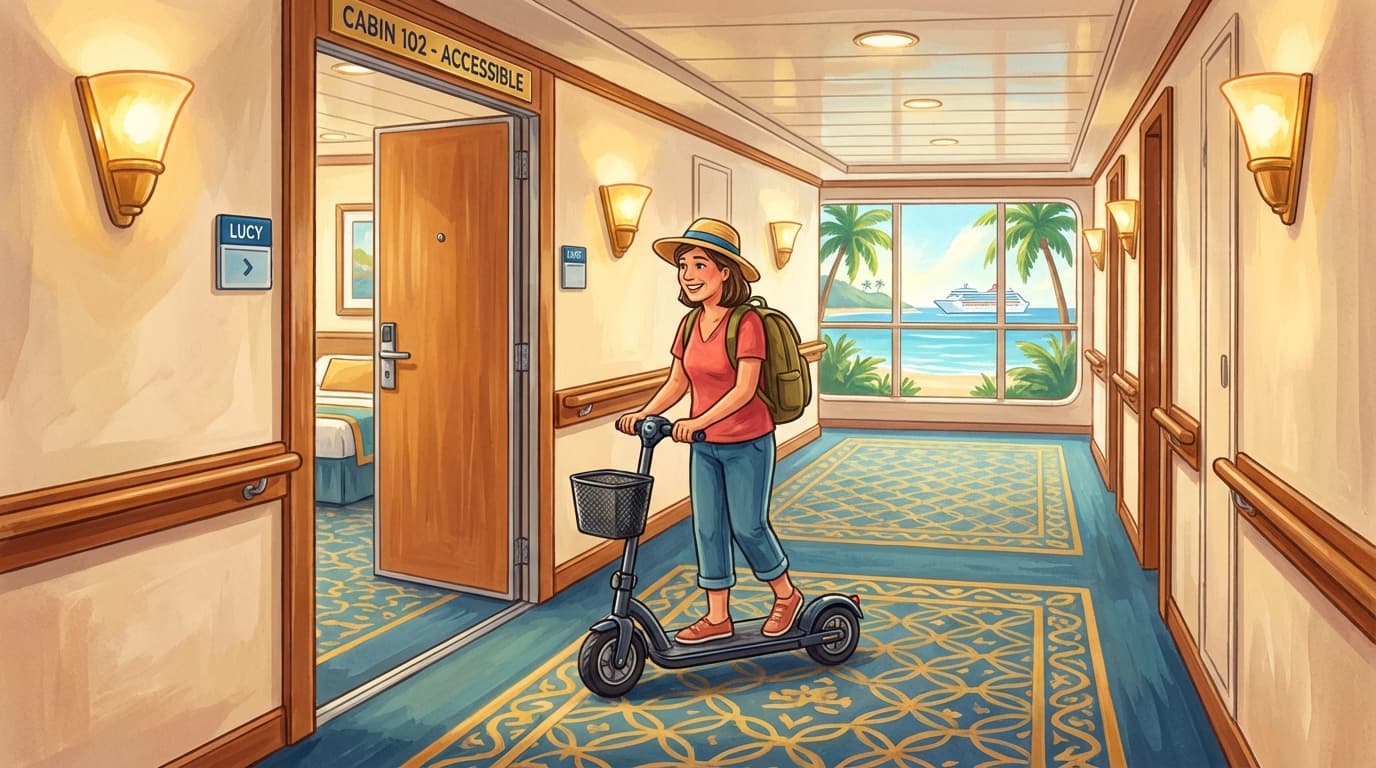
Accessible Cabins and Ship Facilities
Modern cruise ships are designed with accessibility in mind. Accessible cabins have wider doors, roll-in showers, lowered closet rods, and emergency alert systems. Pool lifts, accessible loungers, and elevators to all public decks are standard on newer ships. Book accessible cabins early — they are limited.
Planning Ahead
Contact the cruise line's accessibility department at least 60 days before sailing.
Specify your needs: wheelchair, scooter, visual impairment, hearing impairment, dietary requirements.
Request accessible shore excursions — the cruise line can arrange these but needs advance notice.
Bring your own mobility equipment. Ships can provide wheelchairs but availability is limited.
Port Accessibility Challenges
Port accessibility varies dramatically. Northern European ports (Copenhagen, Amsterdam, Barcelona) are generally well-accessible. Greek islands, Venice, and older Mediterranean towns are challenging with cobblestones, steps, and limited ramps. Research each port before you arrive.
Tender ports (where you take a small boat from ship to shore) can be difficult for wheelchair users. Weather conditions may prevent tendering entirely. Check your itinerary for tender ports and plan accordingly.
Lucy helps accessible travelers by translating local transit information, accessibility signs, and restaurant menus so language is never an additional barrier.