
10 Italian Hand Gestures Every Traveler Should Know
The Lucy Team
We're the team behind Ask Lucy — travellers, food lovers, and language enthusiasts building an AI companion that helps you explore the world with confidence.
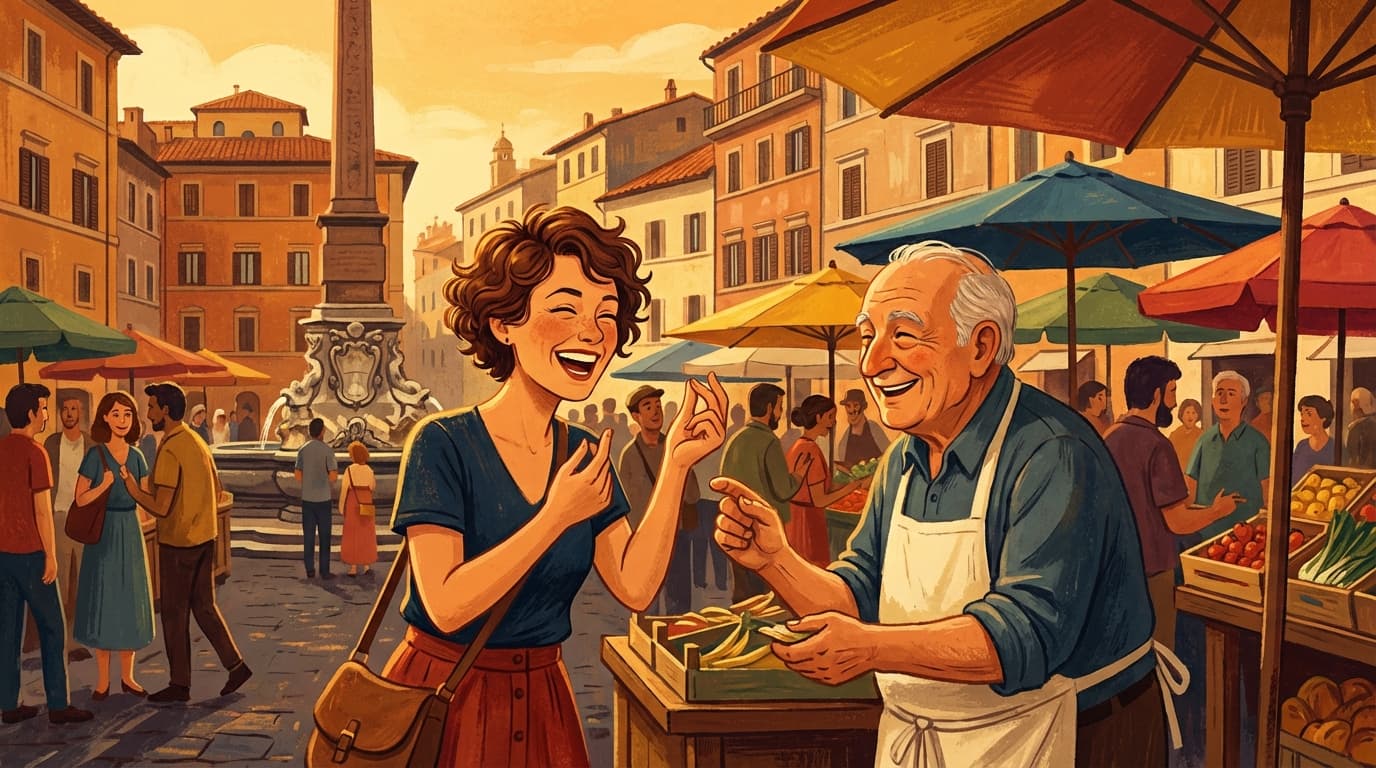
Why Hand Gestures Matter in Italy
Italian hand gestures are not random waving — they are a structured visual language used daily by millions of people. Understanding even a few gestures dramatically improves your ability to communicate and understand what is going on around you.
The 10 Essential Gestures
The pinched fingers ("Ma che vuoi?") — Fingers together, tips pointing up, waved back and forth. Means "What do you want?" or "What are you saying?" The most iconic Italian gesture.
Hand under chin flick — Brush fingers under your chin outward. Means "I don't care" or a dismissive gesture. Can be rude in context.
Finger twist at cheek — Twist your index finger into your cheek. Means "delicious" — use it to compliment food.
Hands pressed together, moved up and down — A plea or prayer gesture. Means "please" or "I'm begging you."
Forearm slap — Slapping the inside of one forearm with the other hand. Rude gesture equivalent to a raised middle finger.
Hand wave near face — Waving your hand near your face. Means "no" or "forget about it."
Thumbs up — Same meaning as elsewhere: "good" or "okay." Universally understood.
Horns gesture — Index and little finger extended. Can mean "your partner is cheating" — be careful with this one.
Eye pull — Pulling down the lower eyelid. Means "be alert" or "watch out."
Money fingers — Rubbing thumb against fingertips. Universal gesture for money or "this is expensive."
Using Gestures as a Traveler
You do not need to use all of these. The cheek twist for "delicious" will delight any Italian cook. A thumbs up is safe everywhere. Knowing the others helps you understand conversations happening around you.